Tag: Jason Kidd (Page 4 of 6)

A look ahead at the free agent class of 2009

With the trade deadline in the rear view mirror and players tied to their current teams at least until the summer, it’s a good time to take a look ahead at the free agent class of 2009. Given the state of the economy and how so many teams are saving up for the class of 2010, some are suggesting that this summer’s free agency could be a “nuclear winter” of sorts, no pun intended. The salary cap and luxury tax thresholds are likely to decline for the first time in years and that has GMs and owners around the league scrambling to cut salary where they can.

There are three types of free agents: players with early termination options (ETO) or player options (PO), restricted free agents and unrestricted free agents.

Players with ETOs or POs

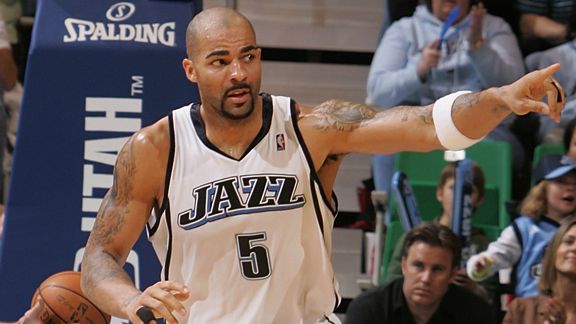
This group includes Kobe Bryant, Jermaine O’Neal, Al Harrington, Jamal Crawford and Mehmet Okur, but it’s highly unlikely that any of these guys will hit the open market given the kind of money they’ll be making by extending their respective contracts. Of this group, Hedo Turkoglu, Anderson Varejao and maybe Carlos Boozer are the only big names that are likely to hit free agency. Boozer has already stated that he’s going to opt out, but he may decide against it if he doesn’t come back strong from his injuries. Turkoglu — the reigning Most Improved Player — is having another nice season, but he’s not playing quite as well as last year. Still, he can command more than the $7.3 million he’s due to make next season. Varejao could stay with the Cavs and make $6.2 million next season, but he and his agent (Dan Fegan) have been looking for more. Varejao wants a long term deal but it seems he and the Cavs disagree on how much he’s actually worth.

For the most part, guys in this group are going to be conservative and play out their contracts.
Restricted Free Agents

RFAs hardly ever change uniforms, but in this economic climate there are teams that are unlikely to match substantial offers for their restricted free agents. The other issue is that once a team signs a RFA to an offer sheet, the player’s team has a full week to match the offer. Most teams know instantly whether or not they’re going to match, but they take the full week so that the other team can’t make any other offers because its money is tied up in the offer sheet. The NBA should reduce this period to three or four days so that teams are more willing to make offers to RFAs. Or better yet, it should eliminate restricted free agency completely to avoid Josh Childress-type cases in the future.

(Stepping down from my soapbox…)

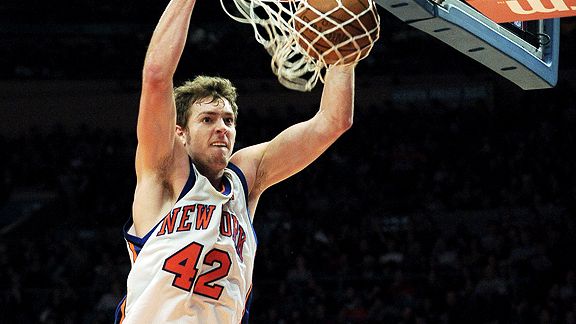
Anyway, the list of restricted free agents includes Childress, David Lee, Paul Millsap, Nate Robinson, Charlie Villanueva, Ramon Sessions (ESPN says he’s restricted though HoopsHype and ShamSports show Sessions as an UFA), Marvin Williams, Raymond Felton, Leon Powe and Linas Kleiza.

The Knicks can’t afford to keep both Lee and Robinson and sign LeBron or some other max-type free agent next summer, so if someone comes along and offers either player a substantial contract, it is unlikely that the Knicks will be able to match. Millsap played great in Boozer’s absence, and they are very similar players so it is unlikely that Utah can afford to keep both. Millsap looks like a potential All-Star and would be a cheaper option, but only time will tell if the Jazz have the balls to let Boozer walk.

Childress will probably return to the U.S. after a year playing in Greece. I suspect he’ll be a mid-level type guy, which increases the number of potential suitors as teams that are over the cap can still sign a player at the mid-level. The Bucks are in financial trouble and they need to get rid of Michael Redd or Richard Jefferson if they hope to keep both Sessions and Villanueva. Both players are having career years under Scott Skiles, but it’s unclear if the Bucks will be able to keep them. I’d expect Sessions to be a mid-level guy (and should be a solid starter for that price), while Charlie V might command a bit more. There are still questions about his heart, but if he’s thriving under Skiles, could he really be lacking toughness and drive? The Bucks have been hit by injuries to Redd and Andrew Bogut but are still holding onto the #8 playoff spot in the East, so they’d be wise to keep this core together if they can.

The Bobcats’ decision to draft D.J. Augustin made Raymond Felton expendable, so he could probably be had for the right price. I’m guessing that he’s a mid-level guy as well, though he and his agent will probably want more. Leon Powe and Linas Kleiza are both productive bench players and if the offer sheet is big enough, the Celtics and Nuggets (respectively) may decide not to match.
Unrestricted Free Agents

This group includes Ben Gordon, Lamar Odom, Shawn Marion, Allen Iverson, Ron Artest, Mike Bibby, Andre Miller, Jason Kidd, Rasheed Wallace, Trevor Ariza and Brandon Bass. Most of these players are older and on the decline, but they can still play. Veteran players in this group might be shocked by the kind of pay cut that they’re going to have to take in today’s climate. The days of 30+ year-old stars (not superstars) signing max or near-max deals are over, at least for a while. I bet all of these guys sign for less than $10 million per season. (I know…that’s peanuts, right?)

Gordon, Ariza and Bass are younger and could still be on the rise if they find the right team. Gordon seems to think he’s a starter and should be paid as such, but he’s small and doesn’t have a reputation for being a very good defender. He can really score though. If some team wants to pay him starter’s money, he’d be a good match to play alongside a bigger point guard who could cover the opponent’s off guard (Utah, Denver, Detroit?) or he needs to go to a team that doesn’t emphasize the defensive end.

Ariza continues to play well for the Lakers, but since he’s a much cheaper option than Odom, he’s probably going to be staying put. Bass had a terrific season two years ago, and is really coming on after a slow start this season. He’s just 23 and has some upside. I’d expect some team will sign him to a deal averaging in the $3-$4 million range, which would make him one of the best bargains of the summer.

So where will these players end up? Your guess is as good as mine. There are only a handful of teams — Atlanta, Detroit, Memphis (of course), Minnesota, Oklahoma City, Portland, Sacramento and Toronto — with the cap space (~$7 million or more) to sign a good player for another team, so I think there may be quite a few starter-level players/borderline stars signing mid-level deals this season. Playoff contenders that are over the cap won’t be able to pass up a good player for $5 million per season and there should be a number of guys that fit the bill this summer.

Expiring contracts…who’s got ’em?

The NBA trade deadline is less than a month away, so it’s a good time to talk expiring contracts. These are players that are in the final year of their deals, which makes them trade fodder for teams looking to cut salary this summer. I’ll list each player by contract size, whether or not he can still play, and discuss the possibility that they’ll be traded by the trade deadline. I’ll also dig into the strategy that their current teams should and/or could be utilizing when considering a trade.

All salary data is from HoopsHype, and I’ll assume – given the bad economy – that the cap will stay at about $59 million next season. (In fact, it might even be lowered.)

Allen Iverson, Pistons
Salary: $21.9 million
Detroit is 20-15 since trading for AI, and considering the franchises successful run over the past few season, that’s disappointing. But the Pistons didn’t make this trade to acquire AI, they made the trade to rid themselves of Chauncey Billups’ contract, which runs through 2011. Was this wise? Probably not, at least in the short term. Billups is one of the top point guards in the league and is doing great things with his new team. But since the Pistons like what Rodney Stuckey can do (and justifiably so), Billups became expendable. GM Joe Dumars made the deal to give the team the financial flexibility to retool the roster over the next two summers, and with Iverson and Rasheed Wallace coming off the books, the Pistons will have about $26 million to spend this summer. They could opt to sign Carlos Boozer, but would likely have to pony up big bucks to do so. He would probably start at $14 million, so that would leave $12 million to re-sign the 34 year-old Wallace or another center. The team could conceivably sign Boozer, then wait a year, let Rip Hamilton’s contract expire, and then sign Chris Bosh or Amare Stoudemire in the summer of 2010, giving the team a core of Stuckey, Boozer, Tayshaun Prince and either Bosh or Stoudemire to build around. Not bad. Considering the main reason the Pistons traded for AI was to cut salary, the chances of them trading him (and taking on salary in return) aren’t good. (Though a Marion-for-Iverson swap might help both teams in the short term.)
Chances of being traded: Low

Jason Kidd, Mavs
Salary: $21.3 million
Ah the Mavs. Every time I see Kidd’s name I think of Devin Harris and the 22 points and six assists he’s averaging this season for the Nets. That was a horrible trade (even at the time) and the Mavs aren’t any better now than they were a season ago. Unless they buck the odds and make a run to the Finals, that trade will go down as one of the worst of recent memory. (Don’t forget that the Mavs threw in two first round picks as well.) Anyway, it seems unlikely that anyone would want Kidd’s giant salary at this point. He’s still an above average starting point guard, but that’s about it. He could help a team make a playoff run – Miami jumps to mind – but his value is limited after this season. A Marion/Kidd trade is unlikely because that would leave the Mavs without a dependable point guard for their own postseason run. My guess is that Dallas stands pat, the Mavs are ushered out of the first round of the playoffs, and he signs elsewhere next season (or maybe re-signs with the Mavs for much, much less).
Chances of being traded: Low

Stephon Marbury, Knicks
Salary: $20.8 million
What’s there to write about Starbury that hasn’t already been written? The Knicks don’t want him, but no one else does either, so the parties need to come to a buyout agreement to end the stalemate. If that happens, it looks like the Celtics are willing to roll the dice and give him an opportunity to resurrect his career. The Heat need a point guard and would seem like another possibility, but that’s pure conjecture.
Chances of being traded: Slim

Shawn Marion, Heat
Salary: $17.2 million
Of all the guys on this list, the Matrix has the most trade buzz surrounding him. His production is down and he just doesn’t seem like a good fit in Miami. The Heat need a center and a point guard, and are reportedly considering a deal that would send Marion to Toronto for Jermaine O’Neal. The Heat might opt to take on O’Neal’s contract (which runs through the 2010 season) because they no longer see Boozer as a good fit, since he plays the same position as Michael Beasley. The ultimate goal is to sign Chris Bosh or Amare Stoudemire in the summer of 2010, and acquiring O’Neal would give them an inside presence for the next two seasons, assuming he can stay healthy. Marion is a valuable trade commodity because he still has some good basketball in him and has the type of complementary game that fits well with others.
Chances of being traded: High

Mike Bibby, Hawks
Salary: $15.2 million
Bibby is staying put. The Hawks are in the thick of the playoff race in the East and Bibby’s resurgence is a big reason why. He could be playing well because he’s in a contract year, but he also has had a season to get comfortable in Atlanta. Either way, the Hawks aren’t going to move him before the deadline unless they’re offered a deal they can’t refuse.
Chances of being traded: Slim

Rasheed Wallace, Pistons
Salary: $13.7 million
Wallace is 34 and his game seems to be fading. His PER (14.54) indicates that he’s just an average starting center at this point of his career. Still, he could be useful to another team for a playoff run, though he’s just as useful to the Pistons, so it is unlikely that they’ll move him.
Chances of being traded: Low

Wally Szczerbiak, Cavs
Salary: $13.0 million
Wally is becoming one of those players that are more famous for their contracts than they are for their ability. Sure, he’ll make a few shots and post the occasional nice game, but his PER (11.35) proves that he is a shell of the player he once was. The Cavs seem reluctant to fix something that’s not broken, but maybe the 17-point lambasting they took at the hands of the Lakers will convince them that they should continue to try to make the team better. Since he’s clearly on the decline, whatever team that’s interested in trading for Szczerbiak would want to do one thing – cut salary. That means whomever the Cavs would be getting in return would probably be a bit overpaid and in a long term contract. This could affect the Cavs’ ability to potentially sign a player like Chris Bosh or Amare Stoudemire in the summer of 2010. Cleveland is in a tough position, however. They (probably) need to make a run to the Finals in the next two seasons to keep LeBron, but they don’t want to do anything drastic that would limit their options in 2010 when they could potentially pair their superstar with the likes of Bosh or Stoudemire. Ideally, the Cavs would move Wally to add a good player who has a contract that expires in 2010 or earlier. That’s going to be tough to do since there won’t be much incentive for the trade partner to strike a deal.
Chances of being traded: Moderate

Raef LaFrentz, Blazers
Salary: $12.7 million
Portland needs a point guard and they could use LaFrentz’s expiring salary to acquire one. But their trade partner would need to be a non-playoff team looking to cut salary, and there aren’t too many of those out there. The Blazers might be content to let LaFrentz’s salary expire and put themselves in position to make a splash this summer or next.
Chances of being traded: Low

Steve Nash, Suns
Salary: $12.3 million
The Suns are a playoff team and Nash is still a key cog in that machine. He is not going anywhere this season, but the team holds his option for another year, so if the Suns flame out in the playoffs again, it might be time to blow this thing up.
Chances of being traded: Slim

Carlos Boozer, Jazz
Salary: $11.6 million
Boozer has a player option for another year, but he has already stated that he plans to opt out after the season. He has missed much of this season with injury, and just had arthroscopic surgery on his knee. He hopes to be back by the All-Star break, which is right before the trade deadline. Utah wants him back, but there’s a reasonable possibility that he’ll sign elsewhere. Miami no longer seems to think he’s a good fit (since they view Michael Beasley as a power forward), so Boozer’s biggest suitor has probably been crossed off the list. The Jazz are in a tough spot because they think they can re-sign him – and they may be able to. But that means they probably won’t get too involved in any trade discussions. With the Heat (likely) bowing out, the chances that the Jazz can re-sign him have increased, which means they are likely to wait until the end of the season to deal with him. At 27, he’s right in the middle of his prime and is one of those players that are likely to command a max contract, but with his injury history, he probably isn’t worth one. The Jazz may have to pony up max dollars out of fear that he’ll sign elsewhere.
Chances of being traded: Slim

Lamar Odom, Lakers
Salary: $11.4 million
The Lakers seem content to stand pat as this current rotation has resulted in one of the league’s best records. But Odom is coming off the bench and is having the worst statistical season of his career. Since he can’t shoot, they can’t play Odom alongside Pau Gasol and Andrew Bynum, so one of the three have to sit in crunch time. Lately, it’s been Odom getting those minutes (and Bynum on the bench), so the team clearly trusts him down the stretch. If they elect not to trade him and they don’t ultimately win a title, then they would have missed an opportunity to add someone like Ron Artest (last season) or Shawn Marion (this season?), who may have put them over the hump. In that event, Odom would be likely to sign elsewhere because the Lakers aren’t going to pay a reserve what he’ll be asking.
Chances of being traded: Low

Andre Miller, Sixers
Salary: $10.0 million
When Philly got off to a slow start, there was some talk that the Sixers might move Miller since he’s in the last year of his contract. But since Brand went down with an injury, the team is 9-7 and during a recent seven-game win streak, Miller averaged 17.0 points, 6.7 assists and 4.4 rebounds per game. The addition of Brand hasn’t gone as smoothly as hoped, but the Sixers are currently in the playoff hunt and the franchise will want to see how this group finishes the season. Good point guards are hard to find, so there’s no real reason to move Miller at this point.
Chances of being traded: Low

Ron Artest, Rockets
Salary: $8.4 million
Artest isn’t going anywhere. The Rockets are in the thick of the playoff hunt and they’ll need his toughness in the postseason.
Chances of being traded: Slim

Other players with expiring contracts: Rasho Nesterovic (Pacers, $8.4 million); Malik Rose (Knicks, $7.6 million); Drew Gooden (Bulls, $7.1 million); Marquis Daniels (Pacers, $6.9 million); Chris Wilcox (Thunder, $6.8 million); Bobby Jackson (Kings, $6.1 million); Stromile Swift (Nets, $6.2 million); Desmond Mason (Thunder, $5.3 million); Joe Smith (Thunder, $4.8 million); Anthony Parker (Raptors, $4.6 million); Damon Jones (Bucks, $4.5 million)

Is the NBA ’09 free agent class better than ’10?

When I saw the headline — “’09 free agents may be better than ’10 class” — I was ready to jump all over David Aldridge for saying that any free agent class could be better than the one that will likely feature LeBron James, Dwyane Wade, Chris Bosh and Amare Stoudemire. But as I read the full article, he made some sense. I still don’t agree with him, but I see his point.

Here’s a look at the possible free agents in ’09:

Those with asterisks either have options for ’09 or can terminate existing contracts for ’09, and many are expected to do one or the other, for one reason or another:

Kobe Bryant*, Carlos Boozer, Shawn Marion, Ron Artest, Lamar Odom, Hedo Turkoglu*, Mehmet Okur*, Andre Miller, Mike Bibby, Jason Kidd, Allen Iverson, Rasheed Wallace, Kyle Korver*, Anderson Varejao*, Drew Gooden, Stephon Marbury, Grant Hill, Brandon Bass, Joe Smith, Wally Szczerbiak, Zaza Pachulia and Anthony Parker. Jermaine O’Neal could join the group if he walks away from $23 million next season. (Don’t hold your breath. There’s no asterisk by Boozer because he’s already said he’s opting out next summer.)

Aldridge has four major arguments:

1. 2010 is fool’s gold.

It doesn’t take a rocket scientist to figure out that unless seismic changes take place, James is either going to stay in Cleveland in 2010 or go to New York. Maybe Los Angeles. Wade will almost certainly choose between Miami, New York, L.A. and Chicago. Bosh will choose between the preceding cities and, perhaps, Detroit. And that’s it.

Without the Big Three on the market for most NBA cities, the ’10 class loses a good bit of its luster. That’s going to leave a lot of teams with max money to spend on mostly not-max players.

2. Given the recession, owners will not want to spend.

Only seven or eight teams are going to be over the luxury tax threshold this season. That number isn’t going up any time soon. Fewer teams contributing luxury taxes to their fellow competitors will further erode many teams’ bottom lines.

“People have spent (in recent years) not to be a tax payer,” says a CEO of a major market team. “Indiana really can’t afford to spend up to the tax based on their local economy. But they do, because everyone else is doing it … now, I think you’re going to see teams having to make a lot of tough decisions on spending.”

3. Since fewer teams have cap space this summer, ’09 will have more opportunity.

The point is, there will be far fewer ’09 suitors than ’10 teams. And while Bryant is equally not likely to leave L.A. for smaller-revenue teams this summer, those teams are nonetheless in a buyer’s market similar to that of Major League Baseball. There will be solid, veteran players available who may well have to settle for cents on the dollar instead of bigger paydays. A wise team will likely get a whole lot more bang for its reduced buck in ’09.

Says one extremely high-ranking team executive: “This is going to be a nuclear winter for free agents. I would not want to be one this summer. So, if the point is that this summer will be great because there will be bargains galore, you are on the money.”

4. ’10 is loaded with wings, while ’09 has better point guards and bigs.

The ’10 group is lousy with wings — big wings, small wings, fast wings, shooting wings. But so is the whole NBA. The worst teams in the league — Oklahoma City, Washington, Minnesota, Memphis — all have perfectly fine wing players. It’s the point guards and centers that most of them lack, and so does the 2010 class.

Point guards available in two years: Nash. He’s it. And he’ll be 35 on opening night, 2010.

Point guards available next year: Kidd (who, granted, will be 36 on opening night, 2009), Miller and Bibby.

Quality bigs under 35 in two years: Bosh, Nowitzki and Chandler.

Quality bigs under 35 next summer: Boozer, Okur, Varejao, Wallace. Not-great-but good ones include Dallas’ Bass, Chicago’s Gooden and Atlanta’s Pachulia.

I don’t disagree with any of his individual points, but I don’t believe that they combine to make the ’09 class better than the ’10 class. To say that one class is better than another is to say that the collection of talent in one is greater than the other. That’s simply not the case here. It doesn’t matter if only a few cities have a shot at LeBron, D-Wade, Bosh and Amare — those four players hold more value than the entire ’09 class. (All right, maybe they don’t, but you get my point.) Just because the Grizzlies won’t have a shot at LeBron, it doesn’t make the ’09 class better. It might make it better for the Grizzlies, or for any other team with cap space in ’09 and no shot at LeBron, but it doesn’t make ’09 a better class on the whole.

And just because there may more bargains in ’09 than ’10 doesn’t make the former better, it just means that there may be better value available.

Aldridge’s points are all valid, it’s just his conclusion that I don’t agree with. When comparing two free agent classes, the one with more talent is the one that’s better. The other class may have a few traits that will make it appealing to certain teams, but that only makes it better to those individual teams.

2008 Year-End Sports Review: What We Already Knew

While every year has its own host of surprises, there are always those stories that simply fit the trend. Sure, it can get repetitive, but if we don’t look back at history aren’t we only doomed to repeat it? Every year has its fair share of stories that fell into this category, and 2008 was no different.

Continue reading »

That sound you hear is Mark Cuban grinding his teeth…

Barring an unlikely Dallas run to the NBA Finals, the verdict on the Jason Kidd trade is in.

The Nets got the better end of the deal.

Devin Harris is blowing up right before our eyes. On the season, he is averaging 26.3 points (on 49% shooting) and 6.3 assists. On Sunday night, he posted 47 points, eight assists and seven rebounds in a win in Phoenix. The night before, he finished with 34 points, six assists and three steals in a road win over Utah.

Not only did the Nets get Harris, they also received a couple of first round picks as part of the trade.

I wouldn’t want to be in charge of Mark Cuban’s blood pressure right now.

« Older posts Newer posts »