Tag: Shawn Marion (Page 2 of 5)

2009 NBA Free Agency Preview: The top unrestricted free agents

Once the draft is over, the next step of the NBA offseason is the free agency period. Negotiations start July 1, but players have to wait until July 8 to actually sign on the dotted line. Due to the economy, this promises to be an interesting summer, as more franchises seem to be trying to cut payroll than add talent. There are eight teams with significant cap space this summer, and there’s no guarantee that they’ll be willing to use it. Teams that are over the cap can add good players in two ways: 1) they can sign a player to the Mid-Level Exception (MLE), which will be around $5.8 million per season (and can be split up between two or more players), or 2) they can work out a sign-and-trade with the player’s old team.

Below is a list of the top unrestricted free agents this summer. These are players who can sign with whomever they like. They’re ranked in order of total value, which is based on overall talent, age, injury history and cost.

For each player, I’ll provide his position, age, Player Efficiency Rating (PER) and an estimate of what kind of contract he’s likely to sign.

1. Carlos Boozer, PF (27 years-old)
PER: 17.28
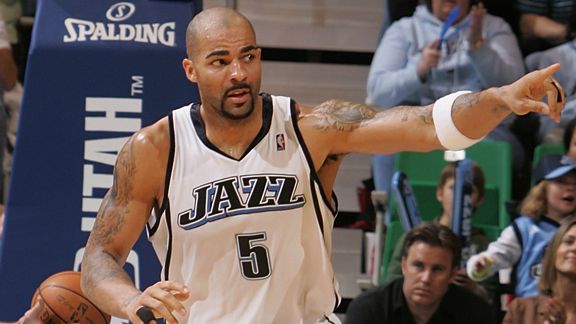
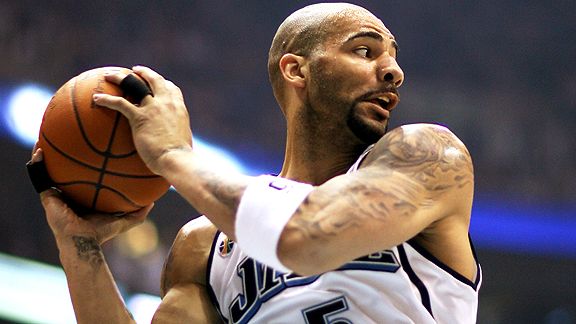
At press time, Boozer hasn’t officially opted out, but he is expected to. He can play another year for $12.3 million, but he thinks he’s due for a raise, and I don’t think he’s going to get the kind of raise he’s expecting. Boozer is one of the top 20 players in the league when healthy, but it’s that whole “when healthy” part that’s the problem. Over the past five seasons, he has missed a third of his team’s games. At 27, he’s in his prime, and assuming he has the right supporting cast, I think he can be one of a twosome or threesome on a championship-caliber team. Boozer may not get a raise this summer, but he could get long-term security. The Pistons, Raptors, Kings and Thunder all have the space to make a run at him, but Sacramento and OKC might consider themselves too far away from contending to add a big piece like Boozer. The Pistons seem like the best fit, but they are rumored to have more interest in Ben Gordon. There’s always the possibility that another team works out a sign-and-trade with Utah, but I don’t think anyone is going to give him a max deal, not in this economy.
Value: $12.0 – $13.0 million per year

Continue reading »

NBA Rumors: Stoudemire, T-Mac, Brand and more draft talk

T-Mac for Amare?

According to the same source that disclosed Terry Porter was about to be fired as Suns coach, the Rockets are leaning toward swapping Tracy McGrady’s expiring $22M contract, Carl Landry and Aaron Brooks for Leandro Barbosa and Stoudemire, who owns an escape clause after next season and is demanding an extension this summer to waive it.

I’m not sure what the upside is for the Suns. Stoudemire will likely opt out of his contract after the season, so they aren’t gaining any financial flexibility. They do get a couple of good young players (Landry and Brooks), but is that really enough? McGrady is a very good player when healthy, but he can’t seem to stay upright.

This would be a bold move for the Rockets, but it would leave them awfully thin at point guard. Kyle Lowry would be the only experienced PG on the roster, but Houston could use its mid-level exception to go out and get a veteran like Andre Miller or Mike Bibby, though the MLE may not be enough.

Continue reading »

Which NBA teams will have cap space this summer?

The NBA free agency period starts July 1st, and as that date approaches I’ll preview this year’s free agent class in more detail. But for now, I’d like to take a look at which teams have the cap flexibility to be major players in free agency this summer. (Mind you, just because a team has cap space, it doesn’t necessarily mean that they’ll use it. Just sayin’.)

Not familiar with the NBA salary cap? Here’s a quick primer…

1. The cap for the 2008-09 season was $58.7 million. The general consensus is that the cap will stay flat or decrease slightly. We’ll assume it sticks at $58.7 million.

2. If a team is over the cap, the only free agents they can sign are their own, unless they elect to sign a player to the mid-level exception (~$5.8 million per season), the bi-annual exception (~$2.0) or to a minimum contract. (The bi-annual exception may not be used in two consecutive years.)

3. If a team is under the cap, they can sign any free agent they want as long as they do not exceed the cap. They can also take on salary via trade up to the cap, so a team like the Grizzlies (with almost $20 million in cap space) could conceivably trade their first round pick to the Suns for Amare Stoudemire or to the Raptors for Chris Bosh.

Here’s a list of the bigger names in the free agent pool this summer:

Unrestricted: Carlos Boozer, Ben Gordon, Ron Artest, Lamar Odom, Andre Miller, Shawn Marion, Jason Kidd, Hedo Turkoglu, Allen Iverson, Mehmet Okur, Rasheed Wallace, Mike Bibby, Anderson Varejao, Grant Hill, Kyle Korver, Trevor Ariza, Brandon Bass, Chris Andersen, Zaza Pachulia, Chris Wilcox and Drew Gooden

Restricted: David Lee, Paul Millsap, Ray Felton, Josh Childress*, Marvin Williams, Glen Davis, Ramon Sessions, Charlie Villanueva, Nate Robinson, Leon Powe, Hakim Warrick, Linas Kleiza, Jarrett Jack and Shannon Brown

* It appears that if Childress does return to the NBA, the Hawks still hold his rights, so he would be a restricted free agent.

There are eight teams that project to have more than $5.8 million (the value of the mid-level exception) in cap space this summer:

Memphis Grizzlies
Projected Cap Space: $19.7 million
Memphis has been reluctant to spend for several years now and is probably one of the franchises that’s struggling the most in the current economy. I lived in Memphis for three years, and given its small size and overall lack of wealth, I always thought that it would struggle to support a professional sports team. With a core of Rudy Gay, O.J. Mayo and Marc Gasol, the Grizzlies have to feel pretty good about what they have at off guard, small forward and center. The big decision this summer is what to do with restricted free agent Hakim Warrick. When dealing with bad teams, numbers can be deceptive, because no matter what, somebody has to score and rebound, right? Warrick’s PER (16.91) is #24 amongst power forwards, so ideally he’d be coming off the bench for a playoff team. The Grizzlies projected cap space assumes they make the qualifying offer to Warrick ($3.0 million). Memphis is one of those teams that could really use the services of a Carlos Boozer, David Lee or Paul Millsap, but in this economy, are the Grizzlies willing to make that kind of a commitment? They could try to make a run at Chris Bosh or Amare Stoudemire next summer, but the odds are long that either guy would want to play for the Grizzlies.

Continue reading »

A look ahead at the free agent class of 2009

With the trade deadline in the rear view mirror and players tied to their current teams at least until the summer, it’s a good time to take a look ahead at the free agent class of 2009. Given the state of the economy and how so many teams are saving up for the class of 2010, some are suggesting that this summer’s free agency could be a “nuclear winter” of sorts, no pun intended. The salary cap and luxury tax thresholds are likely to decline for the first time in years and that has GMs and owners around the league scrambling to cut salary where they can.

There are three types of free agents: players with early termination options (ETO) or player options (PO), restricted free agents and unrestricted free agents.

Players with ETOs or POs

This group includes Kobe Bryant, Jermaine O’Neal, Al Harrington, Jamal Crawford and Mehmet Okur, but it’s highly unlikely that any of these guys will hit the open market given the kind of money they’ll be making by extending their respective contracts. Of this group, Hedo Turkoglu, Anderson Varejao and maybe Carlos Boozer are the only big names that are likely to hit free agency. Boozer has already stated that he’s going to opt out, but he may decide against it if he doesn’t come back strong from his injuries. Turkoglu — the reigning Most Improved Player — is having another nice season, but he’s not playing quite as well as last year. Still, he can command more than the $7.3 million he’s due to make next season. Varejao could stay with the Cavs and make $6.2 million next season, but he and his agent (Dan Fegan) have been looking for more. Varejao wants a long term deal but it seems he and the Cavs disagree on how much he’s actually worth.

For the most part, guys in this group are going to be conservative and play out their contracts.
Restricted Free Agents

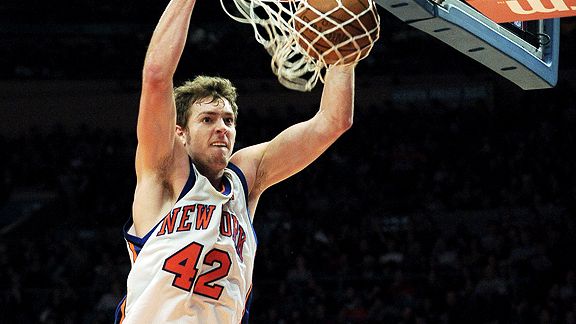
RFAs hardly ever change uniforms, but in this economic climate there are teams that are unlikely to match substantial offers for their restricted free agents. The other issue is that once a team signs a RFA to an offer sheet, the player’s team has a full week to match the offer. Most teams know instantly whether or not they’re going to match, but they take the full week so that the other team can’t make any other offers because its money is tied up in the offer sheet. The NBA should reduce this period to three or four days so that teams are more willing to make offers to RFAs. Or better yet, it should eliminate restricted free agency completely to avoid Josh Childress-type cases in the future.

(Stepping down from my soapbox…)

Anyway, the list of restricted free agents includes Childress, David Lee, Paul Millsap, Nate Robinson, Charlie Villanueva, Ramon Sessions (ESPN says he’s restricted though HoopsHype and ShamSports show Sessions as an UFA), Marvin Williams, Raymond Felton, Leon Powe and Linas Kleiza.

The Knicks can’t afford to keep both Lee and Robinson and sign LeBron or some other max-type free agent next summer, so if someone comes along and offers either player a substantial contract, it is unlikely that the Knicks will be able to match. Millsap played great in Boozer’s absence, and they are very similar players so it is unlikely that Utah can afford to keep both. Millsap looks like a potential All-Star and would be a cheaper option, but only time will tell if the Jazz have the balls to let Boozer walk.

Childress will probably return to the U.S. after a year playing in Greece. I suspect he’ll be a mid-level type guy, which increases the number of potential suitors as teams that are over the cap can still sign a player at the mid-level. The Bucks are in financial trouble and they need to get rid of Michael Redd or Richard Jefferson if they hope to keep both Sessions and Villanueva. Both players are having career years under Scott Skiles, but it’s unclear if the Bucks will be able to keep them. I’d expect Sessions to be a mid-level guy (and should be a solid starter for that price), while Charlie V might command a bit more. There are still questions about his heart, but if he’s thriving under Skiles, could he really be lacking toughness and drive? The Bucks have been hit by injuries to Redd and Andrew Bogut but are still holding onto the #8 playoff spot in the East, so they’d be wise to keep this core together if they can.

The Bobcats’ decision to draft D.J. Augustin made Raymond Felton expendable, so he could probably be had for the right price. I’m guessing that he’s a mid-level guy as well, though he and his agent will probably want more. Leon Powe and Linas Kleiza are both productive bench players and if the offer sheet is big enough, the Celtics and Nuggets (respectively) may decide not to match.
Unrestricted Free Agents

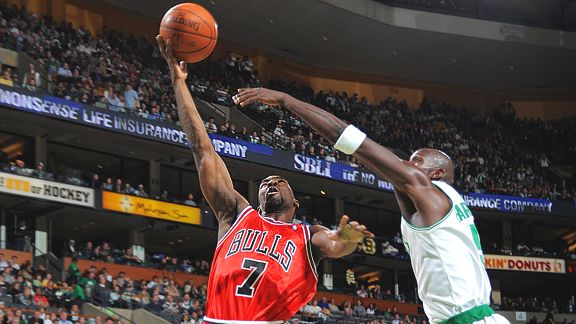
This group includes Ben Gordon, Lamar Odom, Shawn Marion, Allen Iverson, Ron Artest, Mike Bibby, Andre Miller, Jason Kidd, Rasheed Wallace, Trevor Ariza and Brandon Bass. Most of these players are older and on the decline, but they can still play. Veteran players in this group might be shocked by the kind of pay cut that they’re going to have to take in today’s climate. The days of 30+ year-old stars (not superstars) signing max or near-max deals are over, at least for a while. I bet all of these guys sign for less than $10 million per season. (I know…that’s peanuts, right?)

Gordon, Ariza and Bass are younger and could still be on the rise if they find the right team. Gordon seems to think he’s a starter and should be paid as such, but he’s small and doesn’t have a reputation for being a very good defender. He can really score though. If some team wants to pay him starter’s money, he’d be a good match to play alongside a bigger point guard who could cover the opponent’s off guard (Utah, Denver, Detroit?) or he needs to go to a team that doesn’t emphasize the defensive end.

Ariza continues to play well for the Lakers, but since he’s a much cheaper option than Odom, he’s probably going to be staying put. Bass had a terrific season two years ago, and is really coming on after a slow start this season. He’s just 23 and has some upside. I’d expect some team will sign him to a deal averaging in the $3-$4 million range, which would make him one of the best bargains of the summer.

So where will these players end up? Your guess is as good as mine. There are only a handful of teams — Atlanta, Detroit, Memphis (of course), Minnesota, Oklahoma City, Portland, Sacramento and Toronto — with the cap space (~$7 million or more) to sign a good player for another team, so I think there may be quite a few starter-level players/borderline stars signing mid-level deals this season. Playoff contenders that are over the cap won’t be able to pass up a good player for $5 million per season and there should be a number of guys that fit the bill this summer.
Much Ado About Nothing: The 5 Biggest Trade Deadline Teases

You can blame it on the Grizzlies.

Ever since they traded Pau Gasol to the Lakers for a bag of peanuts and some slightly used underwear, NBA teams have become more and more fickle about pulling the proverbial trigger. With the state of the economy, and some owners desperately trying to cut payroll before the cap and luxury tax thresholds decline, it’s a buyer’s market out there. And those buyers are looking for Gasol-type deals. On the flip side, Chris Wallace took all kinds of grief over that trade and general managers around the league don’t want to follow in his footsteps.

After two or three weeks of covering all of this trade chatter, the biggest deal to speak of is the Shawn Marion/Jermaine O’Neal swap and that happened almost a week ago. Sure, guys like Brad Miller, Andres Nocioni, John Salmons, Rafer Alston, Larry Hughes, Tim Thomas, Chris Wilcox and Drew Gooden changed zip codes, but I doubt any fans out there are sporting wood at the idea that one or more of these players is joining their team.

This year’s trade deadline was mostly about teams setting themselves up financially for the next two summers of free agency. Even though there were a number of big names bandied about, the Marion/O’Neal deal is the only semi-blockbuster trade of the season. And, barring some last-minute, late-breaking deal, we have these five teams to blame…

5. San Antonio Spurs
The Spurs were in talks with the Nets about acquiring Vince Carter and also spoke with the Bucks about Richard Jefferson. Either of those players would have been a nice addition, but the Spurs just don’t have the pieces (or the balls) to pull off a trade like that. They were willing to trade for Carter, but they didn’t want to give up Roger Mason or George Hill. So they offer the Nets Bruce Bowen and Fabricio Oberto. Great, the numbers don’t even add up. Don’t get me wrong – I don’t really think that the Spurs should have given up Mason and/or Hill to acquire Carter. They’re arguably the second-best team in the West and their current lineup, if healthy, is likely to give the Lakers fits if the two teams meet in the playoffs with a less-than-100% Andrew Bynum. Plus the Spurs are notoriously conservative when it comes to messing with their chemistry. Jefferson wouldn’t have been a problem in that area but Carter might have been. So the Spurs stand pat. Shocker.

4. Cleveland Cavaliers
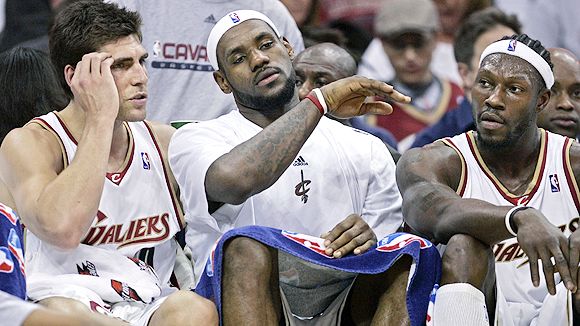
In the weeks leading up to the trade deadline, all was quiet on the Cleveland front, but in the last few days, the rumor mill started to churn as Cleveland started to discover what kind of player Wally Szczerbiak’s expiring contract could get them. (On a side note, Wally and Raef LaFrentz are two players that join Theo Ratliff on the list of players who ultimately are more famous for their expiring contracts than they are for anything they’ve done on the court. It’s sad, but it’s true.) The Cavs reportedly spoke with the Bucks about Jefferson, with the Wizards about Antawn Jamison, with the Nets about Vince Carter and with the Suns about Amare Stoudemire and Shaquille O’Neal. They wanted an upgrade at power forward, so the Jefferson deal didn’t make perfect sense, though he and LeBron would be compatible on the wing because they’re both versatile players who can defend. The same goes for Carter, but ultimately the Cavs decided to let Szczerbiak’s deal expire, which will give them more cap flexibility in two seasons when LeBron (likely) hits free agency. They run the risk of passing on a deal that would have ultimately resulted in an NBA championship, which would have made it very difficult for LeBron to leave Cleveland, but that’s impossible to prove.

3. New Jersey Nets
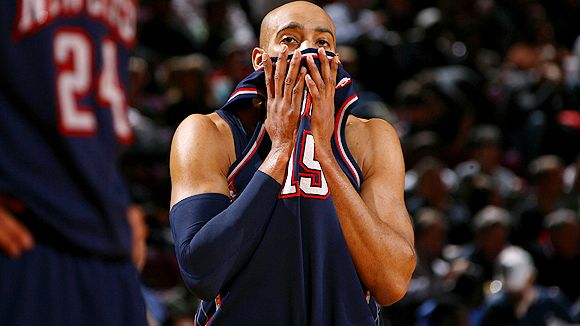
Reportedly, the Nets were literally trying to give Vince Carter away, but had no takers. They spoke with Cleveland, Portland, Houston and San Antonio (and probably others), but were unable to come to terms. He has two years and over $33 million remaining on his contract, so his is a deal that is apparently unmovable in the current environment. No one wants to take on that salary, especially since Carter is already 32-years-old and his salary runs through the 2010-11 season. My guess is that the Spurs would have added him had they been able to convince the Nets that a package built around Bruce Bowen and Fabricio Oberto was enough. If it’s true that the Nets were desperate to move him, a Szczerbiak-Carter or a LaFrentz-Carter swap probably would have done the trick, but the Cavs and Blazers apparently felt that Carter wasn’t worth the cap ramifications of his contract and ultimately balked.

2. Phoenix Suns
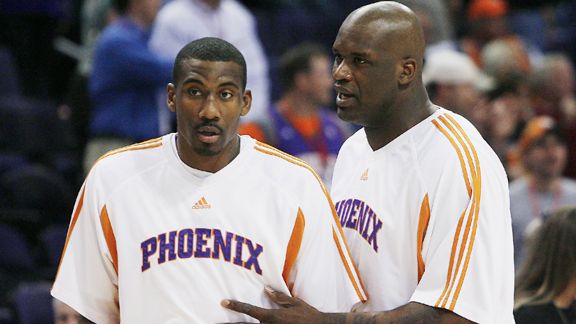
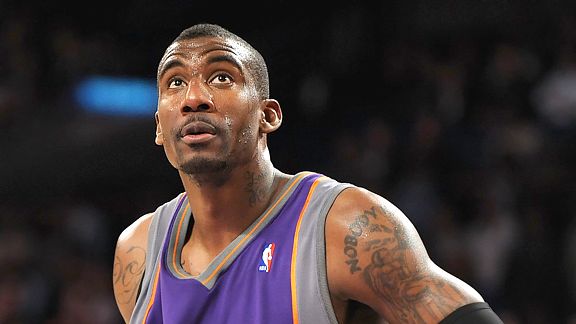
Surprised? I thought about putting the Suns in the top spot, but once they jettisoned Terry Porter in favor of Alvin Gentry, it became clear that they felt that Porter was the problem, not Amare Stoudemire. Word leaked that the Suns suddenly became less willing to talk about deals involving Amare, and it probably didn’t hurt that he scored 65 points in the two games since Gentry took over. More importantly, the Suns look to be back to pushing the ball, as they scored 282 points in those two wins. (It should be noted that both games were against the Clippers, so it’s tough to get an accurate gauge of the effect that Gentry is having.) It was rumored that they were talking about trading Shaq to the Cavs for Ben Wallace and Sasha Pavlovic, but had they pulled the trigger on that deal, they would have been throwing away whatever chance they have at a playoff run this year in order to save about $5 million by acquiring Pavlovic’s expiring contract. These new-look Suns could be a factor in the playoffs.

1. Portland Trail Blazers
Ah, the Blazers. They have all sorts of talented pieces and Raef LaFrentz’s expiring contract, so they were heavily involved in the rumor mill over the last two weeks. Portland has a reputation for discussing a plethora of different trade scenarios but being very reluctant to pull the trigger, which leads many to believe that most of their trade calls are really just the team’s way of gathering intelligence. They were willing to trade LaFrentz and Jerryd Bayless for Stoudemire, but the Suns decided (wisely) that it wasn’t enough. They spoke with the Nets about Carter, but wanted New Jersey to throw in a first round pick as well. The same goes for the Bucks, who wanted to send Jefferson to Portland in exchange for some salary cap relief. They also tried to pry Caron Butler away from Washington and Gerald Wallace away from the Bobcats. It’s not enough that the Blazers were going to get a talented player for an expiring contract, but they wanted draft picks or a nice young prospect like Ramon Sessions as well. They were one of the few buyers in a buyer’s market and ultimately they didn’t buy a thing.

« Older posts Newer posts »