Tag: John Paulsen (Page 8 of 10)

Championship Week Primer: Bubble teams and #1 seeds

Strap ‘em up, kids. Championship Week is upon us!

Gonzaga and Saint Mary’s square off tonight in the final of the WCC tourney (9 PM ET, and why isn’t this game on national television?), and with the Gaels’ #45 RPI, they could really use a win to guarantee a NCAA tourney berth. The good news is that their leading scorer, Patrick Mills, is back, scoring 12 points in 35 minutes in yesterday’s win over Portland. If Saint Mary’s loses to the ‘Zags, it would put the Gaels squarely on the bubble. ESPN bracketologist Joe Lunardi has Saint Mary’s as a #10 seed, but I think that assumes that the committee will take Mills’ injury into account. After all, he was out of the lineup for three of the team’s five losses. Lunardi says that the Gaels are safe, but they don’t have a marquee win and are just 2-2 against the RPI top 50, so anything can happen.

But let’s move on to the “major” conference tournaments that will take place this week. I’m going to tackle these one-by-one in the order of Jeff Sagarin’s conference rankings.

ACC

Lunardi projects six ACC teams – UNC, Wake Forest, Duke, Clemson, Florida State and Boston College – to make the Dance, and of those teams only BC really has anything to worry about. The Eagles (#57 RPI) are probably safe, but a first round loss on Thursday against Virginia might make BC squirm a bit on Selection Sunday.

Miami, Maryland and Virginia Tech are three teams that could play themselves into an NCAA berth with a nice ACC tourney run. What do I mean by “a nice run”? Well, Virginia Tech and Miami square off on Thursday, so if whomever wins gives North Carolina a great game on Friday, that might be enough. The Hurricanes are a bit closer than the Hokies, so VT would probably have to pull the upset against the Tar Heels to earn a bid. Miami could potentially get in with an 18-12 record and a #53 RPI (against the 26th-toughest schedule) if they were to lose to North Carolina.

Meanwhile, Maryland has to beat N.C. State on Thursday and then (at least) pull the upset against the seemingly vulnerable Demon Deacons on Friday.

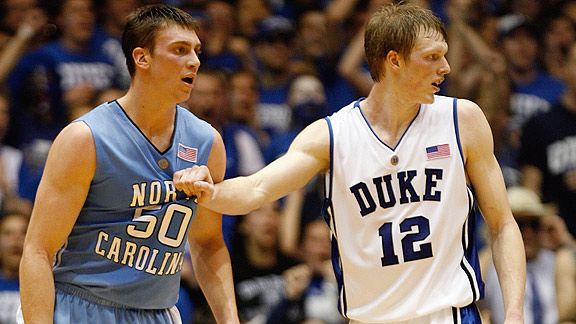
As far as #1 seeds go, North Carolina pretty much sewed one up with their second win against Duke on Sunday. Neither the Blue Devils nor Demon Deacons would seem to have a shot at one of the other three #1 seeds. It’s conceivable that Duke would be able to make a case if they win the ACC Tournament (beating Wake and UNC in the process) and a few of the teams ranked ahead of them have poor conference showings. Despite the brutal schedule (#3) and stellar RPI (3), Duke is realistically shooting for a #2 or #3 seed.
ACC Tournament bracket

BIG TEN

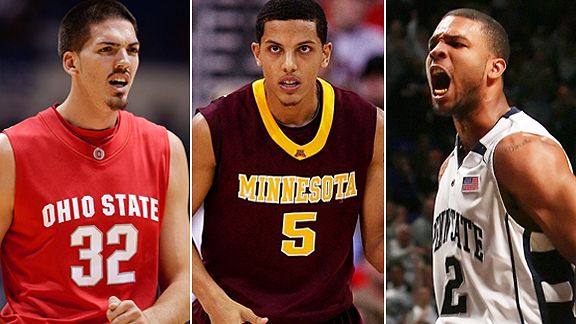
It’s funny, because the conventional wisdom is that the Big Ten is down this season, but it is 2nd in Jeff Sagarin’s rankings and Lunardi projects eight Big Ten teams to make the NCAA tournament, the most of any conference. The list includes Michigan State, Purdue, Illinois, Ohio State, Wisconsin, Minnesota, Michigan and Penn State. Three of those teams – Penn St., Minnesota and Michigan – play in the first round on Thursday and they really need a win (against Indiana, Northwestern and Iowa, respectively) to keep their postseason hopes alive.

In the next round, Minnesota would need to compete with Michigan State, Michigan with Illinois and Penn State with Purdue to clinch a spot. If any of these teams are blown out in the next round, they’ll be right back on the bubble. With an RPI of 38, the Badgers look to be safe, but a win against Ohio State would seal a bid (and vice versa, if the Buckeyes were to win).

The only team with a legitimate shot at a #1 seed is Michigan State. The Spartans have the #6 RPI and the 8th-toughest schedule, so if they win the Big Ten tourney, they have a great shot to move up to the top line.

Big Ten Tournament bracket

BIG EAST

The Big East Championship serves as the actual championship for the conference –they don’t recognize a “regular season” champion. It kicks off on Tuesday with the #9-#16 seeds (on BIGEAST.tv) and then on Wednesday the #5-#8 seeds – Marquette, Syracuse, West Virigina and Providence – start play. At 8-10 in conference, Cincinnati is out barring an unlikely four wins in four days scenario. Lunardi currently projects West Virginia as a #7 seed, so they are safe. Likewise, Syracuse (#6 seed) and Marquette (#7 seed) are both safely in.

So the Big East team that can help itself the most is Providence. Lunardi projects the Friars to miss the cut, and with an 18-12 record and a #70 RPI, it’s easy to see why. However, if Providence can beat the winner of the Cincinnati/DePaul game in convincing fashion and then give Louisville a great game, it might be enough to earn them a bid. After all, the Friars did beat #1 Pitt just two weeks ago. But a near win against Louisville probably won’t be enough; realistically, Providence needs to beat Louisville to secure a berth. That would give the Friars 20 wins and a couple of marquee victories over two of the top teams in the nation.

On the other end of the spectrum, there are three Big East teams — Louisville, Pitt and UConn — that have a legitimate shot at a #1 seed. In fact, Lunardi projects all three as #1 seeds right now, but it is likely that one or more will fall off as the Big East Championship progresses. The Huskies seem to be on the most tenuous footing, given their two head-to-head losses against Pitt in the last three weeks. If both teams survive, Pitt and UConn are projected to meet on Friday, with the winner having a golden opportunity to clinch a #1 seed by winning the next night as well.
Big East Championship bracket

PAC-10

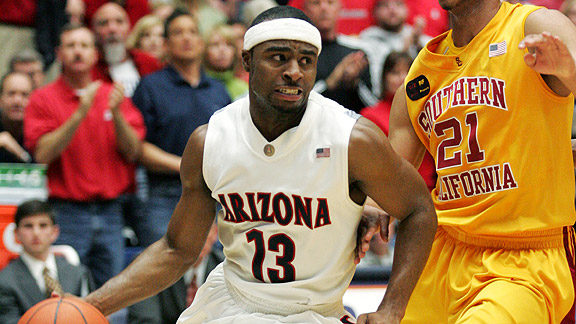
Lunardi says that four Pac-10 teams – Washington, UCLA, Cal and Arizona St. – are already in, while Arizona is holding on for dear life. In fact, he says that they are the very last team in. The Wildcats don’t have a great RPI (52), but their SOS (#32) works in their favor.

Arizona is in a tough spot as the #5 seed in the conference tourney because they play a good team (ASU) right off the bat. A win would probably secure a berth, but a loss would probably knock them out. (And you can bet that after living in Arizona’s considerable hoops shadow for years, that the Sun Devils would like nothing more than to be the ones to knock their arch-rival out of the postseason.)

On the flip side, it’s conceivable that a tournament win would push Washington up to the next line. The Huskies have a strong RPI (13) and have played a tough schedule (#14), so if they can beat UCLA or Cal in the Pac-10 final, they may be rewarded with a #2 seed.

Pac-10 Tournament bracket

BIG 12

Joe Lunardi currently projects six Big 12 teams – Oklahoma, Kansas, Missouri, Texas A&M, Texas and Oklahoma St. – to make the NCAA tournament. Those teams are seeded #9 or above, so all six would seem to be safely in. The team that can play its way into the tournament is Kansas State. The Wildcats have a 21-10 record, but their RPI (#76) and schedule (#111) are lacking. After a string of victories that included wins against Missouri, Texas and Texas A&M in late January/early February, the Wildcats have gone 4-3 over their last seven, including losses to Kansas, Missouri and Oklahoma St. What’s worse, there isn’t a good win amongst the four in that stretch. They are likely to play Texas on Thursday, and that’s absolutely a must-win game.

If things break the right way, both Kansas and Oklahoma could play themselves into a #1 seed. It would help if they faced each other in the tourney final, and if they beat good competition on the way there (Oklahoma St., Missouri for OU and Texas for the Jayhawks). With a Big 12 tourney win, I think the Sooners have a great shot at a #1 seed if the committee takes into account their 0-2 record without POY candidate Blake Griffin, who was out with a concussion.
Big 12 Championship bracket

SEC

According to Jeff Sagarin, the Southeastern Conference is a good bit weaker than any of the other five majors, and this makes sense when Lunardi only picks three SEC teams to make the tourney. (That’s one fewer than the Mountain West!) The fact of the matter is that the SEC is much more of a football conference than it is a basketball conference right now.

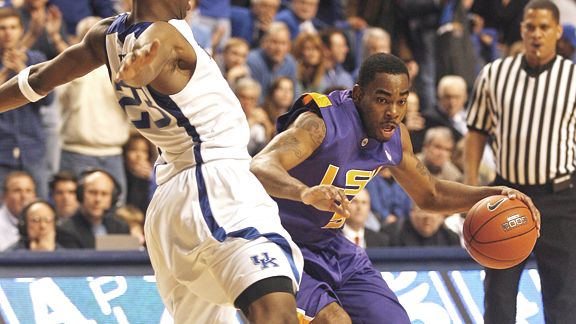
LSU and Tennessee are safely in, and Lunardi projects South Carolina to be a #12 seed so the Gamecocks (along with the Gators) are very much on the bubble. South Carolina needs to win its game on Friday (vs. the winner of the Georgia/Miss. St. game) and could seal a bid with a win (or at least a good showing) in a potential matchup with LSU on Saturday. Regardless of whom they play, the Gamecocks would probably get a berth with two wins in the SEC tourney. Likewise, Florida can play themselves into strong consideration with wins against Arkansas and a pretty good Auburn team. Clearly, a third win (over Tennessee?) would put the Gators back in the Big Dance.

Both LSU and Tennessee are currently projected to be #6 seeds, but a tourney championship for either team could bump the winner up a line or two, especially if the two teams square off in the final.

SEC Tournament bracket

The NBA’s 68 worst contracts

The economy is really starting to take its toll on professional sports, and the NBA is no different. Bad contracts are bad even when the economy is pumping, but they really stand out in tough times like these. So I decided to look through the payrolls team-by-team to try to identify the worst contracts in the NBA. I expected to list 15-20 names, but I ended up scribbling down 68. That’s right, there are no fewer than 68 bad contracts in the NBA.

I didn’t include any of the players that are in the final year of their contracts because…well, what’s the point? They’ll be off the books in a few months anyway. Instead, I wanted to focus on those contracts that are going to haunt teams for years to come, so to be eligible, players have to have at least a year left on their current deals.

It’s tough to compare someone making superstar money to an average, everyday role player, so I split these 68 contracts up into three groups: the Overpaid Role Players, the Not-So-Super Stars and the Injury-Prones. I will rank them from least-worst to most-worst with the thinking that I wouldn’t trade the player for anyone further down the list but I would trade him for anyone previously mentioned. So, for example, if a guy is listed #7 within a particular group, I’m not trading him for anyone ranked #6-#1, but I would think seriously about moving him for a guy that is ranked #8+.

So let’s start with the role players and go from there…

(Note: In most cases, I don’t blame the player himself for his outrageous contract. The fault lies with the general manager that inked the guy to the deal. However, this rule goes out the window if the player has a history of only producing in his contract year – I’m looking at you, Tim Thomas.)

THE OVERPAID ROLE PLAYERS

Guys That I Wouldn’t Mind Having On My Team

36. Shane Battier (two years, $14.3 million)
6.7 ppg, 4.9 rpg
I know he’s supposed to be the “no-stat MVP,” but $7 million per season seems like a lot to pay for a defensive specialist who only gets 0.7 steals per game. Plus, when he shaves his head, you can almost see his brain.

35. Jason Maxiell (four years, $20 million)
5.4 ppg, 3.9 rpg
Maxiell’s Player Efficiency Rating (15.79) is above average. But why pay the guy if you aren’t going to play him?

34. Andres Nocioni (three years, $21.0 million)
10.5 ppg, 4.2 rpg, 41% FG%
Nocioni can ball, but $7 mil a season is a steep price to pay for 11 and 4. We’ll see if he blossoms now that he’s outside of Luol Deng’s shadow.

33. Nick Collison (two years, $13.2 million)
7.9 ppg, 6.8 rpg
You’d think this guy would have a killer 18-footer by now.

32. Ronny Turiaf (three years, $12.5 million)
5.5 ppg, 4.0 rpg
He plays hard, but any number of guys in the D-league and overseas that can do what he does at a fraction of the price.

I Only Want Him On My Team In A Contract Year

31. Tim Thomas (one year, $6.5 million)
9.3 ppg, 3.3 rpg
“Tiny” Tim is the poster boy for guys that only produce when they’re playing for a new contract. Ernie Grunfeld, GM of my beloved Bucks, signed him back in ’00 to a six-year deal worth $68 million and then, six underachieving years later, the Clippers were so enamored with his performance against them in the playoffs that inked him to a four-year deal worth $24 million. This clown has a career average of 11.7 points and 4.2 rebounds and he has made more than $84 million thus far. Sorry, I have to go throw up…

…okay, I’m back.

The Expiring Contracts

30. Darko Milicic (one year, $7.5 million)
6.3 ppg, 4.8 rpg
29. Mike James (one year, $6.5 million)
8.6 ppg, 3.2 apg
28. Antonio Daniels (one year, $6.6 million)
4.4 ppg, 2.8 apg
27. Earl Watson (one year, $6.6 million)
6.0 ppg, 5.7 apg, 37% FG%
26. Tony Battie (one year, $6.3 million)
4.4 ppg, 3.6 rpg
25. Brian Cardinal (one year, $6.8 million)
2.0 ppg, 1.8 rpg
24. Etan Thomas (one year, $7.4 million)
3.1 ppg, 2.6 rpg
23. Mark Blount (one year, $8.0 million)
3.9 ppg, 1.8 rpg
22. Jerome James (one year, $6.6 million)
3.0 ppg, 1.5 rpg
21. Kenny Thomas (one year, $8.8 million)
0.8 ppg, 1.9 rpg
20. Bobby Simmons (one year, $11.2 million)
8.0 ppg, 4.4 rpg
Expect to hear “__________’s expiring contract” a lot next February. Seriously, these guys will be involved in all sorts of trade scenarios, but in this economy, most teams will just hold onto them and let their salaries come off the cap. What’s sad is that most of these guys are useless, yet they’ll make more in one season than most of us will in our lifetimes.

Great, now I’m depressed.

All They Can Do Is Shoot, But That’s Something

19. Jason Kapono (two years, $12.9 million)
8.4 ppg, 2.1 rpg
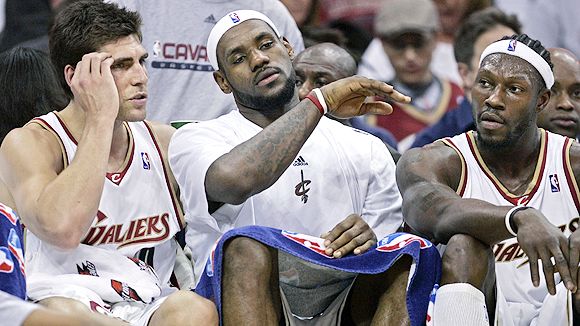
18. Sasha Vujacic (two years, $10.5 million)
5.7 ppg, 1.6 apg
17. Daniel Gibson (three years, $12.5 million)
8.1 ppg, 38% FG%
16. Vladimir Radmanovic (two years, $13.4 million)
10.5 ppg, 4.0 rpg, 1.6 apg
15. Morris Peterson (two years, $12.2 million)
5.4 ppg, 2.1 rpg
After signing a three-year deal, setting himself up for life, Vujacic’s shooting numbers have dropped eight percent from the field and almost nine percent from three-point range. (Like he needed to be more annoying.) And I don’t think the Cavs had 38% shooting in mind when they inked Boobie to a long-term deal; the play of Delonte West has made Gibson expendable. As for Radmanovic, he is arguably the worst defender in the league. Really. Just watch him on that end of the court sometime. He’s totally lost. His awareness in NBA 2K9 should be zero.

One Good Year Does Not a Starting Point Guard Make

14. Marcus Banks (two years, $9.4 million)
2.7 ppg, 1.3 apg
13. Beno Udrih (four years, $26.7 million)
10.9 ppg, 4.3 apg
12. Marko Jaric (two years, $14. 7 million)
1.8 ppg, 0.9 rpg, 27% FG%
Sure, Udrih is overpaid and the Kings were dumb to sign him long-term. But the guy can run an offense and that’s still something. But I wonder — does Marko’s new bride (Victoria’s Secret model Adriana Lima, pictured below) know that he’s not getting any minutes for one of the worst teams in the league? Does she care? Does he care?

After looking at that picture, do I care?

The Not-So-Special Specialists

11. Reggie Evans (two years, $10 million)
2.7 ppg, 4.7 rpg
10. Jared Jeffries (two years, $13.4 million)
4.6 ppg, 4.0 rpg
Here we have the Rebounder and the Defender. Too bad that’s all either guy can do. Jeffries is a poor man’s Battier. (I don’t really know what that even means.)

The Big Stiffs

9. Darius Songaila (two years $9.3 million)
6.7 ppg, 2.6 rpg
8. Joel Pryzbilla (two years, $14.3 million)
5.2 ppg, 8.1 rpg
7. Erick Dampier (one year, $12.1 million)
5.3 ppg, 7.0 rpg, 1.3 bpg
6. Nazr Mohammed (two years, $13.4 million)
2.5 ppg, 2.0 rpg
5. Dan Gadzuric (two years, $14.0 million)
3.5 ppg, 3.5 rpg
Now that’s a list of overpaid backup centers. The Bucks drafted Andrew Bogut in June 2005 then sign Gadzuric to a long-term deal two months later. How does this make sense? Since when does being seven-foot and being able to get up and down the court in a reasonable amount of time entitle you to a multi-million dollar contract?

What In the World Were They Thinking?

4. Jamaal Tinsley (two years, $14.9 million)
No stats in 2008-09
The Pacers have been trying to get rid of Tinsley for a while now but they can’t find any takers. I wonder why…

3. Matt Carroll (four years, $16.4 million)
3.3 ppg, 1.3 rpg, 39% FG%
The Mavs had to take on Carroll’s brutal contract to get rid of the #1 guy on this list, so this is actually an improvement for Mark Cuban. Carroll is proof positive that if you can average double-digit points in your contract year for one of the worst teams in the league, you can parlay that into a deal worth $20 million. Right place, right time…

2. Luke Walton (four years, $21.6 million)
4.9 ppg, 2.5 apg, 2.5 rpg
I’m of the school that Luke wouldn’t have signed this big of a contract if his last name wasn’t “Walton.” Hell, if not for that family name, I’d argue that he wouldn’t even be in the NBA. He’s a 6’8” white dude who can’t shoot but I’m told that “he knows how to play the game.” Seriously, there are a half a dozen guys like that in my rec league (and they can shoot it better than he does).

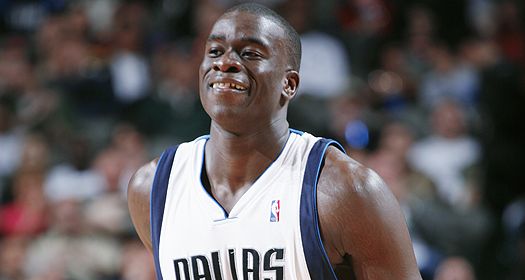
1. DeSagana Diop (four years, $26.8 million)
3.3 ppg, 3.8 rpg, 0.8 bpg
How does a guy that has never averaged more than 3.3 points or 5.4 rebounds a game get a five-year deal worth $31 million? He’s a great shot-blocker, you say? His career high in blocks is 1.8 – that’s worth $6 million per season? Really? I thought America was a meritocracy…

THE (NOT-SO-SUPER)STARS

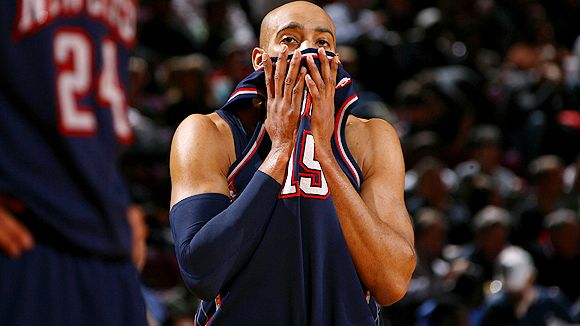
18. Vince Carter (two years, $33.6 million)
20.5 ppg, 5.0 rpg, 4.8 apg
Is he playing well? Absolutely. Is he worth every penny? Not so much. The Nets couldn’t give him away at the trade deadline.

17. Richard Jefferson (two years, $29.4 million)
18.3 ppg, 4.7 rpg, 2.4 apg, 43% FG%
He’s helped the Bucks stay competitive, but the franchise is in dire financial shape. He’s worth $10-$11 mil per season, not $15 million.

16. Rashard Lewis (three years, $58.7 million)
18.4 ppg, 5.9 rpg
Yes, he’s overpaid, but at least he can shoot – and he’s perfect for what Orlando wants to do.

15. Mike Dunleavy (two years, $20.4 million)
15.1 ppg, 3.8 rpg, 2.4 apg
Mike, Jr. finally lived up to his bloated contract last season and then he got hurt. Perfect. Man, it’s been a rough year for the Dunleavys.

14. Antawn Jamison (three years, $40.1 million)
21.6 ppg, 9.2 rpg, 2.0 apg
It’s hard to know how bad this contract will look in a year or two. He’s still producing, albeit for a bad team.

13. Andrei Kirilenko (two years, $34.3 million)
12.4 ppg, 5.3 rpg, 3.0 apg
This contract has looked awful for a long time now. He inked his deal before the arrival of Carlos Boozer and Deron Williams and the Jazz have been counting the minutes since.

12. Troy Murphy (two years, $23.0 million)
13.9 ppg, 11.8 rpg
Call me crazy, but at essentially the same price, I’d rather have Murphy for two years than the next guy for five.

11. Emeka Okafor (five years, $62.5 million)
14.1 ppg, 10.6 rpg, 1.7 bpg
Welcome to cap hell, Charlotte.

10. Andre Iguodala (five years, $68.6 million)
18.0 ppg, 5.4 apg, 6.0 rpg
Don’t get me wrong – Iggy is a solid player. Just not $13.7 mil-per-season solid.

9. Luol Deng (five years, $61.7 million)
14.1 ppg, 6.0 rpg, 1.9 apg
A 14/6 guy is worth $12 mil a year? Really? Someone call Drew Gooden and tell him he’s in for a payday this summer. (Relax, Bulls fans, at least Deng is just 23.)

8. Kirk Hinrich (three years, $26.5 million)
9.4 ppg, 4.2 apg, 43% FG%
What happened to him? His career was on the slide even before Derrick Rose came to town. This is a guy that is in desperate need of a change of scenery.

7. Larry Hughes (one year, $13.7 million)
11.9 ppg, 1.9 apg, 2.9 rpg
6. Ben Wallace (one year, $14.0 million)
3.0 ppg, 6.6 rpg, 1.4 bpg
Hey, at least these ridonkuous contracts only last one more year. I am sick and tired of talking about how they’re overpaid.

5. Stephen Jackson (four years, $35.6 million)
21.1 ppg, 6.4 apg, 41% FG%
4. Corey Maggette (four years, $39.7 million)
19.8 ppg, 5.6 rpg
While Jackson’s numbers are decent, he’s a volume shooter and he’s already 30 – imagine how bad this contract is going to look in a couple of years. The same goes for Maggette. Don’t forget that playing in Golden State inflates those numbers. Geesh!

3. Baron Davis (four years, $53.8 million)
15.3 ppg, 7.9 apg, 3.5 rpg, 36% FG%
I wonder if the Clips want a do-over. Davis is a good player, but not $13.5 million-per-year good. What’s sad is that I really like watching Davis play. He should be playing for a contender. Elton Brand really did a number on this guy.

2. Zach Randolph (two years, $33.3 million)
21.8 ppg, 10.5 rpg
Don’t be fooled by those numbers. Randolph is a $9 million-per-year player in a $16 million-per-year contract. He makes a killing scoring and rebounding for terrible teams.

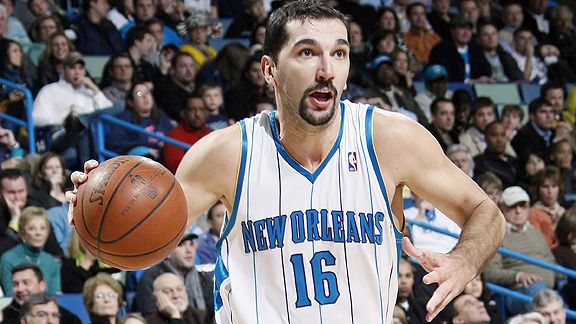
1. Peja Stojakovic (two years, $27.7 million)
13.8 ppg, 4.4 rpg
Sure, he’s averaging almost 14 points per game, but he’s shooting just 40% from the field. This trade actually forced the Hornets to try to give their third-best player, Tyson Chandler, away. Since they acquired Peja, New Orleans has had absolutely no cap flexibility. This is the move that may ultimately keep the Hornets out of the Finals, at least for the next couple of seasons. They rolled the dice that Peja could still shoot and it came up snake eyes.

THE INJURY-PRONES

14. Shaquille O’Neal (one year, $21 million)
18.2 ppg, 8.8 rpg, 1.5 bpg
Yes, he’s having a good year, but he’s not worth $21 million. While the next guy is the better center, at least Shaq has proven he can take a team to the Promised Land. The Cavs may ultimately regret not adding him at the expense of Wally Szczerbiak and Sasha Pavlovic at the trade deadline.

13. Yao Ming (two years, $34.1 million)
19.8 ppg, 9.6 rpg
Don’t get me wrong – Yao has a great game. I love it. But I don’t think you can build around a guy who has missed more than a third of his games in the last three seasons. And his foot problems are only going to get worse, right?

12. Nene Hilario (three years, $33.5 million)
14.8 ppg, 7.9 rpg
He’s productive when he plays, but this guy is an injury waiting to happen. Prior to this season, he missed 40% of Denver’s games over his first six years.

11. Andrew Bogut (five years, $60.0 million)
11.7 ppg, 10.3 rpg, 1.0 bpg
I like Bogut’s hard-nosed style, but it seems to be taking its toll on his body. He has missed more than a quarter of his games over the past three seasons. Now he has back pain — that’s easy to fix, right?

10. Jason Richardson (two years, $27.8 million)
17.0 ppg, 4.3 rpg, 2.2 apg
J-Rich is a solid player. Just not $13.9 mil-per-season solid.

9. Michael Redd (two years, $35.3 million)
21.2 ppg, 3.2 rpg, 2.7 apg
Over the last three years, Redd has missed 36% of the Bucks’ games. I think it’s safe to say he’s injury-prone. I do love this former second round pick, but he’s not living up to his contract. I want to see an efficent, 18+ point season with the Bucks getting out of the first round of the playoffs. Then I’ll be happy.

8. Jermaine O’Neal (one year, $23.0 million)
13.5 ppg, 6.9 rpg
In the previous four seasons, O’Neal has missed 37% of his team’s games. Wowsers. The guy still has skills, if he can only stay upright.

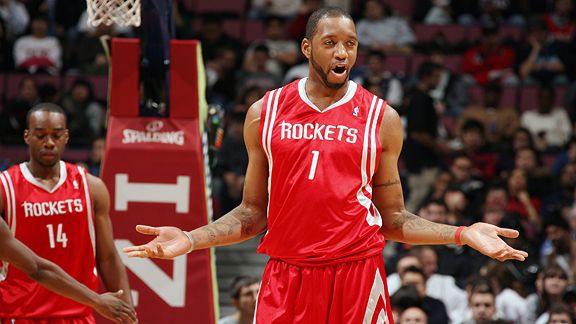
7. Tracy McGrady (one year, $22.5 million)
15.6 ppg, 5.0 apg, 4.4 rpg, 39% FG%
One more year and the Rockets will be able to free themselves from this albatross of a contract. Remember when people used to argue about who was the better shooting guard – Kobe or T-Mac? That seems like such a loooooong time ago.

6. Kenyon Martin (two years, $32.2 million)
12.2 ppg, 6.2 rpg
Hey, at least K-Mart is healthy and contributing! (Nugget fans know what I’m talking about.) Martin has one of those contracts that was untradeable the moment he signed it. Then he played a total of 58 games in the ’05-’06 and ’06-’07 seasons. Believe me, Denver fans are happy for the 12 and 6.

5. Samuel Dalembert (two years, $25.1 million)
6.3 ppg, 8.7 rpg, 1.8 bpg
As time goes on, this contract looks more and more ridiculous.

4. Elton Brand (four years, $66.2 million)
13.8 ppg, 8.8 rpg
Methinks the basketball gods are giving Elton a little payback for leaving Baron Davis high and dry. Karma is a bitch.

3. Eddy Curry (two years, $21.8 million)
2.0 ppg, 2.0 rpg
A 6’11” center who can’t rebound or stay healthy? Great. His game has such a bad rep that he’s been unmovable for years.

2. Monta Ellis (five years, $55 million)
13.4 ppg, 3.8 rpg, 2.8 apg
Yet another bright career gets derailed by a wild moped ride in Mississippi. How many times does this happen before we all stand up and say “NO” to Mississippi moped rides?

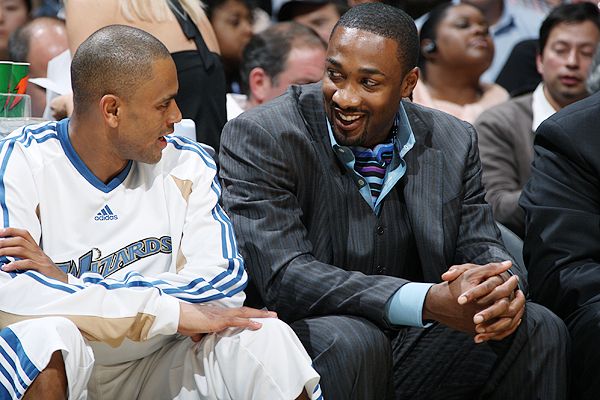
1. Gilbert Arenas (five years, $96.4 million)
No stats in 2008-09
To think, the Wizards actually seemed happy to be getting Agent Zero at a “hometown discount.” But who exactly were they bidding against? If he doesn’t return to his All-NBA form, the franchise will be hamstrung for years to come. This is yet another Ernie Grunfeld gem.

Pistons’ struggles can be traced back to 2003

With the second pick in the 2003 NBA Draft, the Detroit Pistons select…

Darko Milicic.

This is the blackest mark on GM Joe Dumars’ otherwise solid record guiding the Pistons, but six years later, the Milicic pick is having a domino effect on the franchise. While Dumars did successfully dupe the Magic into trading a first round pick for Milicic in 2006 (which resulted in the selection of Rodney Stuckey in the 2007 draft) the Milicic pick still haunts this franchise. Just take a look at the next few selections in that 2003 draft…

3. Nuggets: Carmelo Anthony
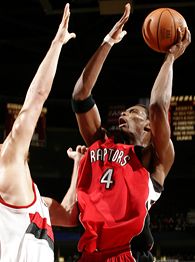
4. Raptors: Chris Bosh
5. Heat: Dwyane Wade
6. Clippers: Chris Kaman
7. Bulls: Kirk Hinrich
8. Bucks: T.J. Ford

Granted, guys like Kaman, Hinrich and Ford are solid starter types, but ‘Melo, Bosh and Wade are superstars. The Pistons would have been better off with anyone on this list, but had they drafted one of the next three guys, they’d have a player to build around right now.

I understand why Dumars passed on Anthony. He had just drafted Tayshaun Prince and the team was happy with his progress. The word in 2003 was that Detroit was worried about Carmelo coming in and screwing with the Pistons’ vaunted chemistry. Fine.

I understand why Dumars passed on Wade. The Pistons already had a very solid shooting guard in Richard Hamilton who averaged almost 20 points per game the previous season. In 2003, Rip was just 25 and entering his prime. Plus, Wade surprised a lot of people with how good of a pro he became. His jumper wasn’t up to snuff and he hadn’t yet revealed just how good he was at taking the ball to hole. Fine.

But I have no Earthly clue why Joe Dumars passed on Chris Bosh. At the time, he was a one-and-done, 6’10”, 19 year-old who played at Georgia Tech. He averaged 15.6 points, 9.0 rebounds and 2.2 blocks in the best collegiate conference in the country, earning All-ACC 2nd Team honors. Moreover, he led the conference with 56% field goal shooting, becoming only the second freshman (Antawn Jamison) ever to do so.
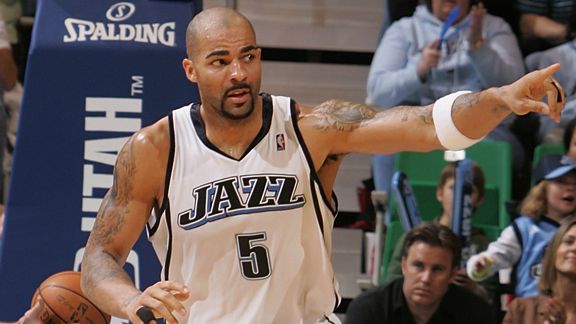
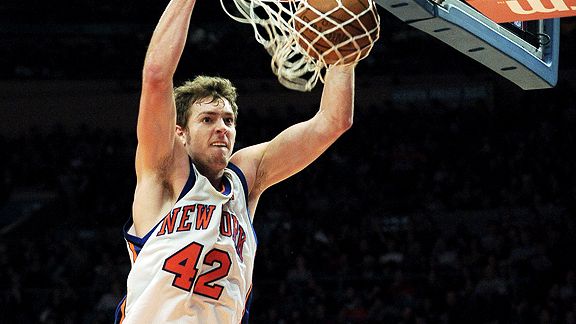
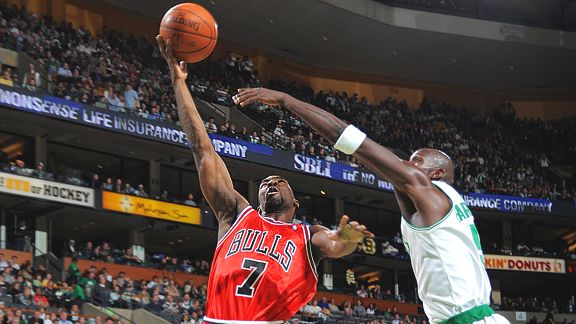
That’s not the longest resume, but it’s damn impressive. It’s certainly better than anything Milicic brought to the table. Dumars fell in love with Milicic’s international mystique and it cost him. Big time.

In 2003, Rasheed Wallace and Ben Wallace were the Pistons’ post players. Both guys were getting older and the franchise needed a big man. Bosh would have been a perfect fit. Had the Pistons gone that route, they would have been serious contenders heading into this season and wouldn’t have had to trade their best player — Chauncey Billups — away to clear cap space for a free agent run this summer or next.

Everyone knows that the Milicic pick was a huge mistake, but Dumars gets a pass because he built a great team that went on to win the 2004 NBA championship. He also managed to turn Milicic into Stuckey, who looks like a solid player.

But he’s no Chris Bosh. How many championships would the Pistons have won with Bosh in tow? They lost in seven games to the Spurs in 2005, and the 2006 Finals featured two flawed teams in the Heat and the Mavs. They probably would have represented the East in the 2007 Finals as well. (The Cavs were swept by the Spurs that year.)

Detroit could have won one, two, or maybe even three (or more) titles. They might have been a dynasty.

The Pistons are currently 25-27 and have lost eight straight games. Dumars has cap space to use this summer or next, so he could conceivably land a big man like Carlos Boozer, Amare Stoudemire or…(gulp)…Chris Bosh.

Keep your fingers crossed, Pistons fans.

A look ahead at the free agent class of 2009

With the trade deadline in the rear view mirror and players tied to their current teams at least until the summer, it’s a good time to take a look ahead at the free agent class of 2009. Given the state of the economy and how so many teams are saving up for the class of 2010, some are suggesting that this summer’s free agency could be a “nuclear winter” of sorts, no pun intended. The salary cap and luxury tax thresholds are likely to decline for the first time in years and that has GMs and owners around the league scrambling to cut salary where they can.

There are three types of free agents: players with early termination options (ETO) or player options (PO), restricted free agents and unrestricted free agents.

Players with ETOs or POs

This group includes Kobe Bryant, Jermaine O’Neal, Al Harrington, Jamal Crawford and Mehmet Okur, but it’s highly unlikely that any of these guys will hit the open market given the kind of money they’ll be making by extending their respective contracts. Of this group, Hedo Turkoglu, Anderson Varejao and maybe Carlos Boozer are the only big names that are likely to hit free agency. Boozer has already stated that he’s going to opt out, but he may decide against it if he doesn’t come back strong from his injuries. Turkoglu — the reigning Most Improved Player — is having another nice season, but he’s not playing quite as well as last year. Still, he can command more than the $7.3 million he’s due to make next season. Varejao could stay with the Cavs and make $6.2 million next season, but he and his agent (Dan Fegan) have been looking for more. Varejao wants a long term deal but it seems he and the Cavs disagree on how much he’s actually worth.

For the most part, guys in this group are going to be conservative and play out their contracts.

Restricted Free Agents

RFAs hardly ever change uniforms, but in this economic climate there are teams that are unlikely to match substantial offers for their restricted free agents. The other issue is that once a team signs a RFA to an offer sheet, the player’s team has a full week to match the offer. Most teams know instantly whether or not they’re going to match, but they take the full week so that the other team can’t make any other offers because its money is tied up in the offer sheet. The NBA should reduce this period to three or four days so that teams are more willing to make offers to RFAs. Or better yet, it should eliminate restricted free agency completely to avoid Josh Childress-type cases in the future.

(Stepping down from my soapbox…)

Anyway, the list of restricted free agents includes Childress, David Lee, Paul Millsap, Nate Robinson, Charlie Villanueva, Ramon Sessions (ESPN says he’s restricted though HoopsHype and ShamSports show Sessions as an UFA), Marvin Williams, Raymond Felton, Leon Powe and Linas Kleiza.

The Knicks can’t afford to keep both Lee and Robinson and sign LeBron or some other max-type free agent next summer, so if someone comes along and offers either player a substantial contract, it is unlikely that the Knicks will be able to match. Millsap played great in Boozer’s absence, and they are very similar players so it is unlikely that Utah can afford to keep both. Millsap looks like a potential All-Star and would be a cheaper option, but only time will tell if the Jazz have the balls to let Boozer walk.

Childress will probably return to the U.S. after a year playing in Greece. I suspect he’ll be a mid-level type guy, which increases the number of potential suitors as teams that are over the cap can still sign a player at the mid-level. The Bucks are in financial trouble and they need to get rid of Michael Redd or Richard Jefferson if they hope to keep both Sessions and Villanueva. Both players are having career years under Scott Skiles, but it’s unclear if the Bucks will be able to keep them. I’d expect Sessions to be a mid-level guy (and should be a solid starter for that price), while Charlie V might command a bit more. There are still questions about his heart, but if he’s thriving under Skiles, could he really be lacking toughness and drive? The Bucks have been hit by injuries to Redd and Andrew Bogut but are still holding onto the #8 playoff spot in the East, so they’d be wise to keep this core together if they can.

The Bobcats’ decision to draft D.J. Augustin made Raymond Felton expendable, so he could probably be had for the right price. I’m guessing that he’s a mid-level guy as well, though he and his agent will probably want more. Leon Powe and Linas Kleiza are both productive bench players and if the offer sheet is big enough, the Celtics and Nuggets (respectively) may decide not to match.

Unrestricted Free Agents

This group includes Ben Gordon, Lamar Odom, Shawn Marion, Allen Iverson, Ron Artest, Mike Bibby, Andre Miller, Jason Kidd, Rasheed Wallace, Trevor Ariza and Brandon Bass. Most of these players are older and on the decline, but they can still play. Veteran players in this group might be shocked by the kind of pay cut that they’re going to have to take in today’s climate. The days of 30+ year-old stars (not superstars) signing max or near-max deals are over, at least for a while. I bet all of these guys sign for less than $10 million per season. (I know…that’s peanuts, right?)

Gordon, Ariza and Bass are younger and could still be on the rise if they find the right team. Gordon seems to think he’s a starter and should be paid as such, but he’s small and doesn’t have a reputation for being a very good defender. He can really score though. If some team wants to pay him starter’s money, he’d be a good match to play alongside a bigger point guard who could cover the opponent’s off guard (Utah, Denver, Detroit?) or he needs to go to a team that doesn’t emphasize the defensive end.

Ariza continues to play well for the Lakers, but since he’s a much cheaper option than Odom, he’s probably going to be staying put. Bass had a terrific season two years ago, and is really coming on after a slow start this season. He’s just 23 and has some upside. I’d expect some team will sign him to a deal averaging in the $3-$4 million range, which would make him one of the best bargains of the summer.

So where will these players end up? Your guess is as good as mine. There are only a handful of teams — Atlanta, Detroit, Memphis (of course), Minnesota, Oklahoma City, Portland, Sacramento and Toronto — with the cap space (~$7 million or more) to sign a good player for another team, so I think there may be quite a few starter-level players/borderline stars signing mid-level deals this season. Playoff contenders that are over the cap won’t be able to pass up a good player for $5 million per season and there should be a number of guys that fit the bill this summer.

Much Ado About Nothing: The 5 Biggest Trade Deadline Teases

You can blame it on the Grizzlies.

Ever since they traded Pau Gasol to the Lakers for a bag of peanuts and some slightly used underwear, NBA teams have become more and more fickle about pulling the proverbial trigger. With the state of the economy, and some owners desperately trying to cut payroll before the cap and luxury tax thresholds decline, it’s a buyer’s market out there. And those buyers are looking for Gasol-type deals. On the flip side, Chris Wallace took all kinds of grief over that trade and general managers around the league don’t want to follow in his footsteps.

After two or three weeks of covering all of this trade chatter, the biggest deal to speak of is the Shawn Marion/Jermaine O’Neal swap and that happened almost a week ago. Sure, guys like Brad Miller, Andres Nocioni, John Salmons, Rafer Alston, Larry Hughes, Tim Thomas, Chris Wilcox and Drew Gooden changed zip codes, but I doubt any fans out there are sporting wood at the idea that one or more of these players is joining their team.

This year’s trade deadline was mostly about teams setting themselves up financially for the next two summers of free agency. Even though there were a number of big names bandied about, the Marion/O’Neal deal is the only semi-blockbuster trade of the season. And, barring some last-minute, late-breaking deal, we have these five teams to blame…

5. San Antonio Spurs
The Spurs were in talks with the Nets about acquiring Vince Carter and also spoke with the Bucks about Richard Jefferson. Either of those players would have been a nice addition, but the Spurs just don’t have the pieces (or the balls) to pull off a trade like that. They were willing to trade for Carter, but they didn’t want to give up Roger Mason or George Hill. So they offer the Nets Bruce Bowen and Fabricio Oberto. Great, the numbers don’t even add up. Don’t get me wrong – I don’t really think that the Spurs should have given up Mason and/or Hill to acquire Carter. They’re arguably the second-best team in the West and their current lineup, if healthy, is likely to give the Lakers fits if the two teams meet in the playoffs with a less-than-100% Andrew Bynum. Plus the Spurs are notoriously conservative when it comes to messing with their chemistry. Jefferson wouldn’t have been a problem in that area but Carter might have been. So the Spurs stand pat. Shocker.

4. Cleveland Cavaliers
In the weeks leading up to the trade deadline, all was quiet on the Cleveland front, but in the last few days, the rumor mill started to churn as Cleveland started to discover what kind of player Wally Szczerbiak’s expiring contract could get them. (On a side note, Wally and Raef LaFrentz are two players that join Theo Ratliff on the list of players who ultimately are more famous for their expiring contracts than they are for anything they’ve done on the court. It’s sad, but it’s true.) The Cavs reportedly spoke with the Bucks about Jefferson, with the Wizards about Antawn Jamison, with the Nets about Vince Carter and with the Suns about Amare Stoudemire and Shaquille O’Neal. They wanted an upgrade at power forward, so the Jefferson deal didn’t make perfect sense, though he and LeBron would be compatible on the wing because they’re both versatile players who can defend. The same goes for Carter, but ultimately the Cavs decided to let Szczerbiak’s deal expire, which will give them more cap flexibility in two seasons when LeBron (likely) hits free agency. They run the risk of passing on a deal that would have ultimately resulted in an NBA championship, which would have made it very difficult for LeBron to leave Cleveland, but that’s impossible to prove.

3. New Jersey Nets
Reportedly, the Nets were literally trying to give Vince Carter away, but had no takers. They spoke with Cleveland, Portland, Houston and San Antonio (and probably others), but were unable to come to terms. He has two years and over $33 million remaining on his contract, so his is a deal that is apparently unmovable in the current environment. No one wants to take on that salary, especially since Carter is already 32-years-old and his salary runs through the 2010-11 season. My guess is that the Spurs would have added him had they been able to convince the Nets that a package built around Bruce Bowen and Fabricio Oberto was enough. If it’s true that the Nets were desperate to move him, a Szczerbiak-Carter or a LaFrentz-Carter swap probably would have done the trick, but the Cavs and Blazers apparently felt that Carter wasn’t worth the cap ramifications of his contract and ultimately balked.

2. Phoenix Suns
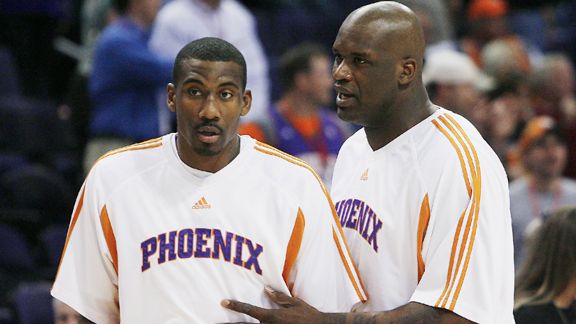
Surprised? I thought about putting the Suns in the top spot, but once they jettisoned Terry Porter in favor of Alvin Gentry, it became clear that they felt that Porter was the problem, not Amare Stoudemire. Word leaked that the Suns suddenly became less willing to talk about deals involving Amare, and it probably didn’t hurt that he scored 65 points in the two games since Gentry took over. More importantly, the Suns look to be back to pushing the ball, as they scored 282 points in those two wins. (It should be noted that both games were against the Clippers, so it’s tough to get an accurate gauge of the effect that Gentry is having.) It was rumored that they were talking about trading Shaq to the Cavs for Ben Wallace and Sasha Pavlovic, but had they pulled the trigger on that deal, they would have been throwing away whatever chance they have at a playoff run this year in order to save about $5 million by acquiring Pavlovic’s expiring contract. These new-look Suns could be a factor in the playoffs.

1. Portland Trail Blazers
Ah, the Blazers. They have all sorts of talented pieces and Raef LaFrentz’s expiring contract, so they were heavily involved in the rumor mill over the last two weeks. Portland has a reputation for discussing a plethora of different trade scenarios but being very reluctant to pull the trigger, which leads many to believe that most of their trade calls are really just the team’s way of gathering intelligence. They were willing to trade LaFrentz and Jerryd Bayless for Stoudemire, but the Suns decided (wisely) that it wasn’t enough. They spoke with the Nets about Carter, but wanted New Jersey to throw in a first round pick as well. The same goes for the Bucks, who wanted to send Jefferson to Portland in exchange for some salary cap relief. They also tried to pry Caron Butler away from Washington and Gerald Wallace away from the Bobcats. It’s not enough that the Blazers were going to get a talented player for an expiring contract, but they wanted draft picks or a nice young prospect like Ramon Sessions as well. They were one of the few buyers in a buyer’s market and ultimately they didn’t buy a thing.

« Older posts Newer posts »