Tag: Fantasy Football (Page 36 of 38)

2009 Fantasy Football Preview: QBs

All 2009 Fantasy Articles | 2009 Position Rankings

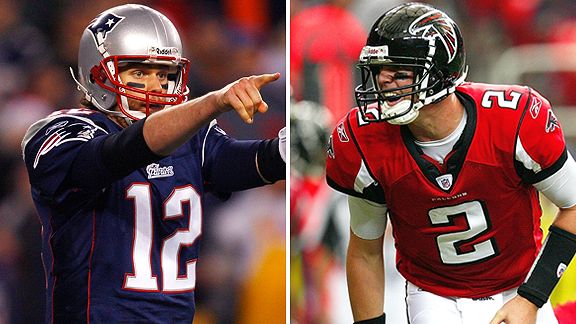
Generally speaking, there are three schools of thought when drafting a quarterback. The first is to draft a stud in the first round or two and hope that he’s destined for a great year like the one Tom Brady had in 2007. The risk here is if this early pick doesn’t vastly outplay most of his peers, or if the owner isn’t able to unearth a good RB or WR in the middle rounds, the team is going to have trouble competing on a weekly basis.

The next theory is to go with running backs and/or wide receivers with the first two or three picks and then start looking for QB value in the next few rounds. This strategy could lead to an owner getting a player ranked in the top 5 in the third or fourth round, or a guy ranked 6-10 in the fifth or sixth round, or even later.

The final approach is to intentionally ignore the quarterback position in all of the early rounds, instead building up depth at running back and wide receiver (and maybe even tight end). Then in the eighth or ninth round, start to look at drafting a QB or three in the next few rounds with the hope of putting together a cohesive Quarterback By Committee (QBBC). (I recently posted a more detailed article that focuses solely on the QBBC.)

All of these strategies can work, but they each represent a different level of risk. For owners that always draft a QB early, they need that player to stay healthy and perform at a level commensurate with their draft position. The same goes for the owner who waits for value to emerge in rounds 3-6, though his QB has better odds of matching or outplaying his draft position. The owner that holds off until the middle rounds and then picks two or three guys that he expects to start throughout the season ultimately has quite a bit more room for error. If one player has a down year, the other (or other two) could very well pick up the slack.

Which strategy you choose may ultimately depend on your draft position. If there are five or six running backs you really like in the first round, but you have pick #12, you may elect to go with Drew Brees, Tom Brady or Peyton Manning instead of taking a RB leftover. Or if you have pick #4 and don’t deem any of those three worthy of your first rounder, but they’re all gone by 2.09, you’ll probably end up taking another RB or going with a WR.

The key is to look for value. That might mean waiting until Aaron Rodgers slips to you in the early 5th, or going with David Garrard and Jason Campbell in the late rounds as part of a QBBC, or even pulling the trigger on Peyton Manning in the early third, especially if there isn’t a RB or WR there that you like.

Below is a list of several guys that seem to represent good value at their current average draft positions (ADP). We’ll also provide rankings for the entire QB position, broken into tiers. Keep in mind that your scoring system will have a great impact on the value of the QB position.

Continue reading »

2009 fantasy football is coming aoon—a look back at 2008 defenses

Last month we started looking at last season’s statistics for position players in fantasy football land, and today we’ll look at a position many often overlook. That’s fantasy defenses, which can sometimes put up just enough points to earn your team a victory once in a while. It’s always smart to try and grab one of the top units, although as we’ve seen before, things change, sometimes drastically, from year to year with fantasy D’s. Me? I like to grab my defense before my kicker. This list is based on point totals from one of my leagues, so keep in mind that stats vary from year to year.

1. Baltimore Ravens—The Ravens’ defense is perennially awesome, and we’ll find out for sure how much of that was due to former coordinator Rex Ryan, who is now the head honcho for the Jets. Ryan took plenty of players with him too, like LB Bart Scott and S Jim Leonhard, but the Ravens still have Ray Lewis, Ed Reed and Terrell Suggs. Reed just keeps getting better every year, and his sick nose for the ball is one reason the Ravens had a league high 26 picks. They will keep scoring low as always, but their 34 sacks last season isn’t much to get excited about. Bottom line: The Ravens won’t be a number one this year, but are still top 10.

Continue reading »

Which running backs drop the ball the most?

When it comes to fumbles, nobody drops the ball more than quarterbacks, because they handle the ball more than anyone besides the center. Brett Favre has 157 of them, which leads active players (yes, we’re considering Favre active). But many times when a QB fumbles, he can pounce right back on the ball. Running backs are a different story. The ones who fumble a lot often wind up in their coach’s doghouse because most of the time it’s because of careless ball handling. As for fantasy football, you’ll want to be careful with these guys too because they take points off your scoreboard, both by negative points for fumbles, and for lost opportunities on offense. So here is the active Top 10 in fumbles by running backs…..

1. Edgerrin James (43)—James isn’t as bad as early in his career, like when he fumbled 8 times during his rookie year of 1999 with the Colts. But you tend to look the other way when the other numbers offset the fumbles—and James was an All Pro that year with 2139 yards from scrimmage and 17 total touchdowns.

2. Ricky Williams (41)—Ricky definitely comes down with fumble-it is pretty often, and that has to drive Bill Parcells crazy. I wonder if it would help if Ricky thought he was carrying a bag of..…oh forget it.

3. Jamal Lewis (39)—Lewis has improved drastically in this area, fumbling only twice last season. But he fumbled 8 times in back to back seasons in 2002 and 2003 while with Baltimore. Yikes.

4. Ahman Green (37)—He hasn’t fumbled since 2006, but that’s only because Green has carried the ball just 144 times since then.

5. Michael Pittman (31)—Pittman was one of like 15 running backs used by the Broncos last season.

6. Shaun Alexander (31)—For a few years there, Alexander was putting up such ridiculous numbers that Mike Holmgren was forced to accept some drops.

7. Warrick Dunn (26)—He’s never had more than 4 fumbles in a season, but he’s been playing for so long that he wound up on here. Dunn may be one of the most underrated RBs in the history of the NFL.

8. Fred Taylor (26)—Taylor has fumbled less in recent years, but he’s also carried the ball less. It should be interesting to see if his career is re-ignited in a Patriots’ uniform.

9. LaDainian Tomlinson (25)—He fumbled 8 times in his rookie year, and only 17 times since. With 2657 total carries, that’s not bad at all.

9 (tie). Clinton Portis (25)—Portis is a solid RB, but he does have two quirks—he’s injury prone and he drops the ball a few too many times.

Source: Pro Football Reference

Correcting ESPN The Mag, Part 2

On page 75 of ESPN The Magazine’s fantasy football preview, Ken Daube argues that owners drafting late in the first round should take WRs with their first two picks. Generally, I agree with the theory, but a few of the assumptions that Daube made appear to be incorrect. Here’s what I wrote on his fan wall at ESPN

Hi Ken, I was reading “The Turn Is No Place For Running Backs,” and while I agree in principle with the strategy of going WR/WR with your first two picks at the first turn, I have a couple of questions.

1) In the second table, you show team #2 getting a 1-5 WR in the third round while team #4 gets a 6-10 WR. In round four, teams #1 and #3 get a 11-15 RB, while team #2 gets a 16-20 RB. Why the inconsistency?

2) Team #1 and #3 get an 11-15 RB at the start of the fourth round, but from ESPN’s live draft results, only guys in the 18+ range are available there.

3) Team #2 gets a 1-5 WR at the end of the third, and team #4 gets a 6-10 player, when only 12+ WRs are available there.

When I recalculate the totals to account for these problems, team #1 finishes with 1050 points, team #2 with 1011 points, team #3 with 1039 points and team #4 with 976 points. The theory still stands, but the execution is confusing.

I’m assuming that this is a 12-team league, which appears to be Daube’s assumption since he mentions pick #12 in the opening paragraph.

Does anyone else have this issue handy? If so, are you seeing the same things I’m seeing?

I’ll update this post if Daube responds.

Top 10 active NFL field goal percentage leaders

It’s almost fantasy football time, and many of you, like me, have already been doing your research. So let’s take a look at a category that you may not pay much attention to, and many experts will tell you not to anyway. That’s field goal percentage. I realize choosing a kicker is like throwing spaghetti against the wall to see what sticks, but good references are to pick those on good offensive teams, or those that can’t score TDs and create more field goal attempts. But it’s also good to pick an accurate kicker, whether that kicker plays in a dome or not. I mean, why take your chances on someone who kicks 25 field goals but misses another 25? So here is a list of the active Top 10 in field goal percentage. You can thank me later.

1. Nick Folk, Dallas Cowboys (86.79%)—For as good as Folk’s rookie season was in 2007, he had less attempts but was even more accurate in 2008, kicking 20 of 22 field goals (90.9%). Which reminds me, what the hell ever happened to Mike Vanderjagt?

2. Nate Kaeding, San Diego Chargers (86.13%)—Sure, he kicks mostly in warm weather, but Kaeding is about as automatic as they come.

3. Robbie Gould, Chicago Bears (85.94%)—If you’re hitting better than 17 out of 20 times when your home field is in the WINDY city, you’re damn good.

4. Shayne Graham, Cincinnati Bengals (85.64%)—One of the lone bright spots on a team that is perpetually going nowhere.

5. Stephen Gostkowski, New England Patriots (85.56%)—No Adam Vinatieri? No problem. This kid stepped in as a rookie in 2006 and has improved each year, hitting 36 of 40 field goal attempts last season (90%) and leading the NFL in total points (148).

6. Rob Bironas, Tennessee Titans (84.50%)—Bironas is extremely dependable, but nothing topped his 2007 All-Pro campaign, when dude kicked an NFL record 8 field goals against Houston.

7. Matt Stover, free agent (83.70%)—The amazing thing about Stover is that he’s been doing it for so long. He broke in with the Browns in 1991 and moved with the team to Baltimore in 1996, where he played until last season.

8. Phil Dawson, Cleveland Browns (82.81%)—One of the original “expansion” Browns, Dawson, like his counterpart Graham in southern Ohio, has been a bright spot on a bad team for years.

9. Jeff Reed, Pittsburgh Steelers (82.65%)—Every year they seem to talk about how hard it is to kick in Heinz Field, so the fact that Jeff Reed is even on this list says a lot about his ability. I’d love to know what the guy could do playing in Minnesota for a year.

10. John Carney, free agent (82.59%)—Carney stepped in for Lawrence Tynes last season and all he did was hit 35 of 38 field goal attempts, an amazing 92.1% clip. It’s even more amazing because Carney played half his games in windy Giants Stadium, and because he did it at the age of 44.

Source: Pro Football Reference

« Older posts Newer posts »