Author: John Paulsen (Page 561 of 937)

Pistons’ struggles can be traced back to 2003

With the second pick in the 2003 NBA Draft, the Detroit Pistons select…

Darko Milicic.

This is the blackest mark on GM Joe Dumars’ otherwise solid record guiding the Pistons, but six years later, the Milicic pick is having a domino effect on the franchise. While Dumars did successfully dupe the Magic into trading a first round pick for Milicic in 2006 (which resulted in the selection of Rodney Stuckey in the 2007 draft) the Milicic pick still haunts this franchise. Just take a look at the next few selections in that 2003 draft…

3. Nuggets: Carmelo Anthony
4. Raptors: Chris Bosh
5. Heat: Dwyane Wade
6. Clippers: Chris Kaman
7. Bulls: Kirk Hinrich
8. Bucks: T.J. Ford

Granted, guys like Kaman, Hinrich and Ford are solid starter types, but ‘Melo, Bosh and Wade are superstars. The Pistons would have been better off with anyone on this list, but had they drafted one of the next three guys, they’d have a player to build around right now.

I understand why Dumars passed on Anthony. He had just drafted Tayshaun Prince and the team was happy with his progress. The word in 2003 was that Detroit was worried about Carmelo coming in and screwing with the Pistons’ vaunted chemistry. Fine.

I understand why Dumars passed on Wade. The Pistons already had a very solid shooting guard in Richard Hamilton who averaged almost 20 points per game the previous season. In 2003, Rip was just 25 and entering his prime. Plus, Wade surprised a lot of people with how good of a pro he became. His jumper wasn’t up to snuff and he hadn’t yet revealed just how good he was at taking the ball to hole. Fine.
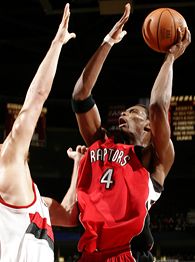
But I have no Earthly clue why Joe Dumars passed on Chris Bosh. At the time, he was a one-and-done, 6’10”, 19 year-old who played at Georgia Tech. He averaged 15.6 points, 9.0 rebounds and 2.2 blocks in the best collegiate conference in the country, earning All-ACC 2nd Team honors. Moreover, he led the conference with 56% field goal shooting, becoming only the second freshman (Antawn Jamison) ever to do so.

That’s not the longest resume, but it’s damn impressive. It’s certainly better than anything Milicic brought to the table. Dumars fell in love with Milicic’s international mystique and it cost him. Big time.

In 2003, Rasheed Wallace and Ben Wallace were the Pistons’ post players. Both guys were getting older and the franchise needed a big man. Bosh would have been a perfect fit. Had the Pistons gone that route, they would have been serious contenders heading into this season and wouldn’t have had to trade their best player — Chauncey Billups — away to clear cap space for a free agent run this summer or next.

Everyone knows that the Milicic pick was a huge mistake, but Dumars gets a pass because he built a great team that went on to win the 2004 NBA championship. He also managed to turn Milicic into Stuckey, who looks like a solid player.

But he’s no Chris Bosh. How many championships would the Pistons have won with Bosh in tow? They lost in seven games to the Spurs in 2005, and the 2006 Finals featured two flawed teams in the Heat and the Mavs. They probably would have represented the East in the 2007 Finals as well. (The Cavs were swept by the Spurs that year.)

Detroit could have won one, two, or maybe even three (or more) titles. They might have been a dynasty.

The Pistons are currently 25-27 and have lost eight straight games. Dumars has cap space to use this summer or next, so he could conceivably land a big man like Carlos Boozer, Amare Stoudemire or…(gulp)…Chris Bosh.

Keep your fingers crossed, Pistons fans.
Woods loses to Tim Clark in match play

Tiger was hoping for a better return than this.

Woods had no complaints with his game or his knee, but he had no answer Thursday for Tim Clark of South Africa, who played 16 holes without a bogey and knocked the world’s No. 1 player out of the Accenture Match Play Championship.

His swing looked as good as it did eight months ago when he won the U.S. Open. His knee felt so strong that when Woods discovered his tee shot into the desert on the 15th hole hit a cart path and went out of bounds — a shot that ended any hope of a rally — he chose to walk 350 yards back to the tee instead of accepting a ride in the cart.

“I knew I had to play out of my mind to beat him,” Clark said.

And he did, pouring in six birdies and constantly putting the pressure on Woods throughout a sunny day in the high desert. Clark won, 4 and 2, when he hit his tee shot to four feet that Woods conceded for birdie after failing to chip in from off the green.

A look ahead at the free agent class of 2009

With the trade deadline in the rear view mirror and players tied to their current teams at least until the summer, it’s a good time to take a look ahead at the free agent class of 2009. Given the state of the economy and how so many teams are saving up for the class of 2010, some are suggesting that this summer’s free agency could be a “nuclear winter” of sorts, no pun intended. The salary cap and luxury tax thresholds are likely to decline for the first time in years and that has GMs and owners around the league scrambling to cut salary where they can.

There are three types of free agents: players with early termination options (ETO) or player options (PO), restricted free agents and unrestricted free agents.

Players with ETOs or POs

This group includes Kobe Bryant, Jermaine O’Neal, Al Harrington, Jamal Crawford and Mehmet Okur, but it’s highly unlikely that any of these guys will hit the open market given the kind of money they’ll be making by extending their respective contracts. Of this group, Hedo Turkoglu, Anderson Varejao and maybe Carlos Boozer are the only big names that are likely to hit free agency. Boozer has already stated that he’s going to opt out, but he may decide against it if he doesn’t come back strong from his injuries. Turkoglu — the reigning Most Improved Player — is having another nice season, but he’s not playing quite as well as last year. Still, he can command more than the $7.3 million he’s due to make next season. Varejao could stay with the Cavs and make $6.2 million next season, but he and his agent (Dan Fegan) have been looking for more. Varejao wants a long term deal but it seems he and the Cavs disagree on how much he’s actually worth.

For the most part, guys in this group are going to be conservative and play out their contracts.

Restricted Free Agents

RFAs hardly ever change uniforms, but in this economic climate there are teams that are unlikely to match substantial offers for their restricted free agents. The other issue is that once a team signs a RFA to an offer sheet, the player’s team has a full week to match the offer. Most teams know instantly whether or not they’re going to match, but they take the full week so that the other team can’t make any other offers because its money is tied up in the offer sheet. The NBA should reduce this period to three or four days so that teams are more willing to make offers to RFAs. Or better yet, it should eliminate restricted free agency completely to avoid Josh Childress-type cases in the future.

(Stepping down from my soapbox…)

Anyway, the list of restricted free agents includes Childress, David Lee, Paul Millsap, Nate Robinson, Charlie Villanueva, Ramon Sessions (ESPN says he’s restricted though HoopsHype and ShamSports show Sessions as an UFA), Marvin Williams, Raymond Felton, Leon Powe and Linas Kleiza.

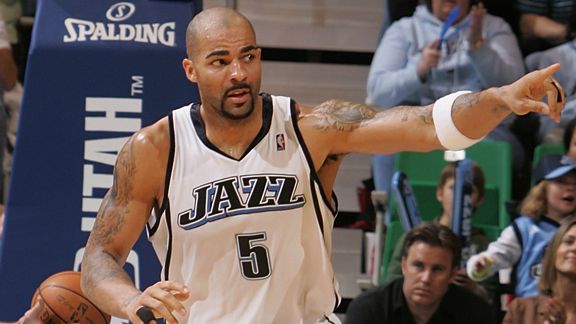
The Knicks can’t afford to keep both Lee and Robinson and sign LeBron or some other max-type free agent next summer, so if someone comes along and offers either player a substantial contract, it is unlikely that the Knicks will be able to match. Millsap played great in Boozer’s absence, and they are very similar players so it is unlikely that Utah can afford to keep both. Millsap looks like a potential All-Star and would be a cheaper option, but only time will tell if the Jazz have the balls to let Boozer walk.

Childress will probably return to the U.S. after a year playing in Greece. I suspect he’ll be a mid-level type guy, which increases the number of potential suitors as teams that are over the cap can still sign a player at the mid-level. The Bucks are in financial trouble and they need to get rid of Michael Redd or Richard Jefferson if they hope to keep both Sessions and Villanueva. Both players are having career years under Scott Skiles, but it’s unclear if the Bucks will be able to keep them. I’d expect Sessions to be a mid-level guy (and should be a solid starter for that price), while Charlie V might command a bit more. There are still questions about his heart, but if he’s thriving under Skiles, could he really be lacking toughness and drive? The Bucks have been hit by injuries to Redd and Andrew Bogut but are still holding onto the #8 playoff spot in the East, so they’d be wise to keep this core together if they can.

The Bobcats’ decision to draft D.J. Augustin made Raymond Felton expendable, so he could probably be had for the right price. I’m guessing that he’s a mid-level guy as well, though he and his agent will probably want more. Leon Powe and Linas Kleiza are both productive bench players and if the offer sheet is big enough, the Celtics and Nuggets (respectively) may decide not to match.

Unrestricted Free Agents

This group includes Ben Gordon, Lamar Odom, Shawn Marion, Allen Iverson, Ron Artest, Mike Bibby, Andre Miller, Jason Kidd, Rasheed Wallace, Trevor Ariza and Brandon Bass. Most of these players are older and on the decline, but they can still play. Veteran players in this group might be shocked by the kind of pay cut that they’re going to have to take in today’s climate. The days of 30+ year-old stars (not superstars) signing max or near-max deals are over, at least for a while. I bet all of these guys sign for less than $10 million per season. (I know…that’s peanuts, right?)

Gordon, Ariza and Bass are younger and could still be on the rise if they find the right team. Gordon seems to think he’s a starter and should be paid as such, but he’s small and doesn’t have a reputation for being a very good defender. He can really score though. If some team wants to pay him starter’s money, he’d be a good match to play alongside a bigger point guard who could cover the opponent’s off guard (Utah, Denver, Detroit?) or he needs to go to a team that doesn’t emphasize the defensive end.

Ariza continues to play well for the Lakers, but since he’s a much cheaper option than Odom, he’s probably going to be staying put. Bass had a terrific season two years ago, and is really coming on after a slow start this season. He’s just 23 and has some upside. I’d expect some team will sign him to a deal averaging in the $3-$4 million range, which would make him one of the best bargains of the summer.

So where will these players end up? Your guess is as good as mine. There are only a handful of teams — Atlanta, Detroit, Memphis (of course), Minnesota, Oklahoma City, Portland, Sacramento and Toronto — with the cap space (~$7 million or more) to sign a good player for another team, so I think there may be quite a few starter-level players/borderline stars signing mid-level deals this season. Playoff contenders that are over the cap won’t be able to pass up a good player for $5 million per season and there should be a number of guys that fit the bill this summer.

UConn tops Marquette, Duke survives

– Jim Calhoun became just the seventh coach in Division I hoops to win 800 games as his #2-ranked Huskies beat #11 Marquette in Milwaukee, 93-82. (Apparently, Calhoun is worth his big salary.) A.J. Price scored a career high 36 points in the win. Marquette’s Dominic James is going to miss the rest of the season with a broken bone in his foot. His college career is over. UConn is likely to be ranked #1 next week.

– #7 Duke survived a tough College Park environment to beat a streaking Maryland team, 78-67. Gerald Henderson’s draft stock continues to shoot up the charts. He scored 19 points in a variety of ways, but none of his buckets were as spectacular as his down-the-lane jam in the second half. Check out the video below. (It’s at the 0:39 mark.)

Video

Another #1 falls

For the sixth time in less than eight weeks, the #1 team in the nation has lost. This time it was #1 Pittsburgh losing to unranked, on-the-bubble Providence.

Weyinmi Efejuku scored 16 points for Providence, which took a 20-point lead and then turned back one last rally by No. 1 Pittsburgh for an 81-73 victory Tuesday night, the school’s second win ever over a top-ranked team.

The victory greatly improves the at-large resume for the Friars (17-11, 9-7), who are in sixth place in the 16-team Big East, a league considered by most as the toughest in the country.

“I think they made a big step to be able to continue their collegiate careers tonight,” [Keno] Davis said of his seniors after their final home game. “We’re in a pretty good situation: we’re in the top half of the best conference in the country. It puts us in the conversation. I’m sure if we had lost, they wouldn’t be talking about us anymore.”

This is a huge win for the Friars, but it’s only the team’s second win against a ranked opponent this season. Providence is just 2-5 against Top 25 opponents, so they’re not out of the woods yet. A win against #12 Villanova on March 5 would certainly help, but the game is on the road. If they lose to the Wildcats (or Rutgers on March 1), they’ll also need to win a game or two in the Big East tournament to get a bid.

« Older posts Newer posts »