Author: Mike Farley (Page 11 of 36)

Top 10 active innings eaters

Chances are, you need a few pitchers on your fantasy baseball roster that can eat up innings. You know, that silly rule that prevents you from loading up on closers? Well, here is a list you could use, especially if your team if floundering and you need some steady pitchers to deliver quality innings of work. This is the list of active leaders in innings pitched. Some of the names will surprise you, but certainly not all of them:

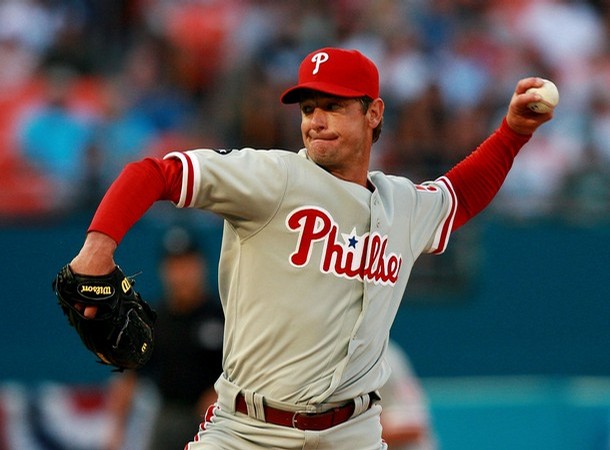
1. Jamie Moyer, Philadelphia Phillies (3966 innings)—Remember when Jamie Moyer pitched for the Cubs? Yeah, neither does anyone else. He was a rookie in 1986, the year Mookie Wilson hit the ball through Bill Buckner’s legs. I know, most of you don’t remember that, either.

2. Andy Pettitte, New York Yankees (2984)—Though it’s early, Andy Pettitte is having a career year at age 38. And I’m just glad I had the foresight (errr, luck) to draft him for my fantasy team.

3. Tim Wakefield, Boston Red Sox (2980)—Remember when Tim Wakefield pitched for the Pirates? Seriously, he started out there in 1992 and joined the Sox in 1995. And dude is still beloved by the chowder heads.

4. Livan Hernandez, Washington Nationals (2795)—Two things are baffling. One, that Livan’s age is listed as 35. Thirty-freaking-five! Um, no. And two, that this guy is still getting hitters out with that blistering 80 mph fastball of his.

5. Javier Vasquez, New York Yankees (2532)—So this guy has banked $92 million in his career to date for losing as many games as he wins (145-144). That’s proof right there that innings eaters are worth something, but still sounds like highway robbery to me.

6. Jeff Suppan, Milwaukee Brewers (2437)—He’s relegated to the bullpen for the most part, but still racking up innings of work.

7. Kevin Millwood, Baltimore Orioles (2382)—Remember when Kevin Millwood was the fourth starter behind Smoltz, Maddux and Glavine in Atlanta? That was in 1997 but seems like it was 50 years ago.

8. Derek Lowe, Atlanta Braves (2191)—He may have peaked a few years ago, but this guy still has some of the nastiest stuff in the game.

9. Tim Hudson, Atlanta Braves (2124)—Through all of the injuries, it’s truly amazing that Tim Hudson has pitched that many innings. And hey, Javier, put this in your pipe and smoke it—a 153-79 career record.

10. Roy Halladay, Philadelphia Phillies (2123)—This dude just keeps winning, but even he’s only got 154 wins to date. Does that seem right?

Source: Baseball Reference

Top 10 active NFL receiving yardage leaders

The NFL has become a pass-first league, and with that, wide receivers and tight ends have become more important than ever—not just in west coast style offenses but in all offensive systems. Here we take a look at the current active leaders in receiving yards. Being that most of the guys on this list are nearing the twilight of their respective careers, you shouldn’t use this as part of your fantasy football research. Instead, just read and enjoy…..

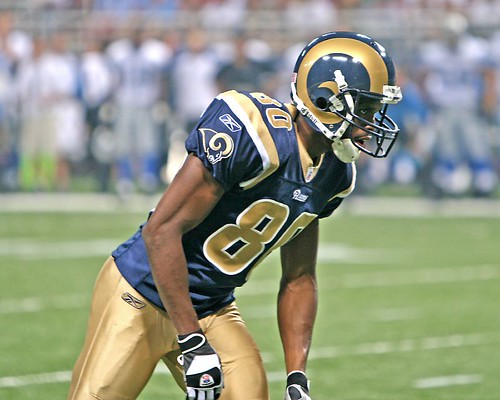
1. Isaac Bruce, free agent (15,208)—He doesn’t have the flash or the mouth that some of these other guys have, but it didn’t hurt that Bruce played on those great Kurt Warner/Mike Martz Rams’ teams about a decade ago. And he still has skills, so someone is bound to sign the guy.

2. Terrell Owens, free agent (14,951)—This guy DOES have the mouth but the skills to back it up. I’m kind of surprised he is team-less right now, but that should also change soon.

3. Randy Moss, New England Patriots (14,465)—That season he and Tom Brady put together in 2007 was absolutely ridiculous (1423 yards, NFL record 23 TD catches). And Moss is only 32!

4. Torry Holt, New England Patriots (13,382)—Sure, he’s getting up there in age and fell off a lot numbers-wise in Jacksonville, but he’s still got something left. It should be especially interesting to see Holt and Moss playing in the same offense.

5. Tony Gonzalez, Atlanta Falcons (11,807)—Arguably the greatest tight end to ever play the game. Gonzo has four seasons with over 1000 yards, almost unheard of for a TE.

6. Muhsin Muhammad, Carolina Panthers (11,438)—Like Bruce and Holt, Muhsin Muhammad has quietly put up numbers for years, and his 2004 season for the Panthers remains his best (1405 yards, 16 scores).

7. Derrick Mason, Baltimore Ravens (11,089)—All Derrick Mason has ever done in his career with Tennessee and Baltimore is get open. He’s topped 1000 yards three straight seasons on the run-first Ravens, and is the epitome of toughness and durability despite being just 5-10, 190.

8. Hines Ward, Pittsburgh Steelers (10,947)—He’s consistently one of the game’s Top ten receivers, but how will he fare with Big Ben out for a few games to start the 2010 season?

9. Joey Galloway, Washington Redskins (10,777)—Galloway resurrected his fine career with Tampa from 2005 to 2007, and is really in the twilight of his career after struggling in Tampa and New England the last two seasons, respectively. Now he’s trying to latch on with the new-look Redskins.

10. Chad Ochocinco, Cincinnati Bengals (9952)—One of the game’s most animated players is also one of its best receivers year in and year out. And it’s always good to be able to back up the talk.

Source: Pro Football Reference

Sports Illustrated lists its Top 20 all-time sportscasters

Sports Illustrated put out this list of what it believes to be the Top 20 all-time sportscasters. Some of these guys are before my time, but unfortunately, most of them are not. Anyway, here is the list and a snappy comment or two, as well as who they missed and who I’m glad is not on here:

1. Jim McKay—The Bob Costas of his time. McKay hosted ABC’s “Wide World of Sports” as well as The Olympics. It’s hard to argue with putting him on top here, but it’s also easy to argue for a few of these others to be #1.

2. Vin Scully—If I hear ol’ Vin doing a game on TV, and with the MLB package it’s nice to still hear him doing Dodgers’ games, I don’t care who is playing….I stop and watch, and listen. It’s just comforting to hear the guy’s voice, which was made for broadcasting baseball.

Continue reading »

Top 10 active NFL passer rating leaders

The NFL draft is over and free agency is kind of in a lull. Mini-camps and stories about letting Pacman back into the league, JaMarcus Russell being released, or what counseling Big Ben is attending just don’t help the football jones we all have. So that’s why we’re back with a few Top 10 lists to ponder. This one for the active NFL passer ratings is good because it’s a solid indicator of who you might think about drafting for your fantasy team come August or September. And hey, we’re just a few months away!

1. Aaron Rodgers, Green Bay Packers (97.2)—Rodgers really emerged last season with 103.2 rating, especially once his line decided to keep him upright. He and the two guys immediately below him should win at least one ring in their careers solely because of their own talent.

2. Phillip Rivers, San Diego Chargers (95.8)—Rivers has topped 104 in QB rating the last two seasons. If you told me I could have one quarterback to win one game, I’m not sure this isn’t the guy I’d take. In fact, he IS the guy I’d take.

3. Tony Romo, Dallas Cowboys (95.6)—Romo cut down his interceptions drastically in 2009, but the pundits and fans in Dallas still couldn’t lay off the guy. I’m telling you, they don’t know how good they have it with Romo at QB. As a Giants fan, this is one guy I cringe when facing.

4. Peyton Manning, Indianapolis Colts (95.2)—Always solid, but Manning needed a freakish 121.1 rating in 2004 and two more seasons after that over 100 to make up for some really bad years early in his career. Still, he’s Peyton Freaking Manning.

5. Tom Brady, New England Patriots (93.3)—Speaking of freakish, Brady’s 117.2 in 2007 kicked him up a few spots here. You know, maybe this is the guy I want in a must-win game, but then again, he’s shown to be slightly damaged goods since the 2008 opener.

6. Drew Brees, New Orleans Saints (91.9)—Brees finally won that elusive ring in 2009, and he also led the NFL with a 109.6 QB rating as well as a ridiculous 70.6 completion percentage. Yeah, I’d say he earned that ring.

7. Ben Roethlisberger, Pittsburgh Steelers (91.7)—A great quarterback that sadly has so much baggage, he has the Steelers and their fans wondering if he’s worth it. The two Super Bowl wins surely don’t hurt, but has Ben peaked?

8. Matt Schaub, Houston Texans (91.3)—Finally healthy a full season, this guy was fantasy gold in 2009. Look for his QB rating number to continue climbing—well, assuming he still has Andre Johnson to throw to.

9. Chad Pennington, Miami Dolphins (90.1)—He hasn’t quite matched his 104.2 mark in 2002, but Pennington was always an underrated QB. And kind of still is. I mean, this guy is still a backup? I can think of at least three teams he’d be starting for.

10. Carson Palmer, Cincinnati Bengals (87.9)—He hasn’t reached 90 in QB rating since 2006, but it’s not often you hear anyone say a bad thing about Mr. Palmer.

Notable omissions: Not on this list are Donovan McNabb, Brett Favre, Eli Manning and Matt Hasselbeck. Okay, really, just the first two are surprising, but then again, maybe not so surprising.

Source: Pro Football Reference

Putting the NFL’s potential lockout in dummy terms

If you, like me, live in fear of the fall of 2011 having no NFL football, but don’t understand all of the legal mumbo-jumbo associated with the labor dispute, I’m hear to put things in terms we all can understand.

First things first, and that is that the owners unanimously opted out of the current CBA (Collective Bargaining Agreement) in 2008, one that they had signed off on in 2006. Since I’m making this as easy as possible to understand, let me tell you that a CBA is the agreement two sides, usually labor and management, come to on various topics, most of which include how money will be divided. And in this case, the owners realized that player salaries were escalating out of control and that their profits were being squeezed more each year. Yes, part of the problem is they are agreeing to these salaries, and player agents are a huge part of that. In the bigger picture, the real problem is revenue sharing, a.k.a. how to split the financial pie. And while the NFL is bringing in a ridiculous amount of money ($7.6 billion in 2008), about 62% of that goes to player salaries, a number that keeps climbing due to increases in the overall salary cap. To make matters worse, there is also revenue sharing among teams, meaning the big market teams have to help the small market teams to help them compete with each other on the field.

So the owners want something like 18% of the pie back, in the form of salary cuts to the players. Naturally, the players do not want to give them this money back, and that is why head of the players’ union DeMaurice Smith announced during the Super Bowl’s hype week that the chance of a lockout were a 14 on a scale of 1 to 10. For his part, NFL commissioner Roger Goodell denounced that, saying he hoped it wouldn’t come to a work stoppage, but he also knows that it’s a very real possibility. The players aren’t necessarily saying they won’t give part of the pie back, either. Smith wants the owners to show the players that they are struggling to run their businesses, meaning he wants them to open up their books. And the owners won’t do it. So are the numbers being reported not what they say? It’s hard to say the owners aren’t lying about these numbers, when they keep agreeing to player contracts and they keep building huge state-of-the-art stadiums, but they also have the right to not open their books if they don’t want to. And the bottom line is that the owners are not happy about doling out more and more of their profits.

Then, of course, there is the issue of an uncapped 2010 season. The current structure calls for a salary cap through the 2009 season, with 2010 being an uncapped year if the owners opt out of the CBA, which they did. Last time this happened, in 1993, player salaries rose to 69% of NFL revenue, and that is expected to happen again. But of course, nothing is guaranteed in 2011, so the players have to be careful of what they wish for.

If organized sports have taught us anything, it’s that the possibility of no games being played can and will happen. You might remember the NFL had a similar situation in 1987, and the owners used replacement players for a few games before the dispute was resolved and the regular players went back to work. MLB cancelled the last two months of the 1994 season as well as the playoffs and World Series, a black mark they have not recovered from. The NBA had a similar situation in 1998-99, with almost half a season being wiped out. And of course, the freshest in our memories is the NHL’s 2004-05 season that was not played due to a labor dispute.

So as fans, we have to hope a few things happen between now and the summer of 2011, which is spewing a black cloud that keeps getting darker and more imposing by the day. We have to hope the owners agree to open up their books, and we have to hope the players agree to give back part of the pie for the health and financial well being of the NFL. Sure, we want the players we love to watch get the money they deserve, but within reason. Certainly it’s not worth much to anyone to have no NFL games being played, but it may very well come to that.

Of course, the NFL is not the only business that would be affected by a lockout. Besides the local businesses near stadiums that thrive during the season, fantasy football and all of the money (reported as upwards of $3 billion in 2007) associated with that is threatened here. Think about that for a second. The folks that make their livelihood in that world will be flattened financially. Well, maybe that’s going to be the subject of my next piece on this, but for the moment I wanted to do my part to help everyone understand the dispute between owners and players, and what it all really means.

Many think that a lockout won’t really happen, and I’m optimistic myself that it won’t. But history surely does make us all nervous, doesn’t it?

« Older posts Newer posts »