Tag: Jose Reyes (Page 5 of 5)

Top 10 MLB Active Stolen Base Leaders

The baseball season, and more importantly to some of you, the fantasy baseball season, is underway. Some fantasy GM’s, myself included, usually stock up on home run hitters and focus less on stolen bases. It’s a matter of taste and a matter of how your league keeps score. But some speedsters can be difference-makers, and here is a list of the active Top 10 in stolen bases to date, excluding those who are technically active but not currently on a major league roster:

1. Juan Pierre, Los Angeles Dodgers (429)—I had to do a double take. Juan Pierre, still playing? Why yes, he’s only 30 years old, and he had 40 stolen bases for the Dodgers last season. He could easily reach 500 by late next season, putting him in the career company of Luis Aparicio and Paul Molitor, among others.

2. Omar Vizquel, Texas Rangers (385)—He’s 42 and a backup now, but how about Omar’s ’99 season in Cleveland when he hit .333 with 42 steals? The fact that Omar finished 16th in the MVP voting that season says more about the steroid era than it does about his season. Today he’d probably finish in the top 5 with those numbers.

3. Johnny Damon, New York Yankees (363)—It’s hard to believe Johnny Damon has been in the league since 1995, but he has, and he’s been a pesky leadoff hitter the entire time, averaging an impressive 30 steals per season.

4. Luis Castillo, New York Mets (342)—He’s not the speedster he once was, but Castillo stole a modest 17 bases last year while not at 100%, and he’s still only 33 years young.

5. Bobby Abreu, Los Angeles Angels (318)—Bobby has that rare combination of speed, power and the ability to hit for average. It’s amazing he was on the free agent market this past winter for as long as he was.

6. Ichiro Suzuki, Seattle Mariners (315)—The amazing thing about Ichiro is that he’s only entering his ninth season in the American major leagues. Once he returns from the DL from a stomach ulcer, he’s going to keep adding to this total, probably for several years.

7. Carl Crawford, Tampa Bay Rays (302)—One of the game’s most exciting young players, and he’s only 27 years old.

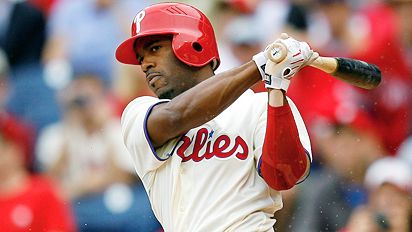
8. Jimmy Rollins, Philadelphia Phillies (295)—Rollins is another guy who does it all, including hit for power and play the field like a wizard. A legitimate MVP candidate year after year, and a big reason the Phils won it all in 2008.

9 (tie). Mike Cameron, Milwaukee Brewers (291)—If Cameron had a higher career batting average than his .250 mark, he’d no doubt have more steals by now as well. But .291 is still pretty impressive for any player.

9 (tie). Jose Reyes, New York Mets (291)—One of the cornerstones of the Mets’ franchise and a guy that has contended for the stolen base title every season of his career. Reyes is only 26 years old, and AVERAGING 62 steals per season. That’s just mind-boggling.

Source: Baseball Reference

2009 MLB Preview: #3 New York Mets

Click Here to see Previews of all 30 MLB Teams

Offseason Movement: In a major effort to try and bolster their bullet riddled bullpen, the Mets signed top free agent closer Francisco Rodriguez, who saved a record 62-games last season for the Angels. The Mets also acquired reliever J.J. Putz, outfielder Jeremy Reed and RHP Sean Green in a three team swap with the Mariners and Indians. The club signed free agent starter Freddy Garcia, but after he gave up 15 runs in just seven innings this spring, they reassigned him to minor league camp. Livan Hernandez – yet another free agent signing – fared much better and will be the Mets’ fifth starter when the season opens. Casey Fossum, Alex Cora, Darren O’Day, Rocky Cherry, Connor Robertson and Cory Sullivan round out the rest of New York’s offseason additions.

Top Prospect: Wilmer Flores, SS
Outfield prospect Fernando Martinez also deserves mention here, but Flores is already showing potential at just 17 years old. Flores is light years away from the big leagues, but he’s already drawing comparisons to Miguel Cabrera in terms of his potential at such a young age. The Mets will likely move Flores along slowly and let him develop his skills. There’s absolutely no need to rush him, but he’ll get his opportunity to shine in the next couple of years.

Continue reading »

Alex Rodiguez has torpedoed my fantasy draft strategy

All 2009 Fantasy Articles | 2009 Position Rankings

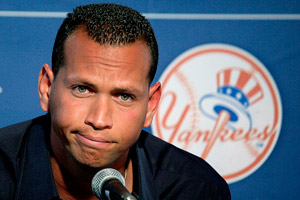
The collective groan you heard when Alex Rodriguez announced that he would have “hybrid” surgery to repair his injured hip was not solely the work of the Yankee faithful. The ramifications in fantasy circles are staggering, especially if you, like me, happen to have the fifth pick in your draft.

Just a few days ago, I thought I had my draft strategy all figured out. The first round would simply be a matter of which of the Big Five (Hanley, Reyes, Pujols, A-Rod, Wright) fell to me. The mock drafts I conducted a few weeks ago indicated that Wright would be my guy, which was fine with me. The post-surgery view from the five-hole, however, is bleak. The Big Five is now the Big Four – Rodriguez is currently sitting at #49 in my draft room – and whichever player I take with my first pick now feels like a reach. However, after doing some stat sorting, I found my guy. He’s a former MVP with pop and speed. So why don’t I want to take him?

Because it’s the same guy I drafted with my first pick last year: Jimmy Rollins.

Before you Philly fanatics start throwing batteries at me, let me state for the record that I think Rollins is a damn fine ball player (obviously, or I wouldn’t have drafted him last year). My reluctance to take him is something that sabremetricians never factor into their projections: keeper fatigue. Truth be told, I’m kind of bored with Rollins. I was really looking forward to owning Wright, or Rodriguez, or someone else, anyone else, besides Rollins. It’s nothing personal; his stats are phenomenal, especially at one of the thinnest positions in the game. I just wanted some variety.

So why not draft someone else, then? Grady Sizemore is sitting at #6, screaming my name. He’s 27 – unlike rock stars, 27 is a great year to be a baseball player – and has 40-40 written all over him (plus, my wife thinks he’s cute). So why not take him? Two words: position scarcity. Actually, here are two more words: points league. I play in a league that keeps track of 34 different stats (17 for hitters, 17 for pitchers), and the combination of various hits plus stolen bases minus strikeouts, errors and getting caught stealing (once, when I was five) produces some strange results. Case in point: Johnny Damon scored more points last year than Aramis Ramirez, Miguel Cabrera and even Ryan Howard. Rollins, like Damon, isn’t as sexy a pick as he once was, but the simple fact is that it’s a lot harder to find a shortstop that can score over 500 points (there are three) than it is to find an outfielder (18) or first baseman (seven) that can do the same. In fact, the gulf between Rollins and the next shortstop is nearly 150 points. He was even injured last year, and still outscored the next shortstop by 90 points. The gap between Sizemore and the next outfielder, by comparison, is 30 points, so I can definitely get Sizemore-type production in the second or third round. It’s a no-brainer, really.

And I still don’t want to do it. Ugh.

That’s only half of my dilemma, though; what on earth do I do with Rodriguez? He had the surgery today and is scheduled to return in early May. There is just one problem: we have no idea when he’ll really return, and what kind of frame of mind he’ll be in when he does. Will the steroids talk have died down for good – insert your own “injury” conspiracy theory here – or will another wave of bad press hit between now and then? Personally, I’m not counting on him playing a game until Memorial Day, but will the other managers downgrade him as much as I am? It’s like playing Texas Hold ‘Em with baseball players. Hmmm, maybe that’s why there has been so much pious talk about how disappointed everyone is with Rodriguez because he tarnished the game, or whatever. People just want to devalue him so they can steal him in the seventh round.

But is even that a safe pick? There are dozens of other, healthier, and most importantly younger players out there. Would a full season of a lesser player be better than four and a half months of Rodriguez? Or are injuries overrated when it comes to the studs? After all, I passed up Pujols in the second round last year because I thought he was one bean ball away from Tommy John Surgery on that elbow of his. Man, did he show me.

So let me hear it, fellow fantasy dorks. What are you planning on doing with A-Rod? Avoiding him altogether, or waiting until the price is right? And what is the right price?

2009 Fantasy Baseball Preview: Shortstops

All 2009 Fantasy Articles | 2009 Position Rankings

Before your 2009 fantasy baseball draft kicks off this year, do yourself a favor and repeat this three or four times to yourself: I will draft a shortstop in the first nine rounds.

Not unlike third basemen, the shortstop position is weak this season. After Hanley Ramirez, Jose Reyes and Jimmy Rollins come off the board in the first two rounds, you’re left with roughly eight shortstops that will give you adequate to good production this season. We project those eight shortstops to be selected anywhere between the fifth and ninth round in standard mixed leagues, which is why we suggest nabbing one before the conclusion of the ninth.

The good news is that in a 12-team league, you’ll definitely have the opportunity to land one of the big three (Ramirez, Reyes, Rollins) or scoop up one of the eight adequate-to-good shortstops that we’re referring to. The bad news is that shortstops can start flying off the board quickly and if you’re selecting in a snake draft, you could wind up on the wrong end of the spectrum when the run starts.

That’s why to be safe, you will draft a shortstop in one of the first nine rounds because you don’t want to be the guy that’s trying to figure out whether or not Edgar Renteria will bounce back now that he’s in the NL again, or having to choose between Orlando Cabrera’s consistent .280 batting average and Khalili Greene’s 25-plus home run potential. (Side note: If you do wind up being that guy come draft day, it might be wise to select two shortstops back to back and hope you catch lightning in a bottle with one of them.)

Obviously you still want to be smart on draft day; we’re not advising you to take Derek Jeter in the third because you’re spooked about failing to grab a shortstop before the ninth round. But taking one of the top 11 shortstops a round early might not be a bad idea considering what you’ll be left with later on.

After Ramirez, Reyes and Rollins come off the board, here are the eight shortstops we’d suggest taking before the ninth round ends:

Stephen DrewStephen Drew, Arizona Diamondbacks
In his third season with the D-Backs last year, Drew was only the third shortstop in major league history to finish with 40 doubles, 20 home runs and 10 triples in 2008. At 26 years old, his ceiling is sky high right now as he enters the prime of his career and there is no doubt that he’s one of the bright young stars in baseball. If he builds off the success he had last year, Drew could easily hit 25 home runs, knock in 75 RBI, score 100 runs and chip in five stolen bases. He probably won’t sniff the .300-mark in terms of batting average, but he should be right around .290.

Troy Tulowitzki, Colorado Rockies
Tulowitzki exploded onto the scene in 2007, helping the Rockies make a World Series appearance and setting a record for most home runs (20) in a season by an NL rookie shortstop. But injuries destroyed what was supposed to be a promising second season in 2008 and he obviously fell short of expectations. Still, he hit .300 over the second half of the season last year and he should once again build on his promising young career. He has the potential to hit 20-plus home runs, knock in 80 RBI, score 90 runs and add 10 stolen bases along with his .290 average. Tulowitzki is a star in the making and definitely one of the better young shortstops in the game.

Alexei Ramirez, Chicago White Sox
Potential could be the one word to describe the Sox’s young shortstop. Ramirez has 20-home run and 20-stolen base potential and he could easily average .290 and score 100 runs. The one thing to keep in mind about him, however, is that last year was his breakout campaign and he could regress in ’09. Still, with Orlando Cabrera moving on in free agency, Ramirez will get every opportunity to build on his rookie performance and should have plenty of fantasy potential hitting in front of Carlos Quentin in the two-hole.

Jhonny Peralta, Cleveland Indians
With most of the Tribe hitters taking a step back in ’08, Peralta came through with a fine season. If Travis Hafner is healthy again this year, Peralta will move back to the third or fifth spot in the order (he was hitting cleanup in Hafner’s absence last season) and should hit 25-plus home runs. He does strike out a lot and his average will probably teeter around .275, but he’ll also give you 80-plus RBI and score 100-plus runs. There’s talk of him moving to third base this year so keep an eye on that, but he’ll still qualify as a shortstop in all leagues.

Derek Jeter, New York Yankees
Tried and true – Jeter is more than capable of giving you quality production day in and day out. At 35 years old, his numbers are definitely on the decline but that doesn’t mean the veteran will crash and burn in 2009. He might not hit 20 home runs or steal 20 bases this year, but you can probably bank on 15 dingers and 15 swiped bags. Just don’t overvalue him, because there’s no doubt someone will based on name recognition alone.

Rafael FurcalRafael Furcal, Los Angeles Dodgers
Obviously he’s a major injury risk, but if he’s healthy there’s no reason to believe Furcal can’t pick up where he left off in April of last year when he hit .367. He also returns to familiar stomping grounds after re-signing with the Dodgers, and he should have every opportunity to top 15 home runs and swipe 35-plus bases. Some owners will look at his name and take a pass given his age and injury concerns, but Furcal could be worth the risk come draft day, especially depending on how far he falls.

J.J. Hardy, Milwaukee Brewers
If you can put up with Hardy’s streaky production, he’s liable to blast 25 home runs, drive in 75 RBI and bat around .280. Depending on how your first five or six rounds turn out, the addition of Hardy could give you a boost in the power department without killing your team’s overall batting average. Not a lot of owners will jump at the opportunity to select him, but Hardy is an underrated player and after hitting 20-plus home runs the last two seasons, he looks like a reliable option.

Michael Young, Texas Rangers
Some owners might choose to go with a young sleeper like KC’s Mike Aviles over an aging vet like Young, but keep in mind how good the Rangers’ offense was last year. Young has the potential to hit .300 with12 dingers, knocking in 82 RBI and scoring 102 runs at the top of Texas’s lineup. Aviles might hit .300 again with 10-plus home runs, but it’s doubtful he brings what Young does to the table in terms of RBI and run production.

Here is our official ranking of shortstops. Remember that all of these players qualify for your middle infield position, so don’t fall asleep and miss out on taking a potential sleeper or consistent veteran shortstop in later rounds.

1. Hanley Ramirez, FLA
2. Jose Reyes, NYM
3. Jimmy Rollins, PHI
4. Stephen Drew, ARI
5. Troy Tulowitzki, COL
6. Alexei Ramirez, CHW
7. Jhonny Peralta, CLE
8. Derek Jeter, NYY
9. Rafael Furcal, LAD
10. J.J. Hardy, MIL
11. Michael Young, TEX
12. Mike Aviles, KC
13. Miguel Tejada, HOU
14. Yunel Escobar, ATL
15. Orlando Cabrera, OAK
16. Elvis Andrus, TEX
17. Edgar Renteria, SF
18. Jason Bartlett, TB
19. Ryan Theriot, CHC
20. Khalil Greene, STL
21. Jed Lowrie, BOS

Newer posts »