Tag: Jason Kidd (Page 3 of 6)

NBA Free Agency Rumors: Kidd, Turk, Gordon and much more

Pistons not willing to pony up for Boozer?

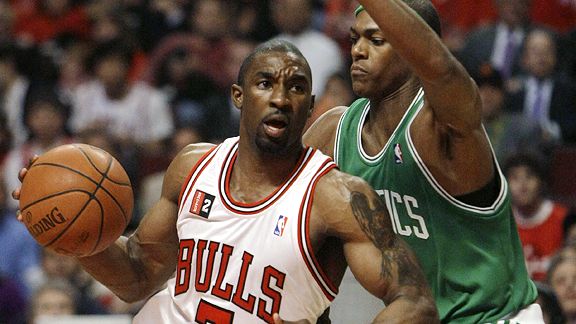
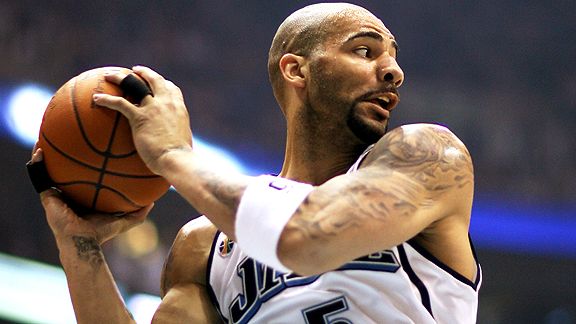
The Pistons would love to sign Carlos Boozer should he decide today to opt out of the final year of his contract with the Jazz and become a free agent.

However, if Boozer opts out, he would leave $12.6 million on the table in Utah. Thus, there is a good chance Boozer, as has been widely speculated, would look to start his next contract at $14 million or $15 million.

If that is the case, the Pistons most likely would walk away.

Just because a guy asks for a contract starting at $14-$15 million doesn’t mean that the Pistons have to give it to him. If Boozer opts out, the Pistons are his most likely landing spot, so they set the market, not him. If he wants an unreasonable deal, they shouldn’t walk away, they should make an offer and give him some time to find a better one. Chances are that he won’t, and he’ll end up taking Detroit’s deal.

Assuming Boozer does not dramatically reduce his asking price, the Pistons would go after Bucks forward Charlie Villanueva.

Villanueva will turn 25 in August and is coming off his best season. He averaged 16.2 points and 6.7 rebounds for the Bucks.

The Pistons could conceivably sign Gordon and Villanueva and still have money left over to pursue re-signing Antonio McDyess.

I estimate Gordon’s value to be about $9 million, though he has turned down bigger offers from the Bulls in the past. Villanueva will probably get lots of MLE offers, so the Pistons would likely have to trump those to convince him to play in Detroit instead of Cleveland (or for another contender). So if Detroit signs both, expect them to pay at least $15.5-$16.0 million combined. That doesn’t leave a lot of space for McDyess.
Continue reading »

2009 NBA Free Agency Preview: The top unrestricted free agents

Once the draft is over, the next step of the NBA offseason is the free agency period. Negotiations start July 1, but players have to wait until July 8 to actually sign on the dotted line. Due to the economy, this promises to be an interesting summer, as more franchises seem to be trying to cut payroll than add talent. There are eight teams with significant cap space this summer, and there’s no guarantee that they’ll be willing to use it. Teams that are over the cap can add good players in two ways: 1) they can sign a player to the Mid-Level Exception (MLE), which will be around $5.8 million per season (and can be split up between two or more players), or 2) they can work out a sign-and-trade with the player’s old team.

Below is a list of the top unrestricted free agents this summer. These are players who can sign with whomever they like. They’re ranked in order of total value, which is based on overall talent, age, injury history and cost.

For each player, I’ll provide his position, age, Player Efficiency Rating (PER) and an estimate of what kind of contract he’s likely to sign.

1. Carlos Boozer, PF (27 years-old)
PER: 17.28
At press time, Boozer hasn’t officially opted out, but he is expected to. He can play another year for $12.3 million, but he thinks he’s due for a raise, and I don’t think he’s going to get the kind of raise he’s expecting. Boozer is one of the top 20 players in the league when healthy, but it’s that whole “when healthy” part that’s the problem. Over the past five seasons, he has missed a third of his team’s games. At 27, he’s in his prime, and assuming he has the right supporting cast, I think he can be one of a twosome or threesome on a championship-caliber team. Boozer may not get a raise this summer, but he could get long-term security. The Pistons, Raptors, Kings and Thunder all have the space to make a run at him, but Sacramento and OKC might consider themselves too far away from contending to add a big piece like Boozer. The Pistons seem like the best fit, but they are rumored to have more interest in Ben Gordon. There’s always the possibility that another team works out a sign-and-trade with Utah, but I don’t think anyone is going to give him a max deal, not in this economy.
Value: $12.0 – $13.0 million per year

Continue reading »

Which NBA teams will have cap space this summer?

The NBA free agency period starts July 1st, and as that date approaches I’ll preview this year’s free agent class in more detail. But for now, I’d like to take a look at which teams have the cap flexibility to be major players in free agency this summer. (Mind you, just because a team has cap space, it doesn’t necessarily mean that they’ll use it. Just sayin’.)

Not familiar with the NBA salary cap? Here’s a quick primer…

1. The cap for the 2008-09 season was $58.7 million. The general consensus is that the cap will stay flat or decrease slightly. We’ll assume it sticks at $58.7 million.

2. If a team is over the cap, the only free agents they can sign are their own, unless they elect to sign a player to the mid-level exception (~$5.8 million per season), the bi-annual exception (~$2.0) or to a minimum contract. (The bi-annual exception may not be used in two consecutive years.)

3. If a team is under the cap, they can sign any free agent they want as long as they do not exceed the cap. They can also take on salary via trade up to the cap, so a team like the Grizzlies (with almost $20 million in cap space) could conceivably trade their first round pick to the Suns for Amare Stoudemire or to the Raptors for Chris Bosh.

Here’s a list of the bigger names in the free agent pool this summer:

Unrestricted: Carlos Boozer, Ben Gordon, Ron Artest, Lamar Odom, Andre Miller, Shawn Marion, Jason Kidd, Hedo Turkoglu, Allen Iverson, Mehmet Okur, Rasheed Wallace, Mike Bibby, Anderson Varejao, Grant Hill, Kyle Korver, Trevor Ariza, Brandon Bass, Chris Andersen, Zaza Pachulia, Chris Wilcox and Drew Gooden

Restricted: David Lee, Paul Millsap, Ray Felton, Josh Childress*, Marvin Williams, Glen Davis, Ramon Sessions, Charlie Villanueva, Nate Robinson, Leon Powe, Hakim Warrick, Linas Kleiza, Jarrett Jack and Shannon Brown

* It appears that if Childress does return to the NBA, the Hawks still hold his rights, so he would be a restricted free agent.

There are eight teams that project to have more than $5.8 million (the value of the mid-level exception) in cap space this summer:

Memphis Grizzlies
Projected Cap Space: $19.7 million
Memphis has been reluctant to spend for several years now and is probably one of the franchises that’s struggling the most in the current economy. I lived in Memphis for three years, and given its small size and overall lack of wealth, I always thought that it would struggle to support a professional sports team. With a core of Rudy Gay, O.J. Mayo and Marc Gasol, the Grizzlies have to feel pretty good about what they have at off guard, small forward and center. The big decision this summer is what to do with restricted free agent Hakim Warrick. When dealing with bad teams, numbers can be deceptive, because no matter what, somebody has to score and rebound, right? Warrick’s PER (16.91) is #24 amongst power forwards, so ideally he’d be coming off the bench for a playoff team. The Grizzlies projected cap space assumes they make the qualifying offer to Warrick ($3.0 million). Memphis is one of those teams that could really use the services of a Carlos Boozer, David Lee or Paul Millsap, but in this economy, are the Grizzlies willing to make that kind of a commitment? They could try to make a run at Chris Bosh or Amare Stoudemire next summer, but the odds are long that either guy would want to play for the Grizzlies.

Continue reading »

What kind of point guard is he?

We hear it all the time. NBA analysts call one point guard “pass-first” and another “shoot-first.” Or they say one guy is “turnover-prone” while another “takes care of the ball.” But really, what makes a player a “pass-first” point guard? How carefree must he be with the ball to be considered “turnover-prone”?

Taking an analytical approach to these questions, I decided to bust out an Excel spreadsheet and try to come up with some answers. Below you’ll see a graph that attempts to classify the top point guards in the league. But first, a little background…

I chose to categorize each player based on two stats. First, to determine if he’s “shoot-first” or “pass-first,” I calculated the shot-to-assist ratio for each player. The bigger the number, the more of a “shoot-first” mentality the player has. Second, to determine whether or not a player is “turnover-prone,” I calculated each player’s assist-to-turnover ratio. I thought about using turnovers per 48 minutes, but I like the idea of including assists so that playmakers are rewarded for the positive as well as the negative. Next, I calculated each player’s Efficiency Per Minute (EPM) to see if there is any correlation between these other statistics and the overall efficiency of the player in question.

Continue reading »

Point guards star in Monday night action

Having dropped Game 1 at home, both the Celtics and the Spurs were in “must-win” mode on Monday night.

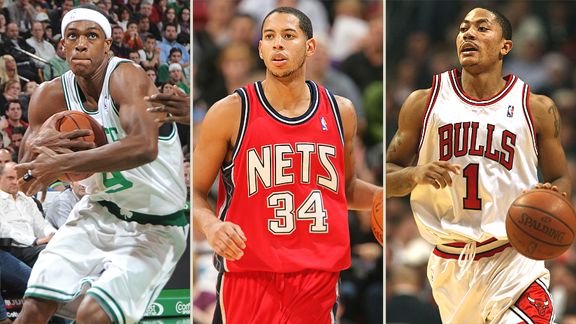
The Celtics/Bulls series is shaping up to be a great one. After a 29-point, nine-rebound, seven-assist effort in Game 1, Rajon Rondo turned in a stellar 19-point, 16-assist, 12-rebound triple-double in Game 2, which the C’s won, 118-115. He also had five steals and turned the ball over just twice. If this kid can get a consistent jump shot, he’s going to be a nightmare. Hell, he’s already a nightmare.

Derrick Rose was the best player on the floor in Game 1, but he came back to Earth in Game 2. Ten points, seven assists and six rebounds is a solid line, but Ben Gordon (42 points) was the star for Chicago in Game 2. What’s amazing about Gordon is how thin his line is. He had one rebound and one steal, but failed to register an assist, a block or even a single turnover. Gordon is a scorer and that’s it, but the name of the game is basketball and he can really light it up.

Ray Allen came up huge in the second half with 28 points over the final two periods, including the game-winner with just 0:02 to play. He scored just six points over the previous four quarters. Wow.

Moving on to the San Antonio/Dallas series, without Manu Ginobili, the Spurs are lacking a third scorer, but Tony Parker was able to carry his team on his shoulders with a 38-point, eight-assist effort en route to a 105-84 win. Jason Kidd can’t keep Parker in front of him, which is why I thought the Spurs would win this series, but J.J. Barea came off the bench in Game 1 and did a decent job containing Parker. Game 2? Not so much.

The Mavericks have home court advantage now and they’ve been great (32-9) at the American Airlines Center this season. The Spurs have the 5th-most road wins in the league, so they’re more than capable of stealing a game in Dallas.

« Older posts Newer posts »