Category: Fantasy Baseball (Page 15 of 48)

2009 Fantasy Baseball Preview: Relief Pitchers

All 2009 Fantasy Articles | 2009 Position Rankings

There are two general schools of thought when it comes to selecting relief pitchers. Some owners zero in on a stud and are willing to select one in the first couple rounds, while others don’t mind cruising the wavier wire on a regular basis during the season after they waited to address the position late in their draft.

Neither approach is bad, although each has its drawbacks. K-Rod racked up 62 saves last season, but switching clubs and leagues this year leads to some uncertainty, plus outside of saves, his ERA and WHIP numbers have been on the decline for years. If you’re the type that burns a high draft pick on a top reliever and a guy like K-Rod fizzles, you obviously would have cost yourself an opportunity to select a position player that could have given you great value at that spot.

Conversely, if you wait until the later rounds of your draft to address your stopper(s), then you run the risk of playing Russian Roulette with the position throughout the regular season, possibly costing you wins/points in not only saves, but strikeouts, ERA and WHIP as well.

If we could offer some advice, we recommend finding a happy medium between those that make finding a reliever one of their top priorities, and those who avoid it like the dentist. Find that next wave of relievers after names like Joe Nathan, Jonathan Papelbon and Mariano Rivera come off the board. Chances are you’ll get a nice combination of saves, strikeouts, ERA and WHIP without burning a high draft pick on one of the studs.

Below are some closers that won’t cost you a top draft pick, but also ones that shouldn’t come up short in the production department.

Carlos Marmol, Chicago Cubs
Marmol is an incredibly intriguing, yet risky closer prospect. He has all the tools and talent to must 40-plus saves, but he is inexperienced and has some control issues. Still, the closer role is all his after Kerry Wood signed with the Indians in the offseason and if Marmol can take the next step forward in his development, he could be in store for a big season.
Bobby Jenks, Chicago White Sox
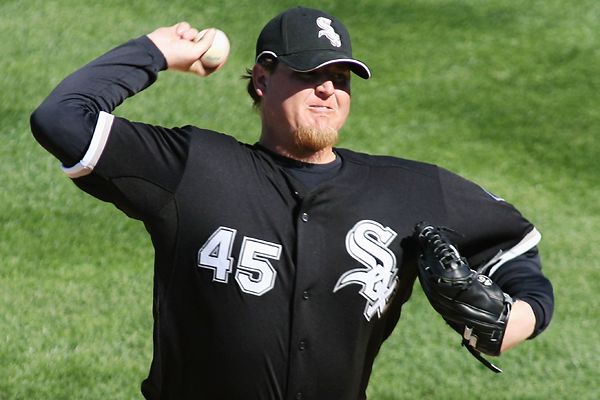
Jenks might scare some owners away this year after having back issues last year. But if he earned 30 saves at less than ideal health and after losing some zip on his fastball, then he’s capable of producing 35-plus saves this season now that he’s healthy again. If he ever matures, he could be one of the better closers in the league.

Kerry Wood, Cleveland Indians
Wood might be the most intriguing closer in fantasy this year after saving 34 games last season for the Cubs. He joins the Indians this year and if the Tribe bounces back, he has the potential to top the 40 mark in saves. He obviously has to stay healthy, however, and must avoid tiring like he did in the second half last season. (He went from having a 2.43 ERA and 0.86 WHIP to 4.57 and 1.45 in the second half.)

Jonathan Broxton, Los Angeles Dodgers
Don’t be scared – Broxton is a stud in the making. The 24-year old has 40-plus save potential and should once again sniff 90 strikeouts, all while keeping his ERA south of 2.80. He has trouble staying consistent at times, but Broxton’s 11.4 strikeouts per 9 innings is nothing to scoff at.

Brian Fuentes, Los Angeles Angels
If the Angels give Fuentes as many opportunities for saves as they did K-Rod last year, then the former Rockie could be one of the best bargains in your draft this season. He saved 30 games last year and managed to keep his ERA (2.73) and WHIP (1.10) low. You might be able to put Fuentes down for 35 saves this season, with comparable ERA and WHIP numbers from 2008.

Brian Wilson, San Francisco Giants
Wilson’s 4.62 ERA and 1.44 WHIP were nasty last year, but his 41 saves make him an awfully intriguing pick. Now that he has a full season under his belt, he should be able to lower his ERA dramatically, although he must be more consistent and cut down on the walks. Even though he pitches for a poor team, the Giants will give Wilson plenty of opportunities for saves as they have the penchant for playing in a ton of tight ballgames.

Below is our official ranking of relief pitchers.

1. Jonathan Papelbon, BOS
2. Joe Nathan, MIN
3. Mariano Rivera, NYY
4. Brad Lidge, PHI
5. Joakim Soria, KC
6. Jose Valverde, HOU
7. Francisco Rodriguez, NYM
8. B.J. Ryan, TOR
9. Carlos Marmol, CHC
10. Bobby Jenks, CWS
11. Jonathan Broxton, LAD
12. Kerry Wood, CLE
13. Francisco Codero, CIN
14. Brian Fuentes, LAA
15. Matt Capps, PIT
16. Brian Wilson, SF
17. Heath Bell, SD
18. Trevor Hoffman, MIL
19. Frank Francisco, TEX
20. Matt Lindstrom, FLA
21. Mike Gonzalez, ATL
22. George Sherrill, OAK
23. Chad Qualls, ARI
24. Huston Street, COL
25. Joey Devine, OAK
26. Troy Percival, TB
27. Joel Hanrahan, WAS
28. Justin Duchscherer, OAK
29. Brad Ziegler, OAK
30. Brandon Lyon, DET
31. Jose Arredondo, LAA
32. Brandon Morrow, SEA
33. Manny Corpas, COL
34. Chris Ray, BAL
35. Chris Perez, STL
36. J.J. Putz, NYM
37. Fernando Rodney, DET
38. Manny Parra, MIL
39. Dan Wheeler, TB
40. Miguel Batista, SEA
41. Kevin Gregg, CHC
42. Takashi Saito, BOS
43. Grant Balfour, TB
44. Hong-Chih Kuo, LAD
45. Rafael Betancourt, CLE
2009 Fantasy Baseball Preview: Starting Pitchers

All 2009 Fantasy Articles | 2009 Position Rankings

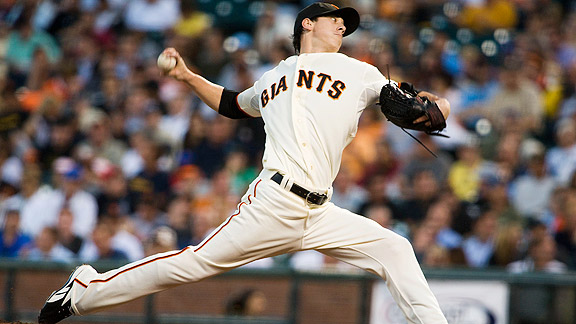
Admit it, you passed on Tim Lincecum last year. You took one look at his 2007 record (7-5), his ball boy-type frame (he only stands 5’11” and is 170-pounds soaking wet) and the fact that he played on a team with one of the worst offenses in baseball and you said, “no thanks.”

But there was one owner (the smart one) in your league that bought into the hype, took a shot and reaped the benefits of Lincecum earning the NL Cy Young Award while going 18-5 with a major league-leading 265 strikeouts and 2.62 ERA.

Don’t feel bad; you weren’t the only fantasy owner last year that just couldn’t pull the trigger on Lincecum. Truth be told, he was a bit of a risk last season given his inexperience and the fact that the Giants weren’t expected to give him much run support. And assuming you’ve played a fair share of fantasy baseball, you’ve probably been burned once or twice in the past by taking a risk on that perfect young sleeper that everyone is gaga for in spring training, yet fizzles once the season starts.

But Lincecum proved last year that you could find diamonds in the rough that can wind up anchoring your pitching staff for the entire season. You have to be willing to take a risk, however, and select one of those potential gems a round or two before they are projected to go.

Below we’ve put together a group of young pitchers that might not become the next Tim Lincecum, but ones that could certainly turn out to be tremendous values once the top 15 arms come off the board. We’re talking about pitchers who haven’t seen their 28th birthday yet (most haven’t even seen their 25th birthday yet), but ones that could post 15-plus wins, 150-plus strikeouts and an ERA south of 3.80.

Joba Chamberlain, New York Yankees
Don’t think for a second that you’ll be pulling a fast one on everybody if you take Chamberlain as your second pitcher – everyone already knows about Joba’s potential. But he has struggled thus far in spring training, which means he could drop into your lap as other owners flock to safer pitching choices. Chamberlain has the potential to win 15-plus games, sniff 200 strikeouts and close in on a 3.20 ERA, but he obviously has to cash in on his immense physical talent. If he continues to struggle in spring training, you might land him later than you projected and if you do, he could wind up being the best pitcher on your roster by season’s end.

Yovani Gallardo, Milwaukee Brewers
Gallardo will scare away plenty of potential owners after only making five starts in 2008, but he has the talent to post 185-plus strikeouts and produce 15-plus wins. If he stays healthy, he should also keep his ERA south of 3.50 and although you’ll land him in the middle rounds, he could project to being a top 25 pitcher. Remember, he had knee issues last year – nothing arm related. The future ace should once again be healthy and he’s definitely worth taking a shot on.

Jon Danks, Chicago White Sox
Danks turned down an opportunity to play in the World Baseball Classic, which should only help the youngster’s fantasy value. Not unlike Matt Cain, Danks needs better run support in order to cash in on his talent, but he has the potential to total 160-plus strikeouts and 15-plus wins. He might not keep his ERA around 3.30 like he did last year, but it won’t go north of 3.90 either. Again, as long as he doesn’t get stiffed in the run support department again this year (which is hard to project), there’s no telling how good this 23-year old stud can be.

Matt Garza, Tampa Bay Rays
Garza only fanned 128 batters in 184 innings last year, but he was a strikeout machine in the minors so hopefully that will eventually transfer to the big leagues. If the Rays don’t take a step back after reaching the Series last year, Garza could notch 14-plus wins and 140-plus strikeouts, all while keeping his ERA south of 3.60. Of all the pitchers we’ve listed, he certainly doesn’t have the highest ceiling, but Garza would be a major value as a No. 2 or No. 3 on your staff.

Scott Baker, Minnesota Twins
Ready to take a shot on a potential stud? Baker is an ace in the making and while he competes in a tough AL Central Division, he could amass 12 to 15 wins and total upwards of 170 strikeouts this season. He probably won’t keep his ERA lower than 3.80, but Baker has increased his K/9 rate every year he’s been in the big leagues and posted an all time low WHIP last season of 1.18.

Ricky Nolasco, Florida Marlins
Nolasco had a breakout year in 2008, posting 15 wins, 186 strikeouts and a 3.52 ERA. Is there a chance he could take a step back this year? Of course, but you have to like taking a shot on a guy who you can select in the mid to late rounds that could potentially be a top 20 pitcher by the end of the year. Thirteen wins, 160 strikeouts and a 3.70 ERA would be a safe projection for Nolasco this season.

Clayton KershawClayton Kershaw, Los Angeles Dodgers
Much like Joba Chamberlain, you’re not going to sneak Kershaw past anybody on draft day because by now, most owners are well aware of the 20-year old’s potential. But like Lincecum last year, don’t be the guy that passes on Kershaw because you’re worried about his lack of experience and the high risk that comes along with drafting him. Kershaw could easily post 170-plus strikeouts and 12-plus wins, although his ERA will probably near 4.00 and he did post 52 walks in 107.2 innings last year, which is high. Still, he’s worth a long look on draft day.

Matt Cain, San Francisco Giants
Don’t be fooled by his 8-14 record last year; if Cain got any run support, he could easily be as good as teammate Tim Lincecum. Cain posted a 3.76 ERA and compiled 177 strikeouts last year, but since the Giants’ offense clearly has a vendetta against him, his effort only amounted to eight wins. Trust us, he has the potential to amass 12 to 15 victories, even though it would appear that his ceiling is right around 10 wins. If he can get a little run support and cut down on the walks, he could turn out to be a top-25 pitcher that you can wait to select in the middle to late rounds. Another Giants’ starter to keep an eye on during your draft is Jonathan Sanchez.

Jair Jurrjens, Atlanta Braves
Some fantasy pundits are concerned about Jurrjens taking a big jump in pitches and innings last year compared to 2008. Those concerns are valid since he clearly wore down at the end of the season last year, but he decided not to pitch against The Netherlands in the World Baseball Classic, which is good because he didn’t throw any extra pitches in March when needs to save his arm for the regular season. His strikeout numbers won’t blow you away (you’ll be lucky if he fans 140 batters this season), but he’ll keep his ERA around 3.70 and should post 11-plus wins, which is certainly decent output for a No. 3 pitcher.

Below is our official ranking of starting pitchers.

1. Johan Santana, NYM
2. Tim Lincecum, SF
3. CC Sabathia, NYY
4. Roy Halladay, TOR
5. Dan Haren, ARI
6. Brandon Webb, ARI
7. Cole Hamels, PHI
8. Jake Peavy, SD
9. John Lackey, LAA
10. Roy Oswalt, HOU
11. Josh Beckett, BOS
12. Cliff Lee, CLE
13. Chad Billingsley, LAD
14. James Shields, TB
15. Scott Kazmir, TB
16. Ricky Nolasco, FLA
17. Francisco Liriano, MIN
18. Felix Hernandez, SEA
19. Rich Harden, CHC
20. Adam Wainwright, STL
21. Daisuke Matsuzaka, BOS
22. Ervin Santana, LAA
23. Edinson Volquez, CIN
24. A.J. Burnett, NYY
25. Joba Chamberlain, NYY
26. Carlos Zambrano, CHC
27. Javier Vazquez, ATL
28. Jon Lester, BOS
29. Justin Verlander, DET
30. Brett Myers, PHI
31. Yovani Gallardo, MIL
32. Zack Greinke, KC
33. Matt Cain, SF
34. Aaron Harang, CIN
35. Ted Lilly, CHC
36. Max Scherzer, ARI
37. David Price, TB
38. Chris Young, SD
39. Josh Johnson, FLA
40. Erik Bedard, SEA
41. Ryan Dempster, CHC
42. Matt Garza, TB
43. Chien-Ming Wang, NYY
44. John Danks, CHW
45. Brandon Morrow, SEA
46. Johnny Cueto, CIN
47. Jered Weaver, LAA
48. Kevin Slowey, MIN
49. Derek Lowe, ATL
50. Scott Baker, MIN
51. Clayton Kershaw, LAD
52. John Maine, NYM
53. Jair Jurrjens, ATL
54. Randy Johnson, SF
55. Fuasto Carmona, CLE
56. Gavin Floyd, CHW
57. Ubaldo Jimenez, COL
58. Jonathan Sanchez, SF
59. Oliver Perez, NYM
60. Justin Duchscherer, OAK
61. Manny parra, MIL
62. Andy Pettitte, NYY
63. Joe Saunders, LAA
64. Gil Meche, KC
65. Chris Carpenter, STL
66. Mike Pelfrey, NYM
67. Hiroki Kuroda, LAD
68. Wandy Rodriguez,
69. Chris Voldstad, FLA
70. Bronson Arroyo, CIN
71. Kenshin Kawakami, ATL
72. Armando Galarraga, DET
73. Jeremy Guthrie, BAL
74. John Smoltz, BOS
75. Paul Maholm, PIT
76. Aaron Cook, COL
77. Joe Blanton, PHI
78. Todd Wellemeyer, STL
79. Rich Hill, BAL
80. Jesse Litsch, TOR
81. Andy Sonnanstine, TB
82. Dave Bush, MIL
83. Edwin Jackson, DET
84. Jeremy Bonderman, DET
85. Nick Blackburn, MIN
86. Mark Buehrle, CHW
87. Tommy Hanson, ATL
88. Neftali Feliz, TEX
89. Brad Penny, BOS
90. Aaron Heilman, SEA
91. Carlos Carrasco, PHI
92. Shawn Hill, WAS
93. Doug Davis, ARI
94. Carl Pavano, CLE
95. Tim Wakefield, BOS
96. John Lannan, WAS
97. Jon Garland, ARI
98. Dontrelle Willis, DET
99. Kyle Lohse, STL
100. Jamie Moyer, PHI
101. Sean Marshall, CHC
102. Braden Looper, MIL
103. Randy Wolf, LAD
104. Anibal Sanchez, FLA
105. David Purcey, TOR

2009 Fantasy Baseball Preview: Outfielders

All 2009 Fantasy Articles | 2009 Position Rankings

The great thing about addressing your outfielder positions on draft day is that there are so many to choose from that chances are if you don’t like one facet about a certain player (i.e. age, inexperience, he plays for the Red Sox and you’re a Yankees fan, etc.), you can move on to one of the many other choices available.

Conversely, with so many players to choose from, you’re liable to stick your head in an oven in order to avoid having to decide between which outfielders will explode and which will wind up on your league’s wavier wire after making you suffer for the first couple months of the season.

The nice thing about having so many choices for outfielders is that you can draft certain players to fill certain needs. As your roster starts to take shape on draft day, if you desire more power, then there are plenty of outfielders that can address that specific need. If your team is lacking speed, there are outfielders that you can target to rack up stolen bases. And if you were able to draft for both speed and power in previous rounds, then adding a couple outfielders that can hit for average will only help you in the long run.

That said, if you’re smart, you’ll pinpoint the outfielders that can do it all. Sure, they might not excel in any one area, but over the course of the season if you can land a guy that can spread out his production in home runs, RBIs, runs and average, it will do wonders for your team in the end. After all, balance is key in fantasy baseball and after you land your studs early on, you’re going to need to complete your roster with players that can produce in all areas.

With a huge pool of outfielders to choose from, there are plenty of players that will give you the balance you’ll need all season. We’ve picked out a few below (that you’ll find in both middle and late rounds), so take a look and keep an eye on them come draft day. And for the sake of not insulting your intelligence, we didn’t list any of the outfielders in our top 15 (see the rankings below). There’s no sense waxing poetically about Ryan Braun, Grady Sizemore and Matt Holliday when you already know what they can do.

Alex Rios, Toronto Blue Jays
Rios flashed power in 2007 and speed in 2008 and if he can put everything together this season, 2009 could be a very good year fantasy-wise for the Blue Jay right fielder. If Rios falls into your lap after the top 15 outfielders come of the board, you probably won’t be disappointed. He should close in on a .290 batting average, 20 home runs, 100 runs and 90 RBI, all while stealing 25 bases. When we talk about finding balance in outfielders, Rios is exactly what we’re talking about.

Vladimir Guerrero, Los Angeles Angels
Vlad might not be the player he was a couple of years ago, but don’t be the one that passes on him because you’re worried about his age. He’ll still hit over .300 and chip in 25-plus home runs, 100-plus RBIs and 85-plus runs. He won’t steal any bases, but he doesn’t strike out much and he’ll likely finish with a slugging percentage around .530.

Magglio Ordonez, Detroit Tigers
Ordonez is another player that you might pass up due to age, but don’t forget that he hits in the same lineup that features Miguel Cabrera, Curtis Granderson and Gary Sheffield so he still has a ton of value fantasy-wise. Similar to Guerrero’s production, Mags will hit over .300, drive in over 100 runs and finish with 20-25 home runs if he can stay healthy. And much like Vlad, Ordonez won’t give you anything in the stolen base department but he’ll finish with a slugging percentage in the .520-range and score 80-plus runs.

Shane Victorino, Philadelphia Phillies
If this guy can stay healthy, he’s going to be a hell of a fantasy player and could be in store for a solid season. Victorino lacks elite power, but he’ll still hit 10-plus dingers, score 95-plus runs and hit in the .280-range. He won’t knock in many runs, but he’ll make up for it by stealing 35-plus bases and add 7-plus triples.

Jermaine DyeJermaine Dye, Chicago White Sox
If Dye comes close to what he did last year (.292-34-96-96), then you’ll be more than happy to add him as your second outfielder. Dye loves hitting at U.S. Cellular and while he won’t hit for average like Vlad or Mags will, he’ll produce seven to 10 more dingers. The only disadvantage of drafting him is that he obviously doesn’t have much upside. He is what he is at this point in his career, so don’t expect better than what he produced last year, which certainly isn’t bad by any means but there’s not much to get excited about either.

Vernon Wells, Toronto Blue Jays
By this point, everyone knows the book on Wells; if he can stay healthy, he has the capability of being a top 20 pick, but you can draft him as a top 30 pick. If avoids the injury bug, he’ll close in on .285, hit 20-plus home runs and score 75-plus runs. He doesn’t offer much in the RBI category, but he’s always knocking on the door of a huge season and worth a look if other owners in your league avoid him like the plague on draft day.

J.D. Drew, Boston Red Sox
This guy terrifies us, as well as he should terrify you. But there’s no doubt he can hit and in that lineup, Drew will have the opportunity to knock in close to 80 RBIs, score 80-plus runs and hit close to 20 dingers. He’ll also sniff .285 and chip in 30-plus doubles. The only problem, of course, is that he’s always a stubbed toe away from landing on the DL and he’s already complaining about his back. Be afraid…be very afraid. Still, there’s no doubt Drew offers a ton of value late in your draft.

Hideki MatsuiHideki Matsui, New York Yankees
There will probably be a point during your draft when you see Matsui’s name staring you in the face and you might be tempted to pass. Depending on what round it is and how your draft has shaken out to that point, Matsui could be a great low risk, high reward player. He’s coming off knee surgery, but he also will see plenty of time at DH this season with the Yankees, which hopefully will keep him healthier. If he does stay healthy throughout, there’s no reason he can’t hit .300 with 15-plus home runs and chip in 80 RBI and 80 runs.

Xavier Nady, New York Yankees
We’ll give you the bad news first; Nady plays in an awfully crowded outfield in New York and you have to be concerned about guys like Melky Cabrera stealing his at bats. But the good news is that he’s in a contract year and could flourish hitting in a stacked lineup. (Although A-Rod is set to miss up to 10 weeks so that certainly doesn’t help.) Nady will likely close in on .280, hit 20-25 home runs and score 70-plus runs. You could do a lot worse late in the draft.

Fred Lewis, San Francisco Giants
Lewis is a sleeper and could be a great value late in your draft following a breakout year of sorts in 2008. He’ll move into the third spot in the lineup sandwiched between Edgar Renteria and Benglie Molina, thus having the opportunity to score close to 90 runs while sniffing a .280 batting average. Unfortunately he probably won’t rack up a ton of RBIs, but he’ll more than make up for it with 20-25 stolen bases and he’ll even chip in 10-15 home runs and 10 triples. Not bad for a late round pick.

1. Grady Sizemore, CLE
2. Ryan Braun, MIL
3. Carlos Beltran, NYM
4. Carlos Quentin, CHW
5. Alfonso Soriano, CHC
6. Carlos Lee, HOU
7. Josh Hamilton, TEX
8. B.J. Upton, TB
9. Carl Crawford, TB
10. Matt Holliday, OAK
11. Ichiro Suzuki, SEA
12. Nick Markakis, OAK
13. Matt Kemp, LAD
14. Manny Ramirez, LAD
15. Jason Bay, BOS
16. Alex Rios, TOR
17. Shane Victorino, PHI
18. Nate McLouth, PIT
19. Vladimir Guerrero, LAA
20. Jacoby Ellsbury, BOS
21. Curtis Granderson, DET
22. Magglio Ordonez, DET
23. Adam Dunn, WAS
24. Jermaine Dye, CHW
25. Corey Hart, MIL
26. Bobby Abreu, LAA
27. Ryan Ludwick,
28. Jay Bruce, CIN
29. Vernon Wells, TOR
30. Raul Ibanez, PHI
31. Johnny Damon, NYY
32. Hunter Pence, HOU
33. Brad Hawpe, COL
34. Torii Hunter, LAA
35. Chris Young, ARI
36. Milton Bradley, CHC
37. Lastings Milledge, WAS
38. Andre Ethier, LAD
39. Pat Burrell, TB
40. Jayson Werth, PHI
41. Conor Jackson, ARI
42. Xavier Nady, NYY
43. Nelson Cruz, TEX
44. Justin Upton, ARI
45. Fred Lewis, SF
46. Mark DeRosa, CLE
47. J.D. Drew, BOS
48. Coco Crisp, KC
49. Rick Ankiel, STL
50. Adam Jones, BAL
51. Shin-Soo Choo, CLE
52. Carlos Gomez, MIN
53. Cameron Maybin, FLA
54. Hideki Matsui, NYY
55. Willy Taveras, CIN
56. Denard Span, MIN
57. Elijah Dukes, WAS
58. Adam Lind, TOR
59. Mike Cameron, MIL
60. Juan Pierre, LAD
61. Jason Kubel, MIN
62. Jack Cust, OAK
63. Randy Winn, SF
64. Jeremy Hermida, FLA
65. Felipe Lopez, ARI
66. Travis Snider, TOR
67. Mat LaPorta, CLE
68. Chase Headley, SD
69. Jose Guillen, KC
70. Michael Bourn, HOU
71. David DeJesus, KC
72. Gary Sheffield, DET
73. Ryan Spillborghs, COL
74. Ryan Church, NYM
75. Ty Wigginton, BAL
76. Aaron Rowand, SF
77. Brian Giles, SD
78. Eric Byrnes, ARI
79. Michael Cuddyer, MIN
80. Ken Griffey, SEA

Alex Rodiguez has torpedoed my fantasy draft strategy

All 2009 Fantasy Articles | 2009 Position Rankings

The collective groan you heard when Alex Rodriguez announced that he would have “hybrid” surgery to repair his injured hip was not solely the work of the Yankee faithful. The ramifications in fantasy circles are staggering, especially if you, like me, happen to have the fifth pick in your draft.

Just a few days ago, I thought I had my draft strategy all figured out. The first round would simply be a matter of which of the Big Five (Hanley, Reyes, Pujols, A-Rod, Wright) fell to me. The mock drafts I conducted a few weeks ago indicated that Wright would be my guy, which was fine with me. The post-surgery view from the five-hole, however, is bleak. The Big Five is now the Big Four – Rodriguez is currently sitting at #49 in my draft room – and whichever player I take with my first pick now feels like a reach. However, after doing some stat sorting, I found my guy. He’s a former MVP with pop and speed. So why don’t I want to take him?

Because it’s the same guy I drafted with my first pick last year: Jimmy Rollins.

Before you Philly fanatics start throwing batteries at me, let me state for the record that I think Rollins is a damn fine ball player (obviously, or I wouldn’t have drafted him last year). My reluctance to take him is something that sabremetricians never factor into their projections: keeper fatigue. Truth be told, I’m kind of bored with Rollins. I was really looking forward to owning Wright, or Rodriguez, or someone else, anyone else, besides Rollins. It’s nothing personal; his stats are phenomenal, especially at one of the thinnest positions in the game. I just wanted some variety.

So why not draft someone else, then? Grady Sizemore is sitting at #6, screaming my name. He’s 27 – unlike rock stars, 27 is a great year to be a baseball player – and has 40-40 written all over him (plus, my wife thinks he’s cute). So why not take him? Two words: position scarcity. Actually, here are two more words: points league. I play in a league that keeps track of 34 different stats (17 for hitters, 17 for pitchers), and the combination of various hits plus stolen bases minus strikeouts, errors and getting caught stealing (once, when I was five) produces some strange results. Case in point: Johnny Damon scored more points last year than Aramis Ramirez, Miguel Cabrera and even Ryan Howard. Rollins, like Damon, isn’t as sexy a pick as he once was, but the simple fact is that it’s a lot harder to find a shortstop that can score over 500 points (there are three) than it is to find an outfielder (18) or first baseman (seven) that can do the same. In fact, the gulf between Rollins and the next shortstop is nearly 150 points. He was even injured last year, and still outscored the next shortstop by 90 points. The gap between Sizemore and the next outfielder, by comparison, is 30 points, so I can definitely get Sizemore-type production in the second or third round. It’s a no-brainer, really.

And I still don’t want to do it. Ugh.

That’s only half of my dilemma, though; what on earth do I do with Rodriguez? He had the surgery today and is scheduled to return in early May. There is just one problem: we have no idea when he’ll really return, and what kind of frame of mind he’ll be in when he does. Will the steroids talk have died down for good – insert your own “injury” conspiracy theory here – or will another wave of bad press hit between now and then? Personally, I’m not counting on him playing a game until Memorial Day, but will the other managers downgrade him as much as I am? It’s like playing Texas Hold ‘Em with baseball players. Hmmm, maybe that’s why there has been so much pious talk about how disappointed everyone is with Rodriguez because he tarnished the game, or whatever. People just want to devalue him so they can steal him in the seventh round.

But is even that a safe pick? There are dozens of other, healthier, and most importantly younger players out there. Would a full season of a lesser player be better than four and a half months of Rodriguez? Or are injuries overrated when it comes to the studs? After all, I passed up Pujols in the second round last year because I thought he was one bean ball away from Tommy John Surgery on that elbow of his. Man, did he show me.

So let me hear it, fellow fantasy dorks. What are you planning on doing with A-Rod? Avoiding him altogether, or waiting until the price is right? And what is the right price?

Bargain hunting for starting pitchers

Josh Beckett

All 2009 Fantasy Articles | 2009 Position Rankings

As someone who loyally subscribes to the “wait for pitching” strategy on draft day, I’m always on the lookout for value starters. Experience has shown me that there are plenty of nice starting pitching bargains in the middle and late rounds every year, and if I’m diligent enough, I can also add pitching via the waiver wire during the season. All of which allows me to load up on as much hitting as I can in the early rounds, understanding that the more offensive firepower I have on my roster, the easier it will be to trade for a top-line starter should I find myself in need of reinforcements for the stretch run.

Of course, that doesn’t mean I ignore pitching on draft day. Far from it. Those SP bargains I mentioned above are available each year, if you know what to look for. Sure, it’s nice to have a reliable horse like Johan Santana or Brandon Webb anchoring your pitching staff, but the cost of adding someone like that is usually a little too steep for my tastes. So instead, my goal is to take five to seven solid starters who can deliver quality ratios while racking up strikeouts. Ideally, I also look for guys who pitch for successful teams, hoping that will translate to wins for my team.

The guys I target tend to fall into one of four categories: Young Guns, Rebound Vets, Undervalued Arms and Late Steals. As I’ve admitted in previous posts, I’m a sucker for upside but that doesn’t mean I’ll fall for any promising youngster with a lively arm. I’m also a sucker for a good revival story so I’m always looking for veterans with a solid track record whose stock has fallen because of an off year, while guys in the undervalued category tend to fly under the radar despite their consistent production. Finally, I try to wrap up every draft with one or two late-round picks that could pay off big in the long run.

Below, I’ve listed several pitchers I’ve got my eye on in each of these four categories, using the Average Draft Position (ADP) from ESPN’s draft kit as a guide. I’ve included the ADP as well as the SP rank (SP13, for example) for each of the 16 starters below. These aren’t, of course, the only guys who would qualify in these categories, just the ones at the top of my list. If you’re thinking about stockpiling bats early in your draft, maybe they should be at the top of your list too.

Continue reading »

« Older posts Newer posts »