Page 1810 of 2956

2009 MLB Preview: #26 Seattle Mariners

Click Here to see Previews of all 30 MLB Teams

Offseason Movement: The M’s will bring back a familiar face this season after signing OF/DH Ken Griffey Jr. The club also made a slew of trades, adding outfielders Franklin Gutierrez (Indians) and Endy Chavez (Mets), as well as pitchers David Aardsma (Red Sox) and Garrett Olson (Cubs). Seattle also signed free agents Tyler Johnson, Tyler Walker and Russell Branyan.

Top Prospect: Greg Halman, OF
Some feel as though infielder Carlos Triunfel is the Mariners’ best long-term prospect and that very well might be the case, but Halman is closer to making an impact at the big league level at this point. Halman has flashed an outstanding array of power and speed and with Seattle not expected to contend this year, he could be a late season call up. Along with Halman and Triunfel, pitcher Phillippe Aumont is another prospect worthy of keeping an eye on.

Continue reading »

King: Broncos not entertaining trade offers for Cutler

SI.com’s Peter King notes in his Tuesday edition of “Monday Morning Quarterback” that the Broncos aren’t currently entertaining any trade offers at this time for Jay Cutler.

Jay CutlerHold off on the Jay Cutler trade talk — for now. A source close to one team that has inquired with the Broncos about the unhappy quarterback tells me the Broncos have told them they’re hanging on to Cutler and won’t entertain discussions for him at this time.

That’s a natural thing for the Broncos to say. They can’t give Cutler or his agent, Bus Cook, a shred of evidence that they want to move him until coach Josh McDaniels is convinced beyond a shadow of a doubt the relationship with Cutler is not fixable. But it’s probably more likely than unlikely the Broncos will find the situation can’t be remedied, in my opinion. So I do expect Denver’s tune to change sometime between now and the April 25 draft, and I do expect Cutler to be traded.

I expect the usual suspects to line up for Cutler — Detroit, Cleveland, San Francisco, Tennessee and perhaps Carolina, though the Panthers, without a first-round pick in the 2009 draft, will be at a severe disadvantage. But I don’t think he’ll end up in one of those spots unless Detroit offers the 20th and 33rd picks of the draft, and a player sweetener, straight up for him.

I expect the most fervent suitors to be Tampa Bay and the New York Jets.

I still think Detroit has the most to offer with two first round picks. Then again, they have a ton of holes to fill and giving up multiple draft picks for Cutler could be too much in the end when they could select Matthew Stafford with the first overall pick.

My best guess is that Cutler gets dealt on one of the days leading up to the draft. But there’s a fair amount of time between now and then so maybe McDaniels can pull a rabbit out of his hat and remedy the situation before then.

2009 MLB Preview: #27 San Diego Padres

Click Here to see Previews of all 30 MLB Teams

Offseason Movement: The Padres didn’t make a ton of moves this offseason, but they did add 2B David Eckstein to help mentor a young club and hopefully provide a boost at the top of the lineup. San Diego also signed free agents Cliff Floyd, Henry Blanco, Chris Burke, Kevin Correia and traded for RHP Mark Worrell, formerly of the Cardinals.

Top Prospect: Matt Antonelli, 2B
The Padres selected Antonelli with the 17th overall pick in the 2008 draft and while he played third base at Wake Forest, the club envisions him as a second basemen at the next level. Thus far in spring training, Antonelli is hitting .348 in 23 at bats and although the club signed David Eckstein to play second base, they could move him to short to make room for the 23-year old prospect. Antonelli has flashed a decent combination of pop and speed, which is certainly two things the Padres would love to add to their lineup.

Continue reading »

Filling out your bracket? I’m here to help. (Updated 3/18)

3/18 Update: I’ve modified a few picks with the news that Ty Lawson may not be able to go tomorrow because of the injury to his toe. This news casts serious doubt about just how healthy he can get over the next three weeks, and I no longer see North Carolina as a Final Four team. I have modified my picks so that North Carolina loses to Gonzaga in the Sweet Sixteen. I project the Bulldogs to go on and beat Syracuse in the Elite Eight, which means that Gonzaga is now one of my Final Four teams. (I know, I can’t believe it either.)

This column is dedicated to the millions of Americans that will be filling out their March Madness brackets over the next few days.

You might be thinking — why should I bother listening to this joker?

Well, this is the third time that I’ve written this column and in the previous two seasons (2007, 2008), I successfully picked the winner both times.*

* Past performance is no guarantee of future results.

I’m still tweaking my method, but the crux of it is simple: Start with Jeff Sagarin’s computer rankings and go from there. Over the past two seasons, teams that had a 2+ point advantage in Sagarin’s “Predictor” category went a combined 82-15 (85%). That’s a good place to start. Even when the teams are closely seeded (within 1-3 seeds), Sagarin’s ratings are solid. Last year, in games that were closely seeded, teams with a 2+ point Sagarin advantage went 14-2 (88%). In 2007, they went 8-4 (67%). So over the last two seasons, that’s a combined 22-6 (79%). Not bad.

LOCATION

Last year, there were five games where tight (< 2 point) Sagarin matchups were won by teams with a distinct location advantage. Davidson beat Gonzaga in Raleigh, Mississipi State beat Oregon in Little Rock, Kansas State beat USC in Omaha, Stanford beat Marquette in Anaheim and Texas beat Stanford in Houston. In fact, there weren’t any tight matchups that were won by the team that was at a distinct geographical disadvantage. This year, I am going to make this my first tiebraker for tight Sagarin matchups.

SEED DIFFERENTIAL

Seed differential is also a consideration, as teams with a four- to nine-seed advantage win at about a 75% clip. The data for the previous 16 seasons was compiled by BostonSportsHub, but since they are no longer updating their site, I added the seed records for the 2008 tournament. Here is a summary of the 17 years worth of data.
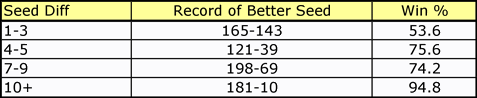
So if Sagarin calculates that the teams are within two points, and there are no geographical considerations, then the next thing I look at is seed. If the differential is four or more, I am going with the better-seeded team barring some overriding factor. In 2008, this methodology was 2-1, winning the Oklahoma/St. Joseph and Purdue/Baylor matchups, while losing the USC/Kansas St. matchup. (Interestingly, all three winners had a slight advantage according to Sagarin, even #11-seed KSU.) Had I gone with KSU’s location advantage, this part of the system would have gone 2-0.

POMEROY RATINGS

Last season, I used Points Per Shot (PPS) to pick seven games and went 3-4. I still believe that PPS is a vital stat, but it doesn’t take into account turnovers, which is key when trying to determine just how good a team is. Ken Pomeroy has offensive and defensive efficiency stats that take into account pace and strength of schedule, and those are compiled to calculate his Pythagorean Winning Percentage.

Here’s how the last few winners were ranked at the end of the tournament in this statistic: Kansas (1), Florida (2), Florida (1), North Carolina (1) and Connecticut (2). Clearly, when picking the overall winner, we don’t want to stray too far from this ranking.

Let’s take a look at the Final Four participants for the last five years and see how they finished, keeping in mind that their final ranking does take into account how they performed during the tournament.

2008: Kansas (1), Memphis (2), UCLA (3), North Carolina (4)
2007: Florida (2), Ohio St. (4), Georgetown (5), UCLA (6)
2006: Florida (1), UCLA (3), LSU (10), George Mason (23)
2005: North Carolina (1), Illinois (2), Louisville (5), Michigan State (7)
2004: UConn (2), Georgia Tech (7), Duke (1), Oklahoma St. (3)

So, excluding the outlier (George Mason), the average Pythagorean ranking for Final Four teams over the last five years has been 3.6. I wish the site showed the pre-tourney rankings, because it would be helpful to know where these teams were ranked when they started the tournament. Since all we have to go by is where they stand now, it would seem unwise to pick a team outside of the top 10 to reach the Final Four.

I used the Pythagorean method back in 2007, and through the second round of the tournament, it had picked 37 of 48 winners. I stopped using it at that point, and I’m not sure why. This year, I’ll keep track of its accuracy throughout the end of the tourney, though I think it’s important to use the static, pre-tourney rankings because that’s all we have to go by when we fill out our bracket.

We’ll see how much I use this statistic as we dig into the bracket.

So, without further ado…

Continue reading »
Ty Lawson’s big toe is a big problem

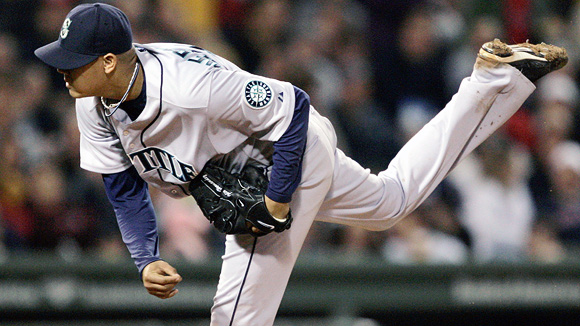
North Carolina is supposed to march to the Final Four, but they’re going to have a tough time if they’re without ACC Player of the Year Ty Lawson.

Coach Roy Williams says the Atlantic Coast Conference player of the year must practice Tuesday and Wednesday in order to play in Thursday’s NCAA matchup against Radford. Lawson has been hobbled since injuring his right big toe before the regular-season finale against Duke, an injury that sidelined him at last weekend’s ACC tournament.

Williams says Lawson’s recovery is going slower than he had expected. Lawson said at the ACC tournament that he was feeling better after several days of rest.

The good news is that the Tar Heels play their first two games in Greensboro, which is only about an hour away from campus. Lawson doesn’t have to travel, which can take its toll on a player’s health.

“Williams says Lawson’s recovery is going slower than he had expected.”

Boy, it’s a bad sign when the words “recovery” and “slower” appear in the same sentence. Even if he can play, there’s a substantial risk of re-injury. North Carolina can’t win a title without him. And if he’s not practicing now, and it doesn’t look like he’s going to be ready to go tomorrow, I highly doubt that he’s going to get to that 90-95% threshold required to get the Tar Heels over the hump.

In my annual bracket column, I had North Carolina going through to the Final Four because all (or was it most?) of the signs pointed to Lawson being ready to go. If he’s hobbled, I don’t think North Carolina gets past Gonzaga in the Sweet Sixteen.

It looks like I have to go change my picks…

« Older posts Newer posts »