Category: NBA Draft (Page 33 of 55)

Conley on the move?

The Racine Journal-Times is reporting that the Bucks and Grizzlies have verbally agreed on a deal that would send Mike Conley, Jr. to Milwaukee in exchange for Ramon Sessions and Joe Alexander.

I’ve been told both teams have virtually agreed on the conditions of the trade and only Bucks owner Herb Kohl had to give his stamp of approval. Bucks general manager John Hammond, reached in North Carolina where he was on a scouting trip, said it was his policy not to comment on any trade speculation.

As a Bucks fan, I don’t really want to see this trade go down. I’m not clear on why Sessions isn’t getting any run despite being the 15th most productive point guard in the league. He must be in Scott Skiles’ doghouse. That’s the only explanation. And it’s a shame because the kid has shown tremendous potential. At 22 years of age, he has a bright future ahead of him.

Neither Joe Alexander nor Mike Conley has shown a whole lot in their brief careers. Conley continues to struggle with his jumper (41%), and if the Bucks were to trade for him, it would be for his potential, not his production. I don’t understand why a team would trade for a semi-expensive, 21 year-old, unproductive point guard when they’d have to give up a cheaper, more productive 22 year-old point guard. Sessions is a better shooter and has a much better assist-to-turnover ratio (3.43 vs. 2.47). I’ve always liked Conley as a prospect, but simply stated, when comparing the two, Sessions is simply more of a proven player.

Like I said, it looks like Sessions may be in Skiles’ doghouse. While I do like the sense of discipline and defense that Skiles has brought to the Bucks, I’ll be disappointed if Milwaukee trades away a productive young player because the head coach can’t find a way to get through to him.

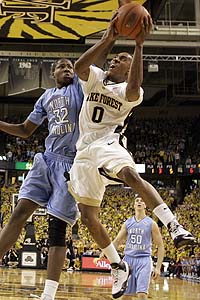
Teague leads Demon Deacons past Tar Heels

Everyone, meet Jeff Teague…

He’s a 6’2″ sophomore combo guard from Indiana who is averaging 20.6 points and 4.1 assists per game. Last night, in a marquee matchup with UNC’s Ty Lawson, Teague posted 34 points and four dimes to help #4-ranked Wake Forest pull out a 92-89 win over the #3-ranked Tar Heels. Teague completely outplayed Lawson — nine points, five assists, six rebounds — which makes one wonder why Lawson is projected to go in the mid-first round of the NBA Draft while Teague isn’t even on NBADraft.net’s draft board. Wait, there he is at #14…hmm…he wasn’t there last night when I checked. Does that mean, according to NBADraft.net, that Teague’s performance against North Carolina raised his stock from undrafted free agent to borderline lottery? It would appear so. (For the draft geeks, here is DraftExpress.com’s profile for Teague. They aptly compare him to Aaron Brooks and Louis Williams.)

Danny Green led the Tar Heels with 22 points, hitting 3 of 4 of his three-point shots. Tyler Hansbrough finished with 17 points, but only shot 3 of 12 from the field. The Demon Deacons’ big men did a nice job of keeping him from catching the ball in the post.

Wake Forest is a team to be reckoned with in the ACC. In addition to Teague, they have Al-Farouq Aminu (a 6’9″ lottery prospect) and James Johnson, who are both projected to go in the first round of the NBA Draft. Seven-footer Chas McFarland (who posted 20 points and nine boards last night) anchors the middle.

Wake Forest has a pair of tough road games coming up against Boston College and Clemson before coming home to host Virginia Tech and Duke.

Interview with Rich Zvosec — author, former coach, ESPN analyst

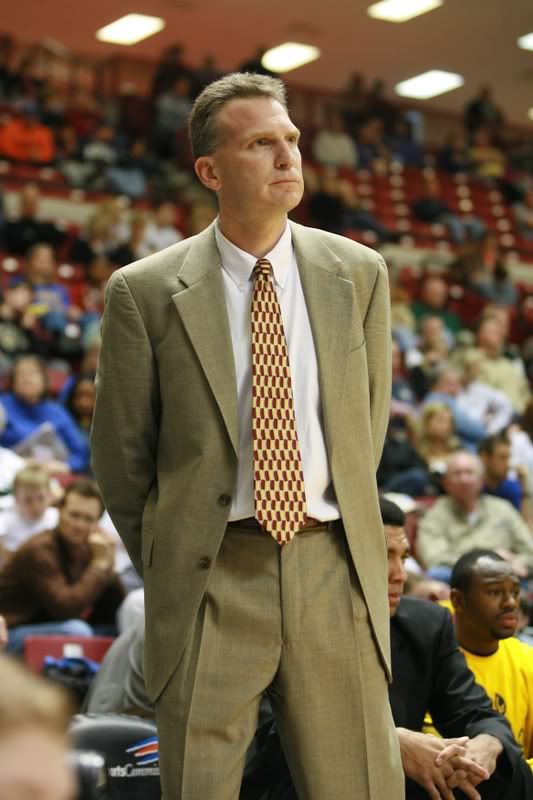
Rich Zvosec, former college basketball coach (and friend of The Scores Report), has written a book, Birds, Dogs & Kangaroos: Life on the Back Roads of College Basketball. In Zvosec’s humorous way, the book outlines what life is really like at the low Division I level.

I played ball at what would be considered the high Division III level and it sounds like we had more resources, support and continuity than a few of Zvosec’s teams. Coach Z is an engaging writer and has a plethora of funny/outrageous/touching anecdotes to relate as he goes through his entire coaching career.

The Scores Report had the opportunity to talk to Zvosec about why he wrote the book, what it’s like coaching in New York City, and the hurdles he had to overcome to develop into a successful color commentator for ESPN.

The Scores Report: Hi, this is John Paulsen from The Scores Report. How are you doing?

RZ: Hey, John. How are you doing?

TSR: Pretty good. I just finished reading your book over the weekend. I enjoyed it. It brought back some memories of when I played Division III ball – sounded like some of the same crazy stories. Can you tell me a little bit about why you decided to write the book?

RZ: When I first got the job at St. Francis in New York, some of the different things happened. My mother always told me, “You should save all these stories and write a book someday.” I guess I kind of wrote it for a number of different reasons. It’s kind of a cathartic look back at 25 years of kind of chasing a dream – college coaching. And the other part of it is, I wanted to give the reader a different perspective on college basketball. So often the media only covers the highest of levels and consequently everything is portrayed as just a business transaction, so to speak. Whether it comes to recruiting or wins and losses. I wanted people to get an inside look at what a coach actually goes through. And certainly it’s a little different at a St. Francis than it is at North Carolina or Kansas.

TSR: You said in the book that you coached at ten different schools. Could you give our readers a brief rundown of where you coached?

RZ: I spent 25 years, 16 as a head coach. I was the head coach at the University of North Florida, where I started the program. I coached at St. Francis college in New York. There was Millersville, Pennsylvania. And my last stop, as a college coach was at the University of Missouri at Kansas City, where I was at for the last seven years.
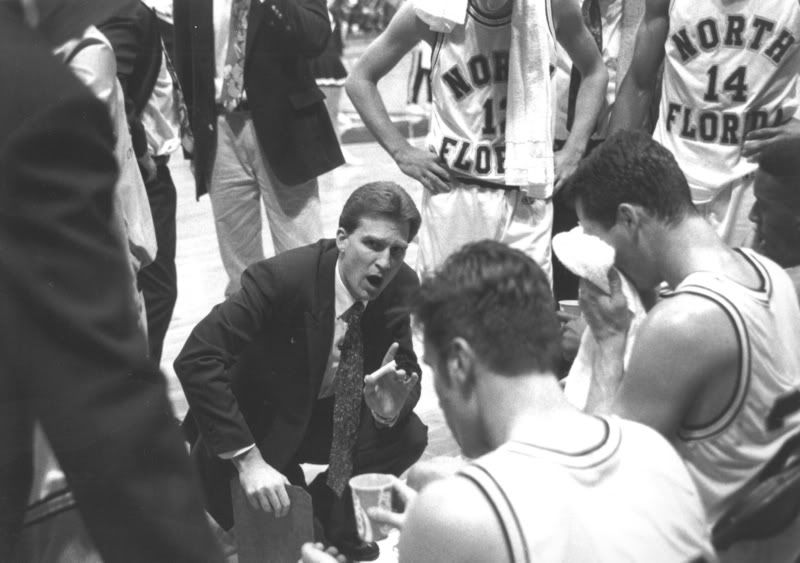
TSR: You mentioned St. Francis; what’s it like being a small fish in such a huge pond, basketball-wise?

RZ: It was a great experience. I was 27 when I got the job and was the youngest Division I head coach in the country. St. Francis is a commuter school. Basically, the campus is one city block. It’s one building, seven stories high, with a gym on the third floor. It was a great opportunity to cut my teeth, and also to rub shoulders with some of the premier coaches at the time in the New York metropolitan area. I had an opportunity to become friends with P.J. Carlisemo, who was at Seton Hall at the time and also Lou Carnesecca, the legendary coach at St. John’s.

TSR: You told a story in the book about taking the subway to one of your games. Only in New York, right?

RZ: Our archrival was Long Island University, which ironically enough, is not in Long Island. It’s in Brooklyn, which to this day I’m not sure why it’s called Long Island University when it’s in Brooklyn. They were actually two subway stops away from us. And because of the parking and transportation, it was much easier for us to jump on the train over to their campus as opposed to getting on a bus, or in a van, or some other mode of transportation. And what made the game even more interesting was that it was played in the old Paramount Theatre, which is an old movie theater where they had plays and obviously films. And it gave a lot of character because you’re playing on a stage. So that was interesting.

TSR: And there you had – I believe it was an athletic director – who didn’t want to pay for your team to play in the semifinal of your conference tournament.

RZ: Actually it wasn’t the athletic director it was the Vice President of Student Affairs.

TSR: Ah, okay. But there was a lack of commitment to the basketball program there?

RZ: Pretty much. The athletic director there was fantastic. He was actually the soccer coach as well. How he survived without strangling the Vice President of Student Affairs for so many years is beyond me.

TSR: That’s one of the big differences between the upper echelon Division I schools and the lower Division I, which you describe in your book – how much support the athletic program has from the school, correct?

RZ: That is correct. I think it really comes down to resources. I think the easiest way to quantify it for the reader is if you’re in a low major, you go play guarantee games. That means you go play at a Syracuse or at a St. John’s strictly for money. They’re never going to return the game to you. Nowadays, you can get as much as a hundred thousand dollars for a road game. That would be low major. Mid-majors would be teams that don’t have to go play guarantee games but don’t have the money to buy home games. And then high-majors are obviously teams like Kansas and Syracuse, North Carolina – people that can buy nine or ten home games before their conference schedule every year.

TSR: So I wanted to ask you a couple of things about the state of college basketball today. Specifically, the NBA age-limit and the effect it’s having on college hoops. Brandon Jennings is a player that was going to go to Arizona, but there was a problem with his test score, so he elected to go play overseas. So he’s going to go play for a year overseas and then come back and play in the NBA. What kind of an effect is this having on college hoops?
RZ: I think it’s having somewhat of a developmental effect, i.e. you have a situation where guys aren’t as fundamentally schooled when they come out of college to go to the NBA, because they’re only playing one year. Now, on the other hand, I’m for either having no rule at all, and just allowing the players to go right to the pros out of high school, or go to the baseball rule where you can’t leave until after your junior year. Right now, for a guy to come to school for one year, to some degree it’s doing a disservice to the institution, because the player doesn’t necessarily want to be at school, but he has to be. I think what Brandon Jennings is doing going overseas – hey, more power to him. I respect that choice because he doesn’t want to be in college. I respect that decision more than a guy who will come to school and just pay lip service. And not to say that a young man can’t get anything out of one year at college because I think they can, and ultimately the reason someone goes to college is to get a better job. The story that sticks in my mind when it comes to guys leaving school early is Bob Costas. Bob Costas never graduated from Syracuse, and by his own admission, he didn’t go back for his senior year because he was offered a broadcasting job and it was too good to turn down. So that’s why people go to college – to get a better job. If a young man can come to college for one year and sign a professional contract where he’s making two hundred thousand dollars, why should he come back and then get a job where he’s making forty thousand dollars a year? Economically, it doesn’t make sense.

TSR: It seems, from the NBA’s point of view, that they want a more mature league, but I wrote a column when this age-limit passed and found that players that came straight out of high school actually had a better chance to become a starter-, star- or superstar-level player than your average college senior or international player that was drafted. So they have the talent, it’s just about where they cultivate that talent and David Stern wants the college ranks to do that.

RZ: The NBA drafts out of two things. They draft out of potential, but more importantly, they draft out of fear — the fear of passing over the next Michael Jordan or the next Kobe Bryant. So they’re going to draft an international guy or a guy with one year of college over maybe a more seasoned college player, because they’re afraid that that guy is going to develop into the next Kobe Bryant. And they’re going to be the one that missed on that guy. It’s unfortunate that the group that’s standing in the way is the NBA Player’s Association. For the life of me, I don’t understand why. Because you would think that they would want older guys so that their veteran players aren’t replaced by younger guys. It will be interesting to see what happens. I know the Coaches Association wanted the baseball rule then it got rolled back two years and then eventually it was rolled all the way back to one year.

TSR: I’m with you. I’m okay with guys going straight to the NBA, but I think if you go to college you should stay for at least two years. At least during that freshman year, they would have to go class, because I think some of these guys know that they don’t have to go to class because they know they’re leaving.

RZ: That’s exactly right. If you keep going to school for two years you have a much better chance of coming back and getting your degree than somebody who goes to college for one year and basically that second semester they really haven’t done anything. Because here’s the caveat – the NCAA wants to talk about a school’s progress and retention rate. Well, if a kid signs a professional contract, it doesn’t matter that he’s leaving school, ineligible to come back the following year. So where’s the motivation to get that kid to at least finish complete that freshman year in good academic standing?
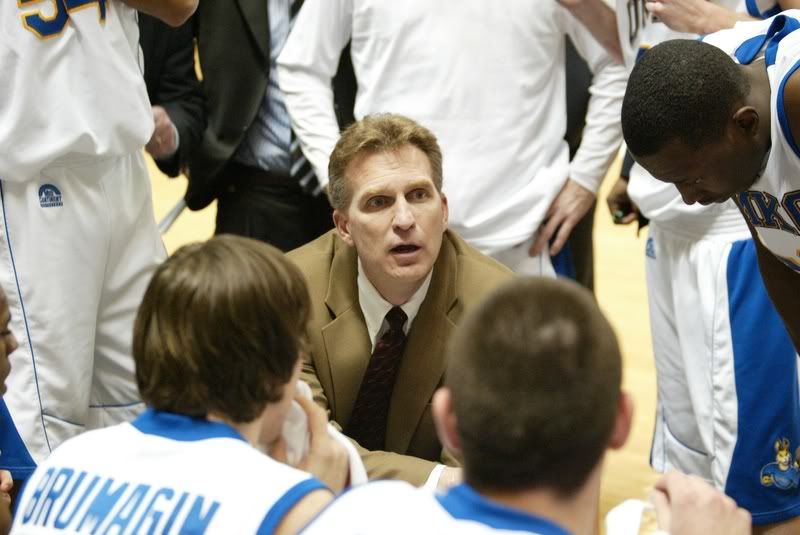
TSR: So, moving on to your current career. You spent last season I believe calling games for the Big Ten Network and now you’re doing a package of games for ESPN. How’s that going?

RZ: It’s going well. I’m really enjoying it. All I know is that I haven’t lost a game in two years. So that’s always a good thing. It’s a great opportunity to stay around the game. I enjoyed getting to know and watch all the guys in the Big Ten last year and this year I’m doing primarily Big 12 games, so I’m kind of getting the same opportunity in the Big 12. I enjoy going to watch practice and see how different coaches prepare their teams. When you’re running your own program as I did for so many years, you don’t really get that opportunity, so in a lot of ways, I’m like a kid in a candy store.

TSR: So when you called your first game on TV, or first couple of games, what were some of the challenges there?

RZ: Actually, the first game I did was Michigan and Radford. And fortunately I did it with Roger Twibell, a longtime broadcaster. He was very helpful in setting me up to cover certain things that I wanted to talk about during a game. But probably the biggest challenge when you’re sitting there doing a game, and you have the producer in your headphones, and they’re saying, “say this” or “this is what’s coming next.” I’ll never forget the very first game I’m doing it and I hear the producer say “Clem Haskins,” and I’m thinking “Clem Haskins, what in the heck is he talking about?” Well then they go to a shot of Jerry Dunn, who is the associate head coach at Michigan, with the graphic underneath his picture that says “Clem Haskins, former head coach at Minnesota.” Well, I was so raw and since I wasn’t looking at the monitor, so I didn’t see it. So they went to Jerry Dunn, I actually rattled off “Jerry Dunn, former head coach at Penn State University now the associate head coach at Michigan.” And the next thing I know, I hear this producer cussing in my headphones because they had the graphic wrong. Well, I had no idea, and probably, if I had been doing this a little longer, I probably wouldn’t have said that. Sometimes accidents happen in a positive way.

TSR: So when’s the next game that we can catch?

RZ: Actually I have Oklahoma and Kansas State on Saturday.

TSR: That should be a good one.

RZ: Yeah, that should be a good contest.

TSR: Well, that’s about all I have for you. Thanks for sending over the book and best of luck in your new career.

RZ: I appreciate that. Thank you.

TSR: All right, talk to you later.

RZ: Take care.

Correcting ESPN The Mag, Part 1

Regular readers might be familiar with my occasional posts — “Correcting Bill Simmons” and “Correcting Rick Reilly” — where I try to help out my better-paid, less-informed counterparts by pointing out when/where they’re wrong. This time, I’m going to tackle the December 29th, 2008 issue of ESPN The Mag as a whole. I know I’m going to hear some guy at the sports bar regurgitate this “analysis” as his own opinion and I won’t have the wherewithal or the energy to call him on it, so I might as well do it here.

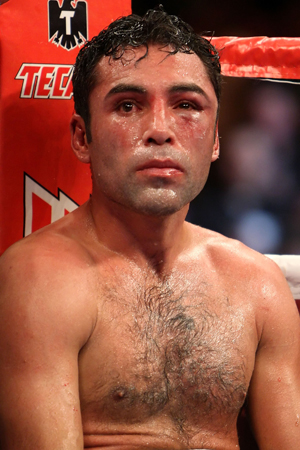
Let’s start with everyone’s favorite blowhard — and I doubt he’d take that as an insult given his commentary stylings — Stephen A. Smith. In his “Up Front” column, he criticizes Oscar De La Hoya for not knowing when to give it up.

Help, someone! Pretty Please!

It would be really nice if someone could muster some plausible explanation as to why a fighter like Oscar De La Hoya, beyond his prime for quite a while before the Manny Pacquiao bout, still chose to step into the ring and get his brains beat out. The mismatch was so obvious that Oscar’s wife, Millie, was screaming for him to quit before he had the common sense to do it himself.

It’s really easy to knock De La Hoya after the match is over when it’s clear that he shouldn’t have fought the fight. But one quick look at the pre-fight odds (-165 Hoya / +135 Pacquiao) reveals that this fight fooled a LOT of people, not just the Golden Boy. According to the betting public, De La Hoya was the clear favorite in the fight, so why would Oscar think that he was about to step into a beatdown? The betting public clearly doesn’t know everything, but it’s a pretty good gauge of public opinion and if the public is fooled, why would De La Hoya — who has an ego of a big-time fighter — know any better?

If Smith writes this column before the fight, I’d give him props. But this is classic kick-’em-while-they’re-down writing.

Let’s move on to Mike & Mike (Golic & Greenberg) who answer “The Big Question” — if the best players in college sports don’t make any noise in the pros, what’s their legacy?

GOLIC: If you think about it, we have two players this year who could end their college days as two of the all-time greats in their sports: Tyler Hansbrough and Tim Tebow. But neither one of them appears to have the type of skills that would make them excel as pros.
GREENY: It’s probably the best illustration we’ll ever see of the difference in athleticism from one level to the next. In college, guys can still dominate even if they’re not athletically superior to the competition. I don’t care how hard you work; if you’re not freakishly gifted physically, you are not going to be a star in the NFL or NBA.

I don’t have any idea if Tim Tebow can make it as a QB in the NFL, so I’ll let Anthony Stalter field that question. As for Tyler Hansbrough, I think he’s going to be a productive power forward at the NBA level. Whether or not he’s going to be a “star” depends on your definition of the word.

Is he going to turn into another Chris Bosh or Amare Stoudemire? Probably not. But if a team can land a starter in the late lottery, that’s considered a success. I see Hansbrough as a player who will focus on defense and rebounding. In fact, he could be a Dennis Rodman-type who can hit a 15-foot jumper. The Worm had the innate ability to rebound, and while Hansbrough doesn’t quite have his nose for the ball, he does have the work ethic, and then some. If he plays 30 minutes a game, I see him averaging 10 rebounds at a minimum. He has really improved his face up game, so if defenders help off of him, he’ll be able to make them pay. He should be especially productive in the regular season — while his opponents are loafing through three-quarters of the game, he and his non-stop motor will be running around like a kid on a sugar high. Work ethic is something that is often overlooked when it comes to the NBA draft and I think Hansbrough is a guy that has the drive to make himself the best player he can be. Other guys might have higher ceilings, but it doesn’t matter if they don’t have the heart to reach them.

Mike & Mike also discussed the upside/downside of a college football playoff…

Golic: As the bowl season ramps up, I cannot stress enough the need for a college football playoff. March Madness is the best tourney of the year, and a deep run by a Cinderella is one of the best parts of it. In the BCS, teams like Boise State and Utah will never play in the championship game.

Greeny: Cinderellas are all well and good, but they should know their place. The regular season is the one thing college football still gets right. A Cinderella team winning it all in a playoff would put that at risk.

Was the editor drunk on egg nog when he reviewed this? Golic’s point is clear, but what is Greeny talking about? Forget about the fact that he seems to be defending the current system — his response is nonsensical. First, he says that Cinderellas “should know their place.” Huh? An undefeated team like Utah or Boise St. should just shrug their shoulders and admit that they don’t belong because they only beat one ranked team all year? Who’s to say that they don’t have the talent and execution to play with the big boys? What’s worse, Greeny just contradicted his point from the previous topic — that, at the college level, a player can still dominate without being athletically superior to the competition.

He goes on to claim that a Cinderella winning it all in a playoff would put college football’s regular season at risk. I don’t have any idea what this means, so I’m not even going to try to speculate. I will say this — whoever wins a playoff deserves to be the champ, and I don’t see how a team like Utah winning three playoff games against the best competition in the country can hurt college football’s regular season.

Lastly — and this is a relatively minor point but it hits close to home because I am (admittedly) a fan of the Milwaukee Bucks — in the “NBA Insider” section, under the article heading “Contract Killers,” Chris Broussard lists a number of guys that are not living up to the contracts they signed this offseason, beginning with Andre Iguodala and Elton Brand. He goes on to say this…

Chicago locked up Luol Deng for $71 million; he’s scoring 13.9 ppg, Baron Davis got $65M from the Clips; he’s shooting 39%. Andrew Bogut ($60M) and Emeka Okafor ($72M) are checking in below their career scoring averages.

Granted, Luol Deng’s FG% is down (48% last year to 44% this year), Baron Davis is not shooting well (actually 37% now, but he’s a career 41% shooter so no big surprise there) and Okafor’s scoring numbers are down (though his FG% is up 5.5% and his PER is the second highest of his career). But why does Broussard have to bag on Bogut?

Sure, he’s averaging 11.5 ppg, down from 14.3 last season. But, in case Broussard hadn’t noticed, the Bucks added Richard Jefferson (and his 14.4 shots per game), so it’s no surprise to see that Bogut’s attempts are down almost three shots a game. His rebounds (10.7) and FG% (55.3%) are at career-high levels even though he missed three games with a knee injury in late November. And it’s no coincidence that the Bucks lost those three games.

Considering that his deal ($12 million per year) was the most affordable on that list of bad contracts, the guy doesn’t deserve to be listed amongst the other “contract killers.”

All I want for Christmas…

The world is a mess. Osama Bin Laden is still at large, the U.S. economy is in a recession and our country is still fighting two different wars on two different fronts.

But I can’t control any of that. On the whole, 2008 has been a pretty good year for Team Paulsen. My wife and I had our first child, a happy and healthy son (97th percentile in height = future 6’10” power forward), and I still have a job and a roof over my head.

I write about sports, so in the spirit of Christmas, which – let’s be honest – is really about getting, not giving, I scribbled down a few things that I’d like to see gift-wrapped underneath the tree.

So, without further ado, all I want for Christmas…

…is a college football playoff.
This drives me nuts and I know I’m not alone. I’m a casual fan of college football and I only watch maybe 10-15 games the entire year, including one bowl game – the BCS title game. If there were an eight-team playoff, I would make a point to watch every single one of those seven games. Not only that, but I’d start watching more of those late-season games that feature teams that are fighting for a playoff berth. I know money is a big issue with the BCS, but if casual fans are going to increase the number of games they watch by 50-70%, how can this not bring higher ratings and more ad revenue? This whole situation is mind-boggling.

…is Sunday Ticket for all fans.
I live in a condo and my patio doesn’t have a view of the southern horizon, so I can’t get DirecTV. And since I can’t have DirecTV, I can’t get NFL Sunday Ticket. Whenever the package is up for sale, the NFL continues to sell the exclusive rights for Sunday Ticket to DirecTV. The cable companies are part of the problem – they can’t seem to join forces and get a combined offer together – but the NFL is mostly to blame for not doing everything in their power to bring as much NFL action as possible to their fans. The increase in the number of subscriptions would offset the loss in profit from selling the “exclusive rights,” or at least I think it would. I don’t really care. I just want to get Sunday Ticket in my condo that has no view of the southern horizon and I’m guessing there are millions of fans that are in the same boat.

…is every game in HD.
The NFL is on board. But there are still some sports that are slow to move to the HD format. The NBA Season Pass is a perfect example. Sure, I can watch any NBA game I want, but the picture is always crappy. Wouldn’t it be great if all the major sports – NFL, CFB, CBB, MLB, NBA and NHL – broadcast every game in high def?

…is a NBA “Fourth Quarter Channel” that bounces around to the best action.
DirecTV’s Red Zone Channel is great. Every Sunday, they jump from game to game and bring us all the scoring plays and red zone possessions. Why doesn’t the NBA Season Pass create a similar channel? It wouldn’t have to operate on days where the league has a light schedule – say, less than five games – but when there are five or more games, why not have a channel (in HD, of course) that brings us all the action, especially all the nail-biting drama in the fourth quarter? The NBA has an advantage over the NFL in that the start times are staggered due to the different time zones, so when there is a full slate of games, there should be plenty of good action and exciting finishes to choose from.

…is a salary cap in Major League Baseball.
I’m not asking for a hard cap, like the NFL, though that would be optimal. I just want some sort of a salary cap with a 50% luxury tax that pays the small-market, fiscally conservative franchises and allows them to be profitable. Say we have a cap of $100,000,000. That way, when the Yankees roll out their $250,000,000 payroll, they have to pony up another $75,000,000 to be divvied up amongst the small market teams. Maybe that would make them think twice before buying up every good player on the market. Before you throw the Tampa Bay Rays in my face, let’s see where they are in four or five seasons. Small market franchises can put together a competitive team for one or two seasons, but it’s impossible to keep it up over the long haul because the Yankees or the Red Sox are inevitably going to come in and sign all their good players.

…are shorter MLB, NBA and NHL seasons.
I know this is a moneymaker for each league, but these seasons are so long that they barely even matter. Long seasons are all right as long as the playoffs aren’t too inclusive, but the NBA and NHL have 82-game seasons and over half the teams make the postseason. This adds up to relatively meaningless regular season games. I’d cut the regular season for all three sports in half and eliminate back-to-back games, at least in the NBA and NHL. This would improve the quality of play and make the regular season important again. Anytime people refer to your regular season as a “grind,” it’s time to start thinking about paring it back.

…are more Saturday NFL games once the college season is over.
College football is pretty much dead the entire month of December yet the NFL is reluctant to schedule more than the occasional Saturday game. This seems like a missed opportunity to me. I know the NFL likes to own Sundays, but what’s wrong with scheduling a few of the better matchups on Saturday so the entire country can see them?

…is a two-year minimum (or an age-limit of 20) before players can declare for the NBA.
These “one and done” players are making a joke out of college basketball. It’s wreaking havoc for college recruiters and there is little continuity in many of the major collegiate programs. In a perfect world, this would be the rule: 1) high school players can declare themselves eligible for the NBA Draft immediately after graduation or 2) they can go to college (or the NBDL or overseas) for a minimum of two seasons before making themselves eligible for the draft. Almost two years ago, I wrote a column that went into great detail about how high school draftees have a better chance of making it in the pros than college or international players do. Almost two-thirds (64%) of high school players drafted in the first round went on to become superstars, stars or starters in the NBA. Compare that to the one-third (32%) of college and international players drafted in the first round that went on to have similar success. It’s clear that high school players are capable of being successful in the NBA, but I understand why the league would like these players to get a year or two of coaching and experience on the college level before making the jump. Under my proposal, if a player does not get drafted, he could still go to college for two seasons and make himself eligible again. If a high school player is drafted but is a bust, he can play in the NBDL or overseas until he’s seasoned enough to return to the NBA (and the league should have an office that helps these players find a new basketball home). The best players successfully make the leap, the fringe players have two years of college before the NBA and the so-called busts have the safety net of the NBDL and/or playing overseas until they’re good enough to return.

But enough about me – what sports-related gifts would you like to see under the tree?

« Older posts Newer posts »