Tag: NFL free agency (Page 3 of 4)

2011 NFL Free Agency Predictions: Where will Nnamdi Asomugha land?

Seattle Seahawks Golden Tate (81) can’t hold on to a Matt Hasselbeck pass as Oakland Raiders Nnamdi Asomugha (21) defends in the second quarter at the Oakland Coliseum in Oakland, California on October 31, 2010. The Raiders defeated the Seahawks 33-3. UPI/Terry Schmitt

With the lockout in the rearview mirror, NFL fans can now put away their “Lawyer Jargon for Dummies” textbooks and start hitting the rumor mill once again.

Since I’m a fun guy who likes to have some fun and enjoys a little fun, I’ve decided to have a little fun by trying to predict where some of the top free agents will land over the next two weeks. Remember, this is all for fun and is not to be taken too seriously. If you’re the asswipe who reads these things and immediately gets in a tizzy because you disagree, then be aware of my one and only rule when it comes to predictions: Don’t criticize me if you don’t have the stones to leave your own predictions in the comments section.

Now that that’s out of the way, let’s have some good ol’ fashion family fun! (Have I overused that word yet? Did the joke land? It wasn’t funny in the first place? All right…) Here are 10 free agents and my predictions for where they might land. In the “Hedging my bet with” section, I list an alternative to where I think said free agent may wind up.

Nnamdi Asomugha, CB: Tampa Bay Buccaneers
It has been reported that the 2011 NFL salary cap will (roughly) be around $120 million, which leaves the Bucs with (roughly) $60 million to spend in free agency. Of course, that doesn’t mean that cheapo Malcolm Glazer will open his wallet, but we do know that the new CBA comes with a salary cap floor. Thus, teams like the Bucs will have to spend something in free agency. The Bucs have built a solid, young core centered around quarterback Josh Freeman. With Aqib Talib’s legal situation up in the air, they have a definite need at corner and if teams like the Eagles, Cowboys and Jets feel as though Asomugha’s price tag is too steep, maybe the Bucs will step in and shell out big money to land the top free agent on the market. (And if you’re wondering about whether or not Asomugha is a fit for Raheem Morris’ defensive scheme, don’t worry about it because the man is a fit for every defense.)
Hedging my bet with: New York Jets

DeAngelo Williams, RB: Carolina Panthers
The emergence of Mike Goodson and Jonathan Stewart make Williams expendable but the Panthers are still the frontrunners to retain him in my eyes. He says he wants to stay in Carolina and while he’d be a fool to not at least test the market, I think he’ll eventually stay put. The Panthers realize they need a good stable of running backs no matter who starts at quarterback this season, so re-signing Williams is still a priority despite expanding rolls for Goodson and Stewart.
Hedging my bet with: New York Giants.

Continue reading »

Putting the NFL’s potential lockout in dummy terms

If you, like me, live in fear of the fall of 2011 having no NFL football, but don’t understand all of the legal mumbo-jumbo associated with the labor dispute, I’m hear to put things in terms we all can understand.

First things first, and that is that the owners unanimously opted out of the current CBA (Collective Bargaining Agreement) in 2008, one that they had signed off on in 2006. Since I’m making this as easy as possible to understand, let me tell you that a CBA is the agreement two sides, usually labor and management, come to on various topics, most of which include how money will be divided. And in this case, the owners realized that player salaries were escalating out of control and that their profits were being squeezed more each year. Yes, part of the problem is they are agreeing to these salaries, and player agents are a huge part of that. In the bigger picture, the real problem is revenue sharing, a.k.a. how to split the financial pie. And while the NFL is bringing in a ridiculous amount of money ($7.6 billion in 2008), about 62% of that goes to player salaries, a number that keeps climbing due to increases in the overall salary cap. To make matters worse, there is also revenue sharing among teams, meaning the big market teams have to help the small market teams to help them compete with each other on the field.

So the owners want something like 18% of the pie back, in the form of salary cuts to the players. Naturally, the players do not want to give them this money back, and that is why head of the players’ union DeMaurice Smith announced during the Super Bowl’s hype week that the chance of a lockout were a 14 on a scale of 1 to 10. For his part, NFL commissioner Roger Goodell denounced that, saying he hoped it wouldn’t come to a work stoppage, but he also knows that it’s a very real possibility. The players aren’t necessarily saying they won’t give part of the pie back, either. Smith wants the owners to show the players that they are struggling to run their businesses, meaning he wants them to open up their books. And the owners won’t do it. So are the numbers being reported not what they say? It’s hard to say the owners aren’t lying about these numbers, when they keep agreeing to player contracts and they keep building huge state-of-the-art stadiums, but they also have the right to not open their books if they don’t want to. And the bottom line is that the owners are not happy about doling out more and more of their profits.

Then, of course, there is the issue of an uncapped 2010 season. The current structure calls for a salary cap through the 2009 season, with 2010 being an uncapped year if the owners opt out of the CBA, which they did. Last time this happened, in 1993, player salaries rose to 69% of NFL revenue, and that is expected to happen again. But of course, nothing is guaranteed in 2011, so the players have to be careful of what they wish for.

If organized sports have taught us anything, it’s that the possibility of no games being played can and will happen. You might remember the NFL had a similar situation in 1987, and the owners used replacement players for a few games before the dispute was resolved and the regular players went back to work. MLB cancelled the last two months of the 1994 season as well as the playoffs and World Series, a black mark they have not recovered from. The NBA had a similar situation in 1998-99, with almost half a season being wiped out. And of course, the freshest in our memories is the NHL’s 2004-05 season that was not played due to a labor dispute.

So as fans, we have to hope a few things happen between now and the summer of 2011, which is spewing a black cloud that keeps getting darker and more imposing by the day. We have to hope the owners agree to open up their books, and we have to hope the players agree to give back part of the pie for the health and financial well being of the NFL. Sure, we want the players we love to watch get the money they deserve, but within reason. Certainly it’s not worth much to anyone to have no NFL games being played, but it may very well come to that.

Of course, the NFL is not the only business that would be affected by a lockout. Besides the local businesses near stadiums that thrive during the season, fantasy football and all of the money (reported as upwards of $3 billion in 2007) associated with that is threatened here. Think about that for a second. The folks that make their livelihood in that world will be flattened financially. Well, maybe that’s going to be the subject of my next piece on this, but for the moment I wanted to do my part to help everyone understand the dispute between owners and players, and what it all really means.

Many think that a lockout won’t really happen, and I’m optimistic myself that it won’t. But history surely does make us all nervous, doesn’t it?

Schefter: Top 5 NFL free agents for 2010

ESPN’s Adam Schefter breaks down the top 5 free agents in this year’s class.

1. Julius Peppers, DE, Carolina Panthers
Should Carolina not tag Peppers — and it would cost the Panthers $21.4 million to do so — he might become the highest-profile free agent since Reggie White. Peppers, 30, would like to play in a 3-4 defense and rush the quarterback as often as possible. Every team in the league could use another pass-rusher. The question will be which ones are willing to spend the millions it will take to land him.

2. Karlos Dansby, LB, Arizona Cardinals
Just like the Panthers might deem Peppers too pricey to franchise, the Cardinals could do the same with Dansby, making him another desirable defensive free agent. It would cost Arizona just less than $11 million to keep the 28-year-old Dansby, and he would love to test the free-agent market and become one of the highest-paid defensive players in football history.

4. Chester Taylor, RB, Minnesota Vikings
Although Taylor turns 31 in September, he has low mileage, having backed up Jamal Lewis in Baltimore and Adrian Peterson in Minnesota. Should the Vikings tag Taylor, he would make $8.15 million next season — about twice as much as Peterson. So Taylor figures to be free, and he figures to be the top running back available for plenty of teams that need one.

Texans’ cornerback Dunta Robinson was No. 3 on Schefter’s list, while Casey Hampton and Ryan Clark of the Steelers were list at No. 5.

It’s interesting that Taylor is getting a lot of attention this offseason despite his age. Running backs over 30 usually get the silent treatment during the offseason, but Taylor figures to be a hot commodity when the free agency period opens in a couple weeks. A team like the Chargers seems like a good fit for him.


Photo from fOTOGLIF

Favorite team not making many moves? Don’t sweat.

With the first wave of free agency complete in the NFL, this is roughly the point in time where fans start having mental breakdowns regarding why their favorite team hasn’t made many moves.

It’s because they’re smart, Junior.

The draft is just over a month away and it appears that more and more teams have realized that you don’t build a core in free agency – you build it in April.

Two offseasons ago, the 49ers signed Nate Clements, Michael Lewis and Tully Banta-Cain in free agency and all the experts bought into the idea that San Fran had dramatically upgraded its defense in one offseason. But then the games started and it was same old, same old for the Niners as they finished 5-11 and third in the NFC West. As it turns out, the players that San Fran had drafted high in previous years (Rashaun Woods, Alex Smith, Vernon Davis, etc.) didn’t produce.

Last year, the Raiders made the biggest splash in free agency, signing Javon Walker and Gibril Wilson, while trading for young cornerback DeAngelo Hall, leading many to believe that they were heading in the right direction. After going 5-11 and finishing third in the AFC West, only Walker remains on the roster as both Hall and Wilson were released either during (Hall) or after (Wilson) the season. Not unlike the Niners, previous drafts had been the true demise of the Raiders.

It was the Redskins turn to make the biggest splash in free agency this year (actually, this was the second time in three years that they made the biggest splash, because they did so in 2006 as well), signing Albert Haynesworth to a massive $100 million contract, agreeing to terms with guard Derrick Dockery and re-signing the aforementioned Hall. To make room for the three new comers, however, the team had to release starters Shawn Springs and Jason Taylor. How do you think the Skins will fare next season?

If the Patriots, Colts and Steelers have taught the rest of the NFL anything over the years, it’s that having successful drafts are the key to building successful rosters – not adding a bunch of high-priced signings in free agency. Outside of the occasional big signing, none of those three teams make big splashes in free agency and they continue to be competitive year in and year out. That’s because the core of those three teams came from successful drafts and the ability to find prospects that fit their schemes and philosophies.

This isn’t to say that free agency isn’t important, because it is. The Giants have made three excellent moves so far in free agency, adding Chris Canty, Michael Boley and Rocky Bernard. But they didn’t overpay for any of those players and none of the three were signed to be part of the main core. The three are just three pieces of the bigger puzzle – role players if you will. (Albeit starting-quality role players, but role players nonetheless.)

The bottom line is that even though the bulk of free agency is already over, it doesn’t mean that your team won’t compete next year if it didn’t land Haynesworth, center Jason Brown or wide receiver T.J. Houshmandzadeh. It just means that your team is gearing up for a successful draft, one in which will hopefully make it competitive over the long haul.

Granted, if your team fails to put together a good draft, then it’ll be time to worry.

Three free agent moves that made sense, three that didn’t and three that have yet to happen

Even though we’re not even a week into the NFL free agency period, there is still plenty to talk about. Below are three free agency moves that made sense, three that didn’t and three that have yet to happen.

Three moves that made sense:

1. The Giants beefing up their defense with the signings of Canty, Boley and Bernard.
Two years ago, New York befuddled a previously unbeaten Patriots team in Super Bowl XLIII with a constant barrage of pressure from its defensive front four. With that in mind, GM Jerry Reese decided to add more talent to his front seven this offseason with the signings of Chris Canty, Rocky Bernard and Michael Boley. Canty and Bernard will beef up the interior of the Giants’ defensive line by adding both size and strength, as well as hopefully boost the production of Justin Tuck and Osi Umenyiora on the outside. Not too many people have heard of Boley, but before he got lost in the shuffle last year in Atlanta, he was on his way to a promising career. Surrounded by the right talent and given the opportunity to play to his strengths in the right system, Boley could become a Pro Bowler someday and eventually excel in New York. They still have to figure out what to do with Plaxico Burress, but thanks to the signings of these three defensive players (coupled with the sensible deal the team signed running back Brandon Jacobs to), the Giants have had one of the best offseasons of any team in the league.

2. The Rams signed the best center on the market.
Since they signed free agent Jason Brown to a five-year, $37.5 million contract over the weekend, all I’ve read about is how the Rams overspent on a center that has never made a Pro Bowl. But considering Brown was the best center on the free agent market and arguably one of the best players available overall, I don’t get what all the criticism is about. Brown is a 25-year old stud that is the first piece in St. Louis’s rebuilding plan for the offensive line. Steven Jackson remains the team’s best player and what’s more beneficial to a running back then having a solid O-line in front of him? Considering the other deals already made so far by other teams, Brown’s contract is quite fair given his talent, age and production. If St. Louis selects one of the stud left tackles with the No. 2 overall pick in the draft, they would have made excellent strides in rebuilding their offensive line heading into next season.

3. The Falcons’ decision to allow Brooking, Milloy, Boley and Foxworth walk.
On paper, the Falcons’ defense took quite a hit this weekend after the team decided to part ways with safety Lawyer Milloy, then lost linebackers Keith Brooking (Cowboys) and Michael Boley (Giants), as well as cornerback Domonique Foxworth (Ravens) in free agency. Brooking’s contract was for an undisclosed amount, but Boley got $25 million with $11 million in guarantees and Foxworth received $27.2 million with a whopping $16.5 million in guarantees. Despite losing four players on a defense that helped them make the playoffs last season, the only significant loss was Foxworth, who wound up being Atlanta’s best corner after acquiring him in an offseason trade last year with Denver. Milloy and Brooking were outstanding leaders, but both have lost a step and weren’t worth the money they would command, while Boley is a potential Pro Bowler but didn’t fit in head coach Mike Smith’s defensive scheme and lost his starting job to Coy Wire (who the Falcons re-signed) last season. With the Falcons not expected to make many moves this offseason, they stand to gain three or four compensatory picks after losing Brooking, Boley, Foxworth and Milloy next year. In fact, they could eventually land three third round compensatory picks, as well as a fourth rounder in 2010 depending on how much Milloy signs for and produces next season. Granted, Atlanta still has to address all of those needs, but defense was supposed to be a main focal point in the draft anyway and they’ll eventually get some decent draft picks to help build a new young defensive corps.

Three moves that didn’t make sense:

1. The Redskins signing Haynesworth, Hall and Dockery with limited cap space.
Before the start of free agency, the Redskins were projected to have $8.1 million in free cap space. They cut cornerback Shawn Springs, which upped that number to roughly $14 mil in free cap space, and essentially allowed them to maybe break the bank for one player and still have enough left over to fill needs with mid-level free agents. Instead, the Skins signed defensive tackle Albert Haynesworth to a seven-year, $100 million contract, offensive guard Derek Dockery to a five-year, $26.5 million contract, and re-signed cornerback DeAngelo Hall to a six-year, $55 million contract. Haynesworth and Hall are expected to get most of their money in guarantees in the first three years of their contracts, which means owner Daniel Snyder and Executive VP of Football Operations Vinny Cerrato used a significant amount of cap space on just two players. One notion is that Snyder and Cerrato are banking on 2010 being an uncapped year in the NFL, so they won’t have to worry about being over the cap after the 2009 season. If that notion is true, then they’ve taken a huge risk with Haynesworth and Hall’s contracts and it could eventually blow up in their faces as the Skins sink deeper into cap hell.

2. Dan Orlovsky’s contract with the Texans.
After trading Sage Rosenfels to the Vikings late last week, the Texans needed a backup for Matt Schaub for next season. So instead of going to the veteran well and reaching out to players like Jeff Garcia, Byron Leftwich or Chris Simms, they decided to go the younger route and ink former Lions’ starter Dan Orlovsky. Grabbing a young quarterback to develop isn’t a bad idea, but signing him to a three-year deal worth $9.15 million including a $2.4 million signing bonus) was. The Texans handed Orlovsky more than $3 million a year, despite the fact that he has limited starting experience and went 0-7 last season for Detroit. (This is also the same kid that accidentally ran out of the back of the end zone for a safety against Minnesota.) Granted, other teams were interested in Orlovsky, so maybe Houston overpaid for a player that they believe can develop nicely under Gary Kubiak. But $3 mil a year for Dan Orlovsky? Really?

3. The Patriots taking the 34th overall pick in exchange for Cassel instead of the 12th.
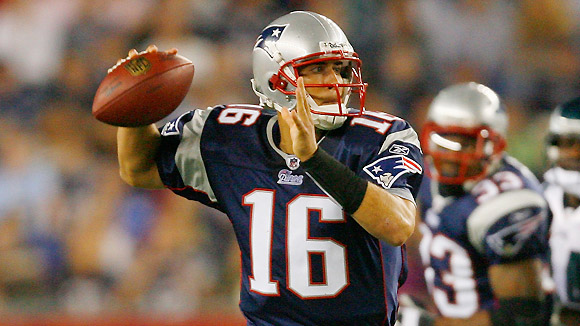
On Saturday, the Patriots traded quarterback Matt Cassel and linebacker Mike Vrabel to the Chiefs for the 34th overall pick in 2009 draft. On Sunday, ESPN.com reported that the Broncos, Patriots and Bucs had talked about a three-team trade that would have sent Cassel to Denver, Jay Cutler to Tampa, while New England would get the 12th overall pick in the draft from the Broncos. Why did the Pats give up Cassel for a second rounder instead of a first? One theory is that Bill Belichick didn’t want to help his former assistant Josh McDaniels, who is now the head coach of the Broncos. Instead, Belichick chose to help buddy Scott Pioli, who is now the new GM of the Chiefs. Another theory is that Belichick covets second round picks more than high firsts because of the financial obligations that come with signing a high first rounder. But that doesn’t make any sense. There’s a big difference between what kind of player you can have at 12 as opposed to 34, so the most logical explanation is that Belichick had already talked to Pioli about trading Cassel and even though the Broncos eventually swooped in with a better offer, Belichick honored the deal with Pioli above all else. But the bottom line is that the Pats could have had the 12th overall pick instead of the 34th and they didn’t take it. If I didn’t fear for my eventual return, I would love to take a walk around the 8th wonder of the world that is Bill Belichick’s mind for just one day.

Three moves yet to happen:

1. Jason Taylor will sign with the Bucs.
After being released by the Redskins for salary cap reasons, Taylor became the most sought after pass-rusher on the market. With loads of cap space and a need to upgrade the defensive end position opposite Gaines Adams, the Bucs could make a decent push to sign Taylor and outbid (if they’re willing) other teams who are interested. The only issue is that there should be plenty of suitors, with the Bills, Bengals, Cardinals, Lions, Bears and Falcons all looking to address holes at defensive end. Again though, the Bucs have the most cap space in the NFL and Taylor might have a desire to head South again.

2. Kurt Warner signing with a team other than the Cardinals.
Ever since the Super Bowl ended in early February, everyone (including myself) has speculated that Warner would return to Arizona for one last run at a championship before he retired. But when you stop and look at the situation, it almost seems more likely that Warner won’t return to Arizona next season. Think about it, Warner’s offensive coordinator is now the new head coach in Kansas City and there’s also a very good chance that once the dust has settled in free agency, the Cards will deal receiver Anquan Boldin. That’s a fair amount of change for a team that just went to the Super Bowl and maybe Warner feels like making a clean break as well. The Cards and Warner also appear to be a couple million apart in terms of a contract offer, which could further complicate things. Warner has already scheduled a trip to visit the 49ers and if they offer him more money, then there’s a good chance he could wind up there to finish his career. It still would seem that Arizona is the best situation for him, but if the NFL has taught us anything over the years, it’s to expect the unexpected.

3. Ray Lewis returning to Baltimore.
When asked if he would take a hometown discount to stay in Baltimore this offseason, Lewis noted that he doesn’t play for less, so he wasn’t going to accept less. Then he made it known that he wouldn’t mind playing for the Cowboys next season and didn’t accept an offer from the Ravens for three-years and $24 million, including $17 million guaranteed. But working against Lewis is the fact that the Cowboys eventually denied interest and then signed linebacker Keith Brooking from the Falcons. Lewis’s former coordinator Rex Ryan, who is now the head coach of the Jets, also signed former teammate Bart Scott away from Baltimore, which pretty much means that New York won’t make a play for Lewis, either. Once it’s all said and done, Lewis is likely heading back to Baltimore after overestimating his market value. The Ravens can’t afford to lose Lewis, but he’s also 33 years old and started to show signs of slowing down at the end of last season. The three-year deal that Baltimore initially offered seems pretty fair and my guess is Lewis will once again be in a Ravens uniform in 2009.

« Older posts Newer posts »