In this episode, Kenny plays in a “celebrity” golf tournament with his a-hole boss.
Great cameo by Ray Ray…”A hundred dollars. I’m not trying to bang you over the head.”
In this episode, Kenny plays in a “celebrity” golf tournament with his a-hole boss.
Great cameo by Ray Ray…”A hundred dollars. I’m not trying to bang you over the head.”
Far be it for me to question any man’s financial worth, but what the hell is wrong with Andy Pettitte?
Andy Pettitte may not be returning to the New York Yankees after all.
The left-handed starter has rejected the Yankees’ one-year, $10 million offer, The New York Times reported, citing a person with knowledge of the negotiations.
There’s also the issue of money.
The $10 million offer Pettitte reportedly rejected would represent a $6 million decrease from the $16 million the Yankees paid Pettitte last year. And that comes at the same time the team has pledged $180 million to first baseman Mark Teixeira and a combined $243.5 million for starting pitchers CC Sabathia and A.J. Burnett.
Pettitte went 14-14 with a 4.54 ERA last season, after starting the year at the center of baseball’s performance-enhancing drugs scandal.
Pettitte, 36, waited until early December 2007 to tell the Yankees he would pitch in 2008. That was before the release of the Mitchell report, which included Pettitte, and he had not told the Yankees he might be included in the report, which said he had used human growth hormone. He subsequently admitted using HGH and was supported publicly by the Yankees.
Let me get this straight. He’s 36 years old, is coming off a 14-14 season playing for one of the best offenses in Major League Baseball and the Yankees stood by him through his HGH scandal. And $10 million isn’t enough? Half of what he made in 2008 should be enough. The guy is on the down swing of his career and now he wants to play hardball with his next contract? Give me a break.
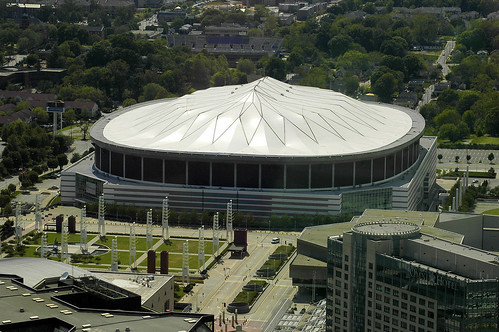 Last Sunday a couple friends and I were watching the Ravens-Dolphins playoff game and we were talking about how good both Baltimore and Miami’s defenses were this season. Then we started to gab about other top defenses in the league and the thought dawned on me – all the good defensive teams play outdoors.
Think about it. What teams had the best defenses in 2008? Pittsburgh, Baltimore, Philadelphia, Washington and the Giants all ranked in the top five – all outdoors teams. Granted, Minnesota was No. 6, but the next dome team was Indianapolis at No. 11.
Out of the eight dome teams (I’ll count both Dallas and Arizona as dome teams), five of them (Arizona, Atlanta, New Orleans, St. Louis and Detroit) finished in the bottom half of the league in total defense. In 2007, six of the eight teams finished in the bottom half. In 2006, five teams finished in the bottom half. In 2005, four of the seven dome teams (Arizona was outdoors before 2006) finished in the bottom half and in 2004, six of the seven dome teams ranked in the bottom half defensively.
Here’s a breakdown of how each dome team has done defensively since 2002:
Arizona 2006-2008: 29th; 17th; 19th
Atlanta 2002-2008: 19th; 32nd; 14th; 22nd; 22nd; 29th; 24th
Dallas 2002-2008: 18th; 1st; 16th; 10th; 20th; 13th; 9th; 8th
Detroit 2002-2008: 31st; 24th; 22nd; 28th; 32nd; 32nd
Indianapolis 2002-2008: 8th; 11th; 29th; 11th; 21st; 11th;
Minnesota 2002-2008: 26th; 23rd; 28th; 21st; 8th; 20th; 3rd; 6th
New Orleans 2002-2008: 27th; 18th; 32nd; 14th; 11th; 26th; 23rd
St. Louis 2002-2008: 13th; 16th; 17th; 30th; 23rd; 21st; 28th
Let’s recap:
– Of the eight dome teams, only three of them have ever finished in the top 10 in total defense since 2002.
– Only two of them (Dallas and Minnesota) have ever finished in the top 5 in total defense since 2002.
– All of them have finished in the bottom half of the league in total defense at least once.
– Atlanta, Detroit, New Orleans and St. Louis haven’t cracked the top 10 in total defense once since 2002.
Granted, there are several huge factors that work against the theory that dome teams are worse off defensively than those that play outdoors. First and foremost, there’s a larger sample size of outdoors teams than dome, so of course they’re going to have better overall defensive rankings. Secondly, 2002 to 2008 might not be a long enough time period to definitively say that dome teams are worse defensively.
But think about it – when has a dome team ever had a consistently good defense? Chicago, Tampa Bay, Pittsburgh, Baltimore, Philadelphia and New England have always been known for their defense. Outside of the “Purple People Eaters” when has a dome team ever been known for its defense? Never. And this plays into the fact that dome teams struggle to make Super Bowl appearances.
Why? It can’t be that these teams have ignored their defenses over the years or have just had terrible luck in the drafts. Free agency has allowed teams to rebuild in just one offseason, so it’s not like these teams haven’t had the opportunity to re-tool their defensive units.
The simple explanation is that teams can obviously move the ball better when they don’t have to deal with weather conditions, so therefore dome teams are more susceptible to giving up more yardage and points. But is that it? So dome teams are just doomed defensively for the end of time? They best they can do on a consistent basis is finish 11-16 in total defense?
Obviously this research is largely incomplete, but it’s an interesting topic.
Paola Boivin of the Arizona Republic writes that while Texas’s 24-21 win over Ohio State in the 2009 Fiesta Bowl was impressive, the Longhorns aren’t title-worthy.
With all due respect, we’d like to direct the jury to disregard the statements of Texas coach Mack Brown, who proclaimed after Monday night’s Fiesta Bowl that, “We’re obviously one of the best teams in the country, if not the best.”
If we’re to tell the truth, the whole truth and nothing but the truth, the Longhorns aren’t worthy of national-title consideration. They were gutsy and entertaining in a 24-21 victory over Ohio State, but by week’s end Florida or Oklahoma will prove it’s more deserving.
We direct your attention to People’s Exhibit 1, mainly Texas’ inability to find the end zone until the third quarter. In a college football postseason that has become, yawn, absurdly diluted, Texas’ quest for title respect was the most interesting story line of the night.
Until the Longhorns scored their game-winning touchdown with 16 seconds left, it was Mr. Sweater Vest himself, Ohio State coach Jim Tressel, who gave the game its spice. The guy might be more sock hop than hip-hop, more L.L. Bean than LL Cool J, but he added some oomph with the way he showcased his freshman quarterback.
In a game that squared off a team that had a lot at stake against one that didn’t, Texas needed a blowout to sway opinion. It will have to live with the reality that the Bowl Championship Series got it right.
Hey, it happens.
“I wasn’t sure before tonight . . . but I’m going to vote Texas No. 1,” Brown said.
Brown is loyal. He’s just not right.
You knew if Texas didn’t blow out Ohio State that we would see 50 of these articles hit the net by Tuesday morning. No offense to the Longhorns or the Buckeyes because they played an entertaining second half, but the game didn’t matter. None of the college football games matter expect for the national championship game and even that doesn’t matter. Without a playoff, there’s no fair way to judge which team is the best in the nation so I refuse to partake in the, “Texas deserves to be No. 1/Texas doesn’t deserve to be No.1” discussions. Sorry.

Georges St. Pierre
Nickname: Rush, GSP
Height: 5’10
Weight: 170
MMA Record: 17-2
UFC Record: 13-2
Fighting Style: Kyokushin, Wrestling, Brazilian Jiu Jitsu
Georges began his training in Kyokushin karate to help deal with bullies at school. He did this until the age of 16, when his sensei died and he was forced to try something else. This is when he began to wrestle and take jiu jitsu with many of his fellow Canadian counterparts. St. Pierre has trained with many top fighters and coaches in his young career, recently making the move to train in New Mexico at Greg Jackson’s camp. He now trains with other top MMA fighters including UFC Light heavyweight Rashad Evans, Keith Jardine and Nate Marquardt.
GSP began his UFC career winning against Karo Parisyan and Jay Herion. Those victories earned him a shot at the vacant welterweight UFC belt. He eventually lost to Matt Hughes via an arm bar at 4.59 of the first round. He would later say that his loss to Hughes was the best learning experience of his career.
Pierre rebounded to defeat a who’s who list of UFC fighters including Jason Miller, Frank Trigg, BJ Penn and Sean Sherk. At this point he was the number one contender at 170 and again would fight Matt Hughes for the title, which Hughes held for almost five years. St. Pierre would run through Hughes and take the title in dominating fashion.
Although he eventually lost the belt to Matt Serra in a huge upset, GSP walked through other top fighters such as Josh Koscheck, as well as Matt Hughes for the third time. He again earned a shot to fight Serra to regain his welterweight championship.
Georges currently holds the UFC welterweight title after successfully defending it against John Fitch.
He is currently regarded as the top 170-fighter in the world and considered one of the top 3 pound-for-pound fighters in all of MMA. St. Pierre will defend his belt at UFC 94 against Hawaiian jiu jitsu specialist BJ Penn on Saturday, January 31.
–Written By TSR Contributor John Duke

© 2026 The Scores Report – The National Sports Blog
Theme by Anders Noren — Up ↑