Tag: MLB (Page 5 of 16)

Top 10 active base hits leaders

I read yesterday that one of Pete Rose’s bats was being auctioned off, the one he used for his last hit, number 4256. And it made me wonder if that will ever be topped. I can’t imagine it will be, but stranger things have happened. Of course, the Baseball Hall of Fame still fails to recognize what Rose did on the field because of what he did as a manager off the field. But that’s for another post. Here is a look at the Top 10 active leaders in base hits:

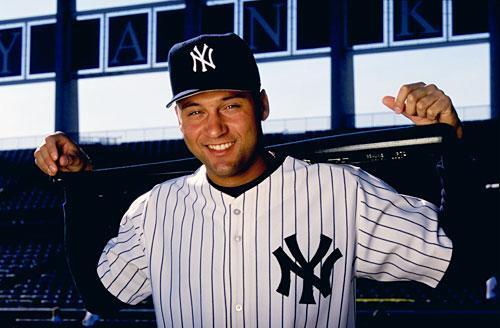
1. Derek Jeter, New York Yankees (2824)—The classiest player by far in the big leagues today, and the epitome of someone who plays the game right and just gets it. I look forward to Jeter notching his 3000th hit, which will likely be next season.

2. Ivan Rodriguez, Washington Nationals (2781)—In his twentieth season this year, I-Rod is batting .331. No loss of bat speed with this guy, that’s for sure.

3. Omar Vizquel, Chicago White Sox (2724)—Amazingly, Vizquel is in his 22nd season and still looks like he’s 28 years old. I got to see him play in his prime in Cleveland, and he was/is the best defensive shortstop I’ve ever seen. But he has clearly racked up hits too.

4. Alex Rodriguez, New York Yankees (2596)—Well, duh. The question is, though, will he eventually be the all-time home run king?

5. Manny Ramirez, Los Angeles Dodgers (2530)—Yeah, he juiced, and so did A-Rod. But these two guys still have to be incredibly talented ball players to rack up this many hits.

6. Garret Anderson, Los Angeles Dodgers (2515)—Steady and classy as well, but it’s just hard to believe Garret Anderson is 38 years old. Didn’t he just break into the bigs?

7. Johnny Damon, Detroit Tigers (2482)—Scrappy, solid player, and he just keeps on grinding. But do any of you remember Damon’s days with the Royals? I sure don’t.

8. Chipper Jones, Atlanta Braves (2444)—Another guy who defines playing the game the way it was meant to be played, and he just keeps on hitting well into his thirties.

9. Vladimir Guerrero, Texas Rangers (2326)—He’s hitting .339 with 53 RBI on June 11. Vlad is another ageless wonder.

10. Edgar Renteria, San Francisco Giants (2213)—It’s kind of amazing that Renteria is on this list, even though he’s never had a 200-hit season. But he’s been reliable and consistent all these years.

Source: Baseball Reference

Top 10 active pitchers who keep it in the yard

Some pitchers give up 1-2 home runs or more per game, while some of them are masters at keeping the ball in the park. We did a gopher ball list last year, so here is the opposite…the pitchers who give up the fewest home runs per nine innings, and therefore the guys you want in the game when the game is on the line:

1. Mariano Rivera, New York Yankees (0.4953)—Amazingly, Rivera gave up 11 home runs his rookie year (1995) and since then, only 50. That’s 50 home runs in like 15 years, or about 3 per season. That’s just sick. No wonder the guy has so many career saves (538).

2. Tim Hudson, Atlanta Braves (0.7141)—If only Hudson was able to stay healthy for any length of time, he’d be a lock for the Hall of Fame.

3. Derek Lowe, Atlanta Braves (0.7221)—When you have a ball that drops like six feet before it reaches home plate, you’re not going to have a lot of hitters get under your pitches. What you’ll get are lots of ground balls.

4. Aaron Cook, Colorado Rockies (0.7384)—If you’re a pitcher in Colorado, it’s sort of like being a meatball sandwich in a pizza joint. You’ll get noticed, but only when they run out of pizza…or in this case, when the Rockies aren’t hitting. Still, when you think about Cook and how he’s spent his entire career in Denver, being fourth on this list is quite an accomplishment.

5. Roy Halladay, Philadelphia Phillies (0.7385)—A perfect game only added to Halladay’s Hall of Fame resume.

6. Carlos Zambrano, Chicago Cubs (0.7445)—He’s always angry but always has nasty stuff, and, like Cook, he pitches in a hitter-friendly park.

7. Andy Pettitte, New York Yankees (0.7671)—Lucky for the Yankees, Pettitte’s career high of 27 home runs allowed was when he was with the Astros in 2006.

8. Roy Oswalt, Houston Astros (0.7729)—He has an impeccable nose for the strike zone, but puts enough on his pitches to keep hitters guessing and in the park.

9. Jake Westbrook, Cleveland Indians (0.7999)—He hasn’t pitched much in the last three years, but when he does, Jake Westbrook is very good at keeping the ball in the yard.

10. AJ Burnett, New York Yankees (0.8213)—As if the Yankees needed another guy like this in their rotation.

Source: Baseball Reference

Top 10 active innings eaters

Chances are, you need a few pitchers on your fantasy baseball roster that can eat up innings. You know, that silly rule that prevents you from loading up on closers? Well, here is a list you could use, especially if your team if floundering and you need some steady pitchers to deliver quality innings of work. This is the list of active leaders in innings pitched. Some of the names will surprise you, but certainly not all of them:

1. Jamie Moyer, Philadelphia Phillies (3966 innings)—Remember when Jamie Moyer pitched for the Cubs? Yeah, neither does anyone else. He was a rookie in 1986, the year Mookie Wilson hit the ball through Bill Buckner’s legs. I know, most of you don’t remember that, either.

2. Andy Pettitte, New York Yankees (2984)—Though it’s early, Andy Pettitte is having a career year at age 38. And I’m just glad I had the foresight (errr, luck) to draft him for my fantasy team.

3. Tim Wakefield, Boston Red Sox (2980)—Remember when Tim Wakefield pitched for the Pirates? Seriously, he started out there in 1992 and joined the Sox in 1995. And dude is still beloved by the chowder heads.

4. Livan Hernandez, Washington Nationals (2795)—Two things are baffling. One, that Livan’s age is listed as 35. Thirty-freaking-five! Um, no. And two, that this guy is still getting hitters out with that blistering 80 mph fastball of his.

5. Javier Vasquez, New York Yankees (2532)—So this guy has banked $92 million in his career to date for losing as many games as he wins (145-144). That’s proof right there that innings eaters are worth something, but still sounds like highway robbery to me.

6. Jeff Suppan, Milwaukee Brewers (2437)—He’s relegated to the bullpen for the most part, but still racking up innings of work.

7. Kevin Millwood, Baltimore Orioles (2382)—Remember when Kevin Millwood was the fourth starter behind Smoltz, Maddux and Glavine in Atlanta? That was in 1997 but seems like it was 50 years ago.

8. Derek Lowe, Atlanta Braves (2191)—He may have peaked a few years ago, but this guy still has some of the nastiest stuff in the game.

9. Tim Hudson, Atlanta Braves (2124)—Through all of the injuries, it’s truly amazing that Tim Hudson has pitched that many innings. And hey, Javier, put this in your pipe and smoke it—a 153-79 career record.

10. Roy Halladay, Philadelphia Phillies (2123)—This dude just keeps winning, but even he’s only got 154 wins to date. Does that seem right?

Source: Baseball Reference

Putting the NFL’s potential lockout in dummy terms

If you, like me, live in fear of the fall of 2011 having no NFL football, but don’t understand all of the legal mumbo-jumbo associated with the labor dispute, I’m hear to put things in terms we all can understand.

First things first, and that is that the owners unanimously opted out of the current CBA (Collective Bargaining Agreement) in 2008, one that they had signed off on in 2006. Since I’m making this as easy as possible to understand, let me tell you that a CBA is the agreement two sides, usually labor and management, come to on various topics, most of which include how money will be divided. And in this case, the owners realized that player salaries were escalating out of control and that their profits were being squeezed more each year. Yes, part of the problem is they are agreeing to these salaries, and player agents are a huge part of that. In the bigger picture, the real problem is revenue sharing, a.k.a. how to split the financial pie. And while the NFL is bringing in a ridiculous amount of money ($7.6 billion in 2008), about 62% of that goes to player salaries, a number that keeps climbing due to increases in the overall salary cap. To make matters worse, there is also revenue sharing among teams, meaning the big market teams have to help the small market teams to help them compete with each other on the field.

So the owners want something like 18% of the pie back, in the form of salary cuts to the players. Naturally, the players do not want to give them this money back, and that is why head of the players’ union DeMaurice Smith announced during the Super Bowl’s hype week that the chance of a lockout were a 14 on a scale of 1 to 10. For his part, NFL commissioner Roger Goodell denounced that, saying he hoped it wouldn’t come to a work stoppage, but he also knows that it’s a very real possibility. The players aren’t necessarily saying they won’t give part of the pie back, either. Smith wants the owners to show the players that they are struggling to run their businesses, meaning he wants them to open up their books. And the owners won’t do it. So are the numbers being reported not what they say? It’s hard to say the owners aren’t lying about these numbers, when they keep agreeing to player contracts and they keep building huge state-of-the-art stadiums, but they also have the right to not open their books if they don’t want to. And the bottom line is that the owners are not happy about doling out more and more of their profits.

Then, of course, there is the issue of an uncapped 2010 season. The current structure calls for a salary cap through the 2009 season, with 2010 being an uncapped year if the owners opt out of the CBA, which they did. Last time this happened, in 1993, player salaries rose to 69% of NFL revenue, and that is expected to happen again. But of course, nothing is guaranteed in 2011, so the players have to be careful of what they wish for.

If organized sports have taught us anything, it’s that the possibility of no games being played can and will happen. You might remember the NFL had a similar situation in 1987, and the owners used replacement players for a few games before the dispute was resolved and the regular players went back to work. MLB cancelled the last two months of the 1994 season as well as the playoffs and World Series, a black mark they have not recovered from. The NBA had a similar situation in 1998-99, with almost half a season being wiped out. And of course, the freshest in our memories is the NHL’s 2004-05 season that was not played due to a labor dispute.

So as fans, we have to hope a few things happen between now and the summer of 2011, which is spewing a black cloud that keeps getting darker and more imposing by the day. We have to hope the owners agree to open up their books, and we have to hope the players agree to give back part of the pie for the health and financial well being of the NFL. Sure, we want the players we love to watch get the money they deserve, but within reason. Certainly it’s not worth much to anyone to have no NFL games being played, but it may very well come to that.

Of course, the NFL is not the only business that would be affected by a lockout. Besides the local businesses near stadiums that thrive during the season, fantasy football and all of the money (reported as upwards of $3 billion in 2007) associated with that is threatened here. Think about that for a second. The folks that make their livelihood in that world will be flattened financially. Well, maybe that’s going to be the subject of my next piece on this, but for the moment I wanted to do my part to help everyone understand the dispute between owners and players, and what it all really means.

Many think that a lockout won’t really happen, and I’m optimistic myself that it won’t. But history surely does make us all nervous, doesn’t it?

Steroid users best liars ever, say writers assigned to cover them

As a diehard baseball fan, the steroids scandal just depresses me. Once it started to fall apart, it was pretty obvious which players would eventually be outed as users (the monster sluggers), along with a few surprises (Brian Roberts? Andy Pettite?). And while I will stress to my kids that they shouldn’t take steroids, I will not wag my finger at any of the players who did; who’s to say what I would do if I were in their position, and stood to make tens of millions by using a little juice, especially when there were no repercussions for getting caught? It’s a complicated issue that, by and large, is painted as a simple black-and-white question by many sports writers today.

And that is the part that bothers me. These same people covered the players while all of this was going on, and I can barely stomach their sanctimonious hindsight when flaying their latest target. With each new development on the subject, we are told that:

1. Lots and lots of players took steroids
2. No one else, not the trainers, coaches, managers, anyone in the commissioner’s office and certainly not the writers and reporters, had any idea these players were taking steroids

The first part is obviously true. The second part, however, I find highly unlikely.

Let’s break this down, shall we? In order for both to be true, it means that the players would all have to individually seek out dealers, who by the nature of their business are not the most upstanding citizens, without drawing any attention to themselves. Ever. That’s giving the players and dealers an awful lot of credit, don’t you think? One of them would have slipped up, and in a moment of desperation met his dealer at the team hotel during a slump. It’s just far too big a secret for so many people to keep. The odds of no one else in baseball stumbling upon it, even accidentally…well, there’s no point in calculating the odds, because it didn’t happen.

mac a rod

No one in baseball knew that these men took steroids. Uh, sure.

But this doesn’t just require all of the players and dealers to have the stealth of a ninja – it also requires the player personnel and writers to be blissfully unaware of what is happening around them, to a point that approaches obliviousness. And these people aren’t oblivious. That must therefore make them liars, yes? Well, it would be irresponsible of me to say, since I have no proof that anything I’m saying here is true, but let’s just say that each group of personnel involved here has their own reasons for keeping their mouths shut. Here is how it looks from my ‘Joe Sixpack’ perspective.

The players: Those inflated statistics raised the value of contracts across the board. Even the ones who didn’t take steroids benefited from those who did, the whole ‘rising tide lifts all boats’ thing. The primary reason the players are playing dumb, though, is because nobody likes a tattletale. If a current player dished on teammates both past and present, he would never stop getting his ass kicked. It’s like the mafia: honor the omerta, or pay the price.

Managers/coaches/trainers: I had an RA in college who summed up his supervisory role like this: “If I don’t see it, hear it, or smell it, I don’t care about it.” Managers and coaches are in a similar position. They need plausible deniability in the event that shit meets fan, but until that day arrives, what they really need is to win. If they don’t win, they get fired. That kind of motivation will lead a person to overlook a lot of things. And remember: the managers and coaches are all former players. Omerta.

Reporters: Two words: career suicide. If anyone who covers baseball were to break a story about steroid use, they’d be banned from every clubhouse in the country. Nope, that story will have to wait for an investigative journalist with no agenda and nothing to lose. Like, say, Mark Fainaru-Wada and Lance Williams, who nearly went to jail over the content of their BALCO exposé “Game of Shadows.”

Let us not forget, baseball was dying when Mark McGwire and Sammy Sosa went on their home run tear in 1998. Those two men are widely credited (and rightly so) with saving the game. Whether or not they achieved their results through illicit means, they put butts in seats, simple as that. The sudden spikes in home run numbers had to have raised an eyebrow or two at mission control, but I think it’s safe to say that the game’s salvation was a far greater priority at the time than its sanctity. Either way, that’s a hell of a choice to make, and in fairness to all concerned, I probably would have done the same thing. I mean, which would you rather be known for, being a participant in the Steroids Era, or the man who killed baseball?

And that’s the bottom line here. I completely understand why all of these people are denying any knowledge of the rampant steroid use that took place on their watch, and I don’t expect otherwise from them. But please, stop trying to convince us proles that the only people who knew about players using steroids were the players themselves. It’s insulting.
« Older posts Newer posts »