Tag: Chad Billingsley (Page 2 of 2)

2009 Fantasy Baseball Preview: Starting Pitchers

All 2009 Fantasy Articles | 2009 Position Rankings

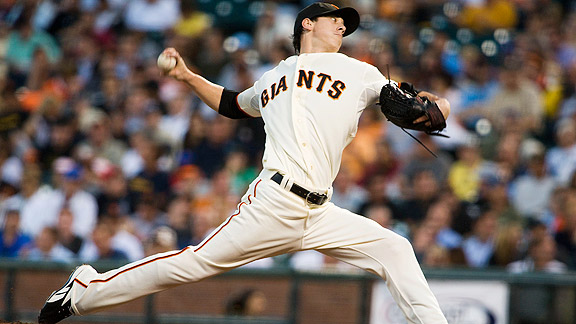
Admit it, you passed on Tim Lincecum last year. You took one look at his 2007 record (7-5), his ball boy-type frame (he only stands 5’11” and is 170-pounds soaking wet) and the fact that he played on a team with one of the worst offenses in baseball and you said, “no thanks.”

But there was one owner (the smart one) in your league that bought into the hype, took a shot and reaped the benefits of Lincecum earning the NL Cy Young Award while going 18-5 with a major league-leading 265 strikeouts and 2.62 ERA.

Don’t feel bad; you weren’t the only fantasy owner last year that just couldn’t pull the trigger on Lincecum. Truth be told, he was a bit of a risk last season given his inexperience and the fact that the Giants weren’t expected to give him much run support. And assuming you’ve played a fair share of fantasy baseball, you’ve probably been burned once or twice in the past by taking a risk on that perfect young sleeper that everyone is gaga for in spring training, yet fizzles once the season starts.

But Lincecum proved last year that you could find diamonds in the rough that can wind up anchoring your pitching staff for the entire season. You have to be willing to take a risk, however, and select one of those potential gems a round or two before they are projected to go.

Below we’ve put together a group of young pitchers that might not become the next Tim Lincecum, but ones that could certainly turn out to be tremendous values once the top 15 arms come off the board. We’re talking about pitchers who haven’t seen their 28th birthday yet (most haven’t even seen their 25th birthday yet), but ones that could post 15-plus wins, 150-plus strikeouts and an ERA south of 3.80.

Joba Chamberlain, New York Yankees
Don’t think for a second that you’ll be pulling a fast one on everybody if you take Chamberlain as your second pitcher – everyone already knows about Joba’s potential. But he has struggled thus far in spring training, which means he could drop into your lap as other owners flock to safer pitching choices. Chamberlain has the potential to win 15-plus games, sniff 200 strikeouts and close in on a 3.20 ERA, but he obviously has to cash in on his immense physical talent. If he continues to struggle in spring training, you might land him later than you projected and if you do, he could wind up being the best pitcher on your roster by season’s end.

Yovani Gallardo, Milwaukee Brewers
Gallardo will scare away plenty of potential owners after only making five starts in 2008, but he has the talent to post 185-plus strikeouts and produce 15-plus wins. If he stays healthy, he should also keep his ERA south of 3.50 and although you’ll land him in the middle rounds, he could project to being a top 25 pitcher. Remember, he had knee issues last year – nothing arm related. The future ace should once again be healthy and he’s definitely worth taking a shot on.

Jon Danks, Chicago White Sox
Danks turned down an opportunity to play in the World Baseball Classic, which should only help the youngster’s fantasy value. Not unlike Matt Cain, Danks needs better run support in order to cash in on his talent, but he has the potential to total 160-plus strikeouts and 15-plus wins. He might not keep his ERA around 3.30 like he did last year, but it won’t go north of 3.90 either. Again, as long as he doesn’t get stiffed in the run support department again this year (which is hard to project), there’s no telling how good this 23-year old stud can be.

Matt Garza, Tampa Bay Rays
Garza only fanned 128 batters in 184 innings last year, but he was a strikeout machine in the minors so hopefully that will eventually transfer to the big leagues. If the Rays don’t take a step back after reaching the Series last year, Garza could notch 14-plus wins and 140-plus strikeouts, all while keeping his ERA south of 3.60. Of all the pitchers we’ve listed, he certainly doesn’t have the highest ceiling, but Garza would be a major value as a No. 2 or No. 3 on your staff.

Scott Baker, Minnesota Twins
Ready to take a shot on a potential stud? Baker is an ace in the making and while he competes in a tough AL Central Division, he could amass 12 to 15 wins and total upwards of 170 strikeouts this season. He probably won’t keep his ERA lower than 3.80, but Baker has increased his K/9 rate every year he’s been in the big leagues and posted an all time low WHIP last season of 1.18.

Ricky Nolasco, Florida Marlins
Nolasco had a breakout year in 2008, posting 15 wins, 186 strikeouts and a 3.52 ERA. Is there a chance he could take a step back this year? Of course, but you have to like taking a shot on a guy who you can select in the mid to late rounds that could potentially be a top 20 pitcher by the end of the year. Thirteen wins, 160 strikeouts and a 3.70 ERA would be a safe projection for Nolasco this season.

Clayton KershawClayton Kershaw, Los Angeles Dodgers
Much like Joba Chamberlain, you’re not going to sneak Kershaw past anybody on draft day because by now, most owners are well aware of the 20-year old’s potential. But like Lincecum last year, don’t be the guy that passes on Kershaw because you’re worried about his lack of experience and the high risk that comes along with drafting him. Kershaw could easily post 170-plus strikeouts and 12-plus wins, although his ERA will probably near 4.00 and he did post 52 walks in 107.2 innings last year, which is high. Still, he’s worth a long look on draft day.

Matt Cain, San Francisco Giants
Don’t be fooled by his 8-14 record last year; if Cain got any run support, he could easily be as good as teammate Tim Lincecum. Cain posted a 3.76 ERA and compiled 177 strikeouts last year, but since the Giants’ offense clearly has a vendetta against him, his effort only amounted to eight wins. Trust us, he has the potential to amass 12 to 15 victories, even though it would appear that his ceiling is right around 10 wins. If he can get a little run support and cut down on the walks, he could turn out to be a top-25 pitcher that you can wait to select in the middle to late rounds. Another Giants’ starter to keep an eye on during your draft is Jonathan Sanchez.

Jair Jurrjens, Atlanta Braves
Some fantasy pundits are concerned about Jurrjens taking a big jump in pitches and innings last year compared to 2008. Those concerns are valid since he clearly wore down at the end of the season last year, but he decided not to pitch against The Netherlands in the World Baseball Classic, which is good because he didn’t throw any extra pitches in March when needs to save his arm for the regular season. His strikeout numbers won’t blow you away (you’ll be lucky if he fans 140 batters this season), but he’ll keep his ERA around 3.70 and should post 11-plus wins, which is certainly decent output for a No. 3 pitcher.

Below is our official ranking of starting pitchers.

1. Johan Santana, NYM
2. Tim Lincecum, SF
3. CC Sabathia, NYY
4. Roy Halladay, TOR
5. Dan Haren, ARI
6. Brandon Webb, ARI
7. Cole Hamels, PHI
8. Jake Peavy, SD
9. John Lackey, LAA
10. Roy Oswalt, HOU
11. Josh Beckett, BOS
12. Cliff Lee, CLE
13. Chad Billingsley, LAD
14. James Shields, TB
15. Scott Kazmir, TB
16. Ricky Nolasco, FLA
17. Francisco Liriano, MIN
18. Felix Hernandez, SEA
19. Rich Harden, CHC
20. Adam Wainwright, STL
21. Daisuke Matsuzaka, BOS
22. Ervin Santana, LAA
23. Edinson Volquez, CIN
24. A.J. Burnett, NYY
25. Joba Chamberlain, NYY
26. Carlos Zambrano, CHC
27. Javier Vazquez, ATL
28. Jon Lester, BOS
29. Justin Verlander, DET
30. Brett Myers, PHI
31. Yovani Gallardo, MIL
32. Zack Greinke, KC
33. Matt Cain, SF
34. Aaron Harang, CIN
35. Ted Lilly, CHC
36. Max Scherzer, ARI
37. David Price, TB
38. Chris Young, SD
39. Josh Johnson, FLA
40. Erik Bedard, SEA
41. Ryan Dempster, CHC
42. Matt Garza, TB
43. Chien-Ming Wang, NYY
44. John Danks, CHW
45. Brandon Morrow, SEA
46. Johnny Cueto, CIN
47. Jered Weaver, LAA
48. Kevin Slowey, MIN
49. Derek Lowe, ATL
50. Scott Baker, MIN
51. Clayton Kershaw, LAD
52. John Maine, NYM
53. Jair Jurrjens, ATL
54. Randy Johnson, SF
55. Fuasto Carmona, CLE
56. Gavin Floyd, CHW
57. Ubaldo Jimenez, COL
58. Jonathan Sanchez, SF
59. Oliver Perez, NYM
60. Justin Duchscherer, OAK
61. Manny parra, MIL
62. Andy Pettitte, NYY
63. Joe Saunders, LAA
64. Gil Meche, KC
65. Chris Carpenter, STL
66. Mike Pelfrey, NYM
67. Hiroki Kuroda, LAD
68. Wandy Rodriguez,
69. Chris Voldstad, FLA
70. Bronson Arroyo, CIN
71. Kenshin Kawakami, ATL
72. Armando Galarraga, DET
73. Jeremy Guthrie, BAL
74. John Smoltz, BOS
75. Paul Maholm, PIT
76. Aaron Cook, COL
77. Joe Blanton, PHI
78. Todd Wellemeyer, STL
79. Rich Hill, BAL
80. Jesse Litsch, TOR
81. Andy Sonnanstine, TB
82. Dave Bush, MIL
83. Edwin Jackson, DET
84. Jeremy Bonderman, DET
85. Nick Blackburn, MIN
86. Mark Buehrle, CHW
87. Tommy Hanson, ATL
88. Neftali Feliz, TEX
89. Brad Penny, BOS
90. Aaron Heilman, SEA
91. Carlos Carrasco, PHI
92. Shawn Hill, WAS
93. Doug Davis, ARI
94. Carl Pavano, CLE
95. Tim Wakefield, BOS
96. John Lannan, WAS
97. Jon Garland, ARI
98. Dontrelle Willis, DET
99. Kyle Lohse, STL
100. Jamie Moyer, PHI
101. Sean Marshall, CHC
102. Braden Looper, MIL
103. Randy Wolf, LAD
104. Anibal Sanchez, FLA
105. David Purcey, TOR

Doyel: Torre blew Game 4 for Dodgers

Gregg Doyel of CBS Sportsline.com writes that Joe Torre is having one bad NLCS in the Wake of the Phillies taking a 3-1 series lead after their 7-5 victory in Game 4 Monday night.

Los Angeles DodgersTorre is the biggest reason the Dodgers are one game away from being eliminated. You can argue that he has been unlucky in this series, but you can’t argue this: He has been unsuccessful. And isn’t that what it comes down to? Success and failure? Wins … and losses? Torre has had failures. The Dodgers have had losses.

We’ll go in reverse, which means we’ll start with the most recent loss, this 7-5 shot to the solar plexus in Game 4 at Dodger Stadium.

Starting pitcher Derek Lowe came out too early. Yes, Lowe was pitching on three days’ rest. But he had thrown just 74 pitches when he was removed, and after being rocked in the first inning he was cruising when Torre pulled him after the fifth.

Didn’t work. Reliever Clayton Kershaw, nominally a starting pitcher — and a 20-year-old rookie to boot — came in and gave up a walk and a single to the first two batters he faced. One of them scored. Kershaw for Lowe? That backfired.

Go back to the second game of this series, at Philadelphia. Torre, the guy who was too quick to pull ace starter Lowe in Game 4, was way too patient with Chad Billingsley in Game 2.

Even my man Scott Miller, who is most judicious with his criticisms of the men who play this decidedly difficult game, devoted his entire column from that game to Torre’s mismanagement of Billingsley, who was allowed to pitch through a streak that saw nine of 10 batters reach base. Philadelphia scored eight runs off Billingsley in 2 1/3 innings, and that was the game. The Phillies didn’t score again. They didn’t need to. They won 8-5.

Now go back to Game 1.

Lowe on the mound. Again. Torre having to decide whether to leave him in or take him out. Again.

Torre guessing wrong.

Again.

It was the sixth inning. Lowe had a 2-0 lead, and he was cruising. And then, suddenly, he wasn’t. Shane Victorino reached on an error, and Lowe came unglued. The next pitch — the very next pitch — was fat, and Chase Utley hammered it for a game-tying home run. Torre let Lowe stay in the game, and one batter later he fell behind 3-1 to Pat Burrell. Lowe grooved one, and Burrell hammered that one for a 3-2 Phillies lead. The Phillies wouldn’t score again, but again, the Phillies didn’t need to. They won 3-2.

It’s interesting how managers always seem to take more criticisms during the postseason than they do during the regular season. Managers have to take calculated risks in baseball and Torre has been around long enough to know when to take them. Still, the situations Doyel highlights are damaging and it’s too bad Torre has to take some heat because he’s done one hell of a job turning around a once dysfunctional Dodgers club.

It’s all about the pitching

“Momentum is always as strong as your starting pitcher is the next day.”
– Joe Maddon

Leave it to the well-read Rays manger to come up with such a profound statement. Chances are this saying is nailed up in his teams’ clubhouse alongside others from the likes of Albert Camus and Jean-Paul Sartre. Maddon’s right, and he’s used this pitching-first philosophy to propel his team into the ALCS.

If there’s one quality that ties each of the remaining four teams together, it’s that each of them can hit. They each have at least two big bats, lead-off men that can hit for average, and a bottom of the order that can consistently do some damage. When teams are this evenly matched at the plate, it’s often a single blunder on the part of a pitcher that can decide a game. As we’ve seen in the Division Series between the Angels and Red Sox, it comes down to the pitching. Both teams boasted fabulous rotations and excellent hitting, but it was the Red Sox middle relief and closer that really won the games.

The same will go for both matchups in the Championship Series. The Phillies, Dodgers, Rays, and Red Sox all have three starters who can win games at home and on the road. However, these series are best out of seven games, which creates a dilemma for each of these ball clubs as there isn’t a strong fourth starter to be found. Subsequently, these teams might start their aces after three days rest, or even force them to pitch for a third time if the series extend to seven games. This will be a test of player’s stamina and sound decision-making on management’s part. While managers struggle with whether to start a tired arm or an unpredictable one, a bullpen becomes even more valuable. They can come to the rescue (Matsuzaka in the ALDS), consistently put the lid on a victory (Papelbon and Lidge all year), or sometimes pitch the majority of the game after a starter bombs (Wade, Park, Kuo, and Saito of the Dodgers).

These games are going to be decided in the late innings, and this factor alone will make watching them gratifying. Here’s the breakdown:

Los Angeles Dodgers vs. Philadelphia Phillies

At their healthiest, the Dodgers have a better pitching staff than the Phillies. If set-up man Hong-Chi Kuo and closer Takashi Saito hadn’t injured themselves at the end of the season, this series would undoubtedly favor the Dodgers. As a result, they need their starters to go as long as possible. If Derek Lowe, Chad Billingsley, and Hiroki Kuroda can each go seven innings in all of their starts, I think the Dodgers can rely on their bullpen to pull through. Chan Ho Park and Cory Wade are both capable of maintaining a lead. The problem lies in the intimidating left-handed Phillies hitting. The Dodgers only have three southpaws on their roster: starter Clayton Kershaw, reliever Joe Beimel, and the aforementioned Kuo. Word is that the left-handed Kuo has been comfortable in recent simulated sessions. The Dodgers have said that Kuo might pitch an inning per game. A successful eighth inning with Kuo in relief opens the door with recent go-to closer Jonathan Broxton. Of course, this is idealistic. Yet, the fact remains that the Phillies cannot match this formula. It’s true that Brad Lidge outshines any of the Dodgers relief, but he’s only as good as the lead he’s protecting. The Dodgers dominated the opposition’s starting pitching better than any other team in the Division Series. They pounded Ryan Dempster, Carlos Zambrano, and Rich Harden of the Cubs, a rotation far more intimidating than the Phillies’. During the regular season, the clubs were evenly matched, with each sweeping the other at home and splitting their decisions. What’s important now is how late into the game their starters can pitch before handing it off to their relief.

The Dodgers have a couple advantages over the Phillies. The first lies in Derek Lowe. He’s thrown “Cy Young” quality pitching for the past two months and has more playoff experience than the Phillies starters combined. The Dodgers can pressure Lowe into pitching Games 1, 4, and if need be, 7. With a two or three run cushion, Lowe can hold steady into the eighth inning, even on three days rest. Given the Dodgers recent activity at the plate, they should be able to support their ace. If Lowe isn’t given the reins in Game 4, the Dodgers could either go with Clayton Kershaw or Greg Maddux. Both can outduel Joe Blanton of the Phillies. Kershaw, the likely choice, has pitched capably against Jimmy Rollins, Chase Utley, and Ryan Howard who have struggled against left-handed pitching.

Boston Red Sox vs. Tampa Bay Rays

The two best teams in the American League advanced. This statement is obvious as both the Red Sox and the Rays made due with critical injuries that severely altered their team’s chemistry. Josh Beckett’s recent injury was visibly apparent in Game 3 against the Angels, as he gave up three runs on eight hits in five innings. Still, Jon Lester, the strongest pitcher in the postseason, led the Red Sox to a Game 4 clincher. The Rays will likely be without veteran closer Troy Percival, who had a magnificent first half. With Percival gone, they’ve moved Dan Wheeler into his spot. Wheeler blew five out of 18 chances during the regular season. Even without a strong closer, the Rays offense produced a large enough lead for their starters to secure wins against the White Sox.

Tampa Bay enters this series with the third best team ERA in baseball. Though they finished 10-8 against the Red Sox, both teams were swept twice at home. James Shields, Scott Kazmir, Andy Sonnanstine, and Matt Garza are a very good rotation, and they’ve proven they can hold a lead when given it. Nevertheless, Jon Lester, Josh Beckett, Daisuke Matsuzaka, and Tim Wakefield stack up better pound for pound—when they’re injury-free. And they’re not. The Rays need to win all their games against an ailing Josh Beckett and a struggling Tim Wakefield. Also, it’s essential to build a lead substantial enough to render Papelbon useless. If Shields, Kazmir, or Garza can outpitch either Lester or Matsuzaka in at least one decision, the Rays have a very good chance.

For Boston, Papelbon is just as key now as he’s ever been. Of the teams that remain, no other closer is as valuable. While the Rays have a fairly talented set-up in Grant Balfour, J.P. Howell, and David Price, Dan Wheeler doesn’t bring the sense of security that comes with Papelbon. If he’s on the mound, the Red Sox are going to win—there’s just no way around it. To advance to the World Series, the Rays need to get to Lester or Matsuzaka in one of their starts. It’s difficult, but not impossible.

Any way you slice it, this year’s World Series is going to be entertaining. Each of these teams carry their own unique story. Whether it’s Manny and Torre in L.A., Charlie and the Phillies, the Red Sox domination, or the endearing Rays, whoever wins will be a deserving champion.

Introducing Andre Ethier: The New Face of the Dodgers

Andre EthierAfter getting called up to the big leagues in 2005, Andre Ethier was immediately traded from the Oakland Athletics to the Los Angles Dodgers, in exchange for Milton Bradley and Antonio Perez. Though the Dodgers gave up a formidable talent in Bradley, they saw something special in the minor-league right fielder. Simply stated, it was potential. When new general manager Ned Colletti was given the reins in 2005, he focused on creating a starting lineup that depended on its youngsters. Since then, he’s been brutally criticized for signing former stars to bulky contracts that have failed to pan out. However, he should be credited for completing what he set out to do way back in 2005. By dipping into his farm system instead of his check book, Colletti has made Russell Martin, Matt Kemp, James Loney, and Andre Ethier into everyday players.

At times, it’s tough to be a Dodger fan. Besides the Yankees, the Dodgers make more transactions involving blue chip players than any other organization. Their starting lineup one day may be completely different the next, as a smorgasbord of future hall-of-famers and one-time greats jump in and out of the lineup. Colletti has taken huge risks in spending enormous sums on big-name players. Manny Ramirez is proving to be his first untainted success after the unfruitful acquisitions of Andruw Jones, Rafael Furcal, Nomar Garciaparra, Juan Pierre, Jason Schmidt, and Brad Penny. Colletti is paying each of these guys at least $5 million a year and is hearing about it every day.

Then there’s Andre Ethier. After signing a one-year $425,000 deal for the 2007-08 season, Ethier has quickly matured into the Dodgers’ most economic star. Actually, forget “economic.” He is the Dodgers’ best all-around player and will soon become the face of their organization if Colletti plays his cards right. Keep in mind, Ramirez came aboard more than two-thirds into the season. At 36 years-old, Manny is a future hall-of-famer with only a few years remaining. As much as the Dodgers and their fans would love to keep the free-spirited slugger, his contract is up at the end of the season, and all signs point to Manny in pinstripes.

Ethier is only 26 and just finishing his third professional season. He has an unbelievable arm, can hit for both power and average, and has avoided injury. On a roster that contains five capable outfielders—Ethier, Jones, Kemp, Ramirez, and Pierre—Ethier has undeniably earned a starting slot. He leads the Dodgers in homeruns (20) and batting average (.299), is tied with Matt Kemp in doubles (36), and is second in RBIs (71) and triples (6). Ethier is a free agent at the end of this season and, as these numbers show, he’s proven more valuable than those other cash cows.

The Dodgers are finally breaking away from the Diamondbacks and are running a blue streak towards the pennant. This current success can be found in the bats of the veteran Ramirez and the youngster Ethier. Next year, the Dodgers are likely to look much different. (Manny Ramirez, Jeff Kent, Nomar Garciaparra, Rafael Furcal, Casey Blake, Russell Martin, James Loney, Matt Kemp, Greg Maddux, Chad Billingsley, and Derek Lowe are all up for contract renegotiation.) Hopefully, Ned Colletti will follow those same instincts he had in 2005 and focus on youth by re-signing Andre Ethier.

Newer posts »