Tag: Bill Simmons (Page 9 of 16)

Correcting Bill Simmons, Part 5: Bill hates Charley Casserly

In Bill Simmons’s most recent mailbag, a reader asks a question about former Redskins and Texans GM Charley Casserly…

Q: I’m taking Sports Leadership taught by Charley Casserly at Georgetown next fall. What percentage of the class is going to be on “How to draft a defensive end from N.C. State even when a running back from USC is available”?
— Rawiri, Washington

SG: Hold on, hold on, hold on … Charley Casserly is teaching at Georgetown??? This is the last straw! What’s next — Trevor Ariza’s agent and Lamar Odom’s agent teaching a class in sports law? For years, I’ve been waiting for some college or university to approach me about teaching a class called “Sports Column Writing 101,” “How to be Lazy and Succeed” or “Weaving Pop Culture and Sports to Your Own Literary Detriment.” Did I get one offer? Did UCLA ever say, “Let’s give Simmons a class, I bet 30 kids will be dumb enough to sign up?” Noooooooooooooo! But failed GM Charley Casserly gets to teach kids at Georgetown, the school I wanted to attend that brutally rejected me in 1988? This makes me want to skin sheep in front of a PETA rally. I’m so bitter right now.

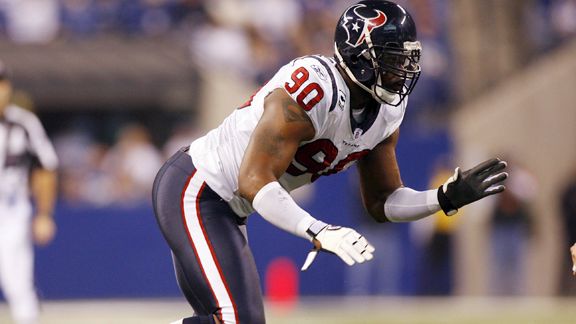
Why is Simmons hating on Casserly? He doesn’t offer any evidence, so I guess that this is all about the Mario Williams-over-Reggie Bush pick in 2006. Only that pick has turned out pretty well for the Texans. Williams was a Pro Bowler last year and Bush has missed 10 games in his first three seasons.

In fact, after a semi-disastrous start in Houston in 2002 (David Carr, Jabar Gaffney and Fred Weary), Casserly rebounded in 2003-2006 by drafting five future Pro Bowlers (Williams, Andre Johnson, Jerome Mathis, DeMeco Ryans and Owen Daniels). Ryans was named Defensive Rookie of the Year in 2006. The Texans went 2-14 in the 2005 season, and Casserly was run out of town resigned after the 2006 Draft. But the team has improved since then, posting a respectable 22-26 record in the three years since his departure. Much of the credit for this leap is given to the aforementioned players that Casserly drafted.

Prior to joining the Texans, Casserly was the GM for the Washington Redskins, where he won Executive of the Year honors in 1999 after fleecing the Saints for all their picks in the draft (as well as a future first and third) while still landing the guy he wanted — Champ Bailey.

While Casserly did have his share of clunkers (Heath Shuler must be mentioned), the guy had his share of good picks as well. Again, I don’t know what Simmons’s beef is here, but if it’s the whole Williams/Bush thing, then he should check his facts — Casserly has been vindicated.

Read the first four parts of Correcting Bill Simmons.

Bill Simmons chimes in on Kobe

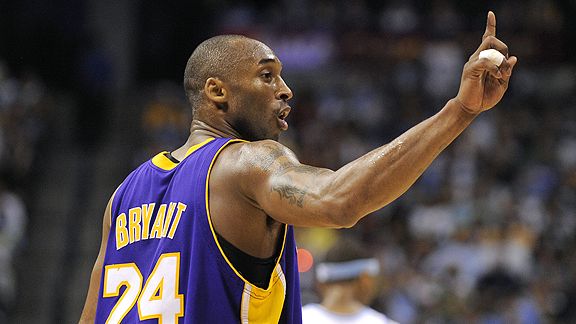
Bill Simmons isn’t too keen on all the talk about how Kobe Bryant went through a metamorphosis this season.

They had the second-best player in the league (Kobe), the second-best center (Pau Gasol), a talented forward with a unique set of skills (Lamar Odom), a breakout swingman (Trevor Ariza), a terrific leader and character guy at point (Derek Fisher), and that’s about it. They caught three breaks from February on — Kevin Garnett’s knee injury killing Boston’s season, Cleveland stupidly opting not to move Wally Szczerbiak’s expiring contract for one more piece, and Yao Ming breaking his foot in Round 2 — and cruised from there. You would not call them great, just very good. I would compare them to the 2003 Spurs, 2005 Spurs or 2006 Heat — the cream of a flawed crop of contenders.

Did they deserve to win the title? Of course. But they didn’t win because Kobe “really wanted this” and “trusted his teammates” and “finally figured it out” and all that revisionist crap.

If you’re playing the “Shut up, Kobe was better this spring!” card, your only real evidence is two signature Kick-Butt Kobe Finals Games (Games 1 and 5). But if you’re selling the “Kobe finally gets it” angle, then why was he gunning for 40 points at the tail end of a Game 1 blowout when he had already taken 30-plus shots? In Game 2, why did he go one-on-four for the winning basket (and miss) and ignore three wide-open teammates? Why did everyone so willingly gloss over the fact that, from the second quarter of Game 3 through overtime of Game 4, he missed 31 of 46 shots and kept shooting, anyway? Or that, near the tail end of Game 5, Kobe was so desperate to drain the clinching dagger that he clanged two 27-footers and allowed Orlando to climb within 12? Or that he didn’t have a single clutch moment in the Finals other than his sweet dish to Gasol during their frantic Game 4 comeback.

The entire piece is worth a read, especially for all of the Kobe apologists and Kobe haters out there. Simmons is quite complimentary towards the end.

I think Bryant altered his game somewhat, but it had as much (or more) to do with a much improved supporting cast as it did with any substantive changes to his mentality as the Lakers’ best player. He still took a number of bad shots, but he passed the ball more. The mentality to take over is still there and he doesn’t have complete trust in his teammates, but I’d say he has an appropriate trust in his teammates.

Simmons focuses on the change between last year and this year and, honestly, I don’t think Kobe changed much in that span. In the instant the Lakers acquired Pau Gasol, Kobe went from unhappy to happy. It was that acquisition that made Kobe believe that the Lakers really had the roster that could go the distance. His outlook was more positive and it (usually) translated to his on-court demeanor.

Otis Smith is the real Executive of the Year

All due respect to Denver’s Mark Warkentien, who won the 2009 NBA Executive of the Year Award, but Orlando GM Otis Smith deserves the honor. This is the problem with how the league hands out these awards at the end of the regular season — there’s no way to take the playoffs into account. Granted, it’s a regular season award, but in that case, wouldn’t Danny Ferry deserve it for pulling the trigger on the Mo Williams trade, which led to an All-Star nod for the guard and a 66-win season? Mitch Kupchak also deserves mention for his theft of Pau Gasol (now a year and a half old) along with mining Trevor Ariza and Shannon Brown from other team’s benches.

Of course, Warkentien pulled arguably the best in-season move by sending Allen Iverson to Detroit for Chauncey Billups, which gave the Nuggets the toughness and defensive intensity to go from a Western Conference also-ran to a legitimate contender. I didn’t like his decision to give away Marcus Camby last summer in a salary dump, but in his defense, his signing of Chris Andersen offset that loss. Still, it would have been nice to have Camby on the roster against the Lakers, but there probably wouldn’t have been enough minutes for three centers. Warkentien rolled the dice that Nene was ready to explode and that Andersen could bring energy, rebounding and shotblocking off the bench, and it worked out, for the most part. Warkentien also signed Dahntay Jones, who eventually turned into (sort of) a starter for George Karl, and re-signed J.R. Smith.

Now let’s take a look at the job Otis Smith has done (from HoopsHype):

Continue reading »

Bill Simmons’ Finals preview

Bill Simmons previews the Finals by taking fake questions from well-known people. Here’s a sample:

Q: Let’s say I pull this off and we win a title. Does that push me past Oscar and Jerry and make me the third-greatest guard ever?
— K. Bryant, Los Angeles

SG: Yes. Absolutely. No question. Just know that your title window is closing because of your odometer — more than 1,100 games in 13 seasons and 203 games (not including the 2009 Finals) over the last 19 months alone — and a group of contenders that will be better next season with Garnett and Ginobili back, Portland and Chicago possibly making a leap, and Cleveland undoubtedly getting LeBron more help. You will never have a better chance at another ring than you do this month. And if you get it, your place in history is secure.

Let’s say you don’t get it. Let’s say Orlando continues to ride the “Nobody believed in us!!!!” wave and topples your Lakers for its first title. Let’s say the matchup troubles from the regular season (both Orlando wins) translate to the postseason just like they did in the Cleveland-Orlando series. That would mean the following things:

A. You never won a title when you were the best guy on your own team. An indisputable fact.

B. You lost not one, not two, but THREE Finals in which you were the best player on a favored team heading into the series: 2004 (versus Detroit), 2008 (versus Boston) and 2009 (versus Orlando). You played poorly by your standards in 2004 (23-4-3, 38 percent FG, 17 percent 3-point FG) and 2009 (26-5-5, 40.5 percent FG, 32 percent 3-point FG, 4.7 TOs); in deciding games those years, your team lost by 13 points and 39 points. If history repeats itself in 2009, you won’t be able to recover historically. You’ll be the guy who needed to ride Shaq’s coattails to win a title, and that’s that.

Honestly, this is one of the reasons I love basketball so much. Kevin Garnett’s career was altered by the 2008 Finals in a good way. Karl Malone’s career was altered in the 1997 and 1998 Finals in a bad way. Walt Frazier’s career was altered in the 1970 Finals in a good way. Clyde Drexler’s career was altered by the 1992 Finals in a bad way. You can come up with 25 superstars like that. A “fork in the road” moment, if you will. For Kobe, we’re here. Officially.

That pretty much sums up Kobe’s situation, though I’m not sure that a Finals loss would send him into a tailspin that he couldn’t recover from. The Lakers will be good again next year.

« Older posts Newer posts »