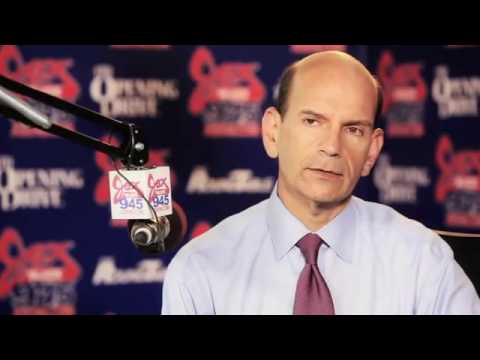
I was fortunate to have the opportunity to see the Alabama-Michigan game last Saturday night in person at Cowboys Stadium. Here’s the view from our luxury box, and yes, the stadium is as impressive as you’ve heard. Jerry Jones has done at least one thing right in the last 15 years.
As an Ohio State fan, I wasn’t very thrilled about the match-up, though of course these are two of the most storied programs in college football. Nick Saban has Alabama at the top of the mountain, while Brady Hoke is trying to rescue Michigan from the RichRod debacle.
Michigan fans were thrilled with last year’s 11-2 record, but many of them and the “experts” around the country were a little too giddy about Michigan’s prospects for this season. Michigan didn’t beat a top 15 team last year, so that record wasn’t as impressive as it looked.
That said, the team’s performance on Saturday was pathetic, and frankly I blame the coaching staff. Sure, Alabama is clearly the better team, but Brady Hoke has Denard Robinson, and he’s the kind of player that can change a college football game in seconds with his explosiveness.
Last year I wrote about Michigan’s dilemma with Denard Robinson. Brady Hoke wanted to run a pro-style offense, but he had one of the best running quarterbacks in the country. Well, Hoke tried to have it both ways for a while, but on Saturday he and his staff called plays as if they had Tom Brady under center instead of Robinson. The result was ugly with incompletions and brutal interceptions. Hoke specifically avoided Robinson’s best play – sending the receivers deep and then tucking the ball and running.
We’ll see if Hoke and offensive coordinator Al Borges realize they blew it with the game plan. Hoke likes to run his mouth, and he’s gotten plenty of support following RichRod, posting 11 wins and then beating Ohio State. But now Urban Meyer is in Columbus, and he seems to know how to use his dual-threat quarterback Braxton Miller. Hoke’s support in Michigan will start to whither if he can’t find a way to unleash Robinson and starts losing to his Big Ten rivals.
Now that the media has fed on the Penn State scandal for the past year after building up Joe Paterno as a saint on the sidelines for the past 40 years, some are naturally moving on to other subjects to deify.
With Alabama coming off of two National Championships in the past three years, it shouldn’t be a surprise to anyone that Nick Saban is the next coach to get glowing coverage from many in the media. Rachel Bachman and Ben Cohen have just written a profile of Saban in the Wall Street Journal where they take great pains to explain Saban’s greatness. Here’s an example of some of the gushing “analysis.”
The stunning volume of victories and championships and NFL draft picks has Alabama redefining college-football success as we know it. How, exactly, does the Tide do it?
Really? Redefining success? This sort of dominance over several years hasn’t been seen before in college football? Didn’t Alabama lose a game last season?
The writers go on to explain Saban meticulous attention to detail in the recruiting process, and I guess there’s some insightful reporting into Saban’s methods. But is there anything really new here? Saban is at one of the top football factories in the country and he’s grabbing the best recruits. It’s no different than what other successful coaches have done, and probably less impressive than what Urban Meyer achieved several years earlier at a school that doesn’t have Alabama’s tradition.
More notable, however, is that they also don’t dig into some of the less noble tactics used by Saban and others in the SEC like oversigning which is mentioned in passing near the end of the article after they’ve nestled Saban comfortably on his pedestal.
Here’s another nugget from the article.
“He’s incredibly honest in the recruiting process,” said former Alabama quarterback Greg McElroy, the starter on the 2009 national-title team who now plays for the New York Jets. “He tells kids, ‘Hey, you’re going to come in and redshirt. Look, you’re going to do this. You’re going to do that.’ He tells them exactly what he thinks. I think a lot of people respect that because so much of the recruiting process is an unknown.”
Wow. Saban sounds great. I guess it’s nice to hear this from Saban’s starting quarterback, but wouldn’t we learn a little more about what really goes on in college recruiting and at Alabama in particular by talking to some of the kids who lost their scholarship after one year because they weren’t quite as “special” as Saban thought when he recruited them? Of course we would, but that wouldn’t fit the happy storyline being promoted here. This isn’t about reporting; it’s PR fluff.
If the writers or the Wall Street Journal wanted to do some reporting, they might have considered looking into the random nature of NCAA enforcement and sanctions, and how many schools are learning to dodge the NCAA by just refusing to self-report problems. That’s why a tattoos for memorabilia scandal brings down a coach at Ohio State, while an alleged suits for memorabilia scheme reported in detail by SPORTSbyBROOKS gets ignored by the national media, Alabama and the NCAA. If a story doesn’t make it to ESPN or SI, it just didn’t happen. Right? Perhaps if publications like the Wall Street Journal would do some real investigating relating to this topic, they might have a real story about Alabama, or on the other hand they could say with confidence that Alabama student-athletes were avoiding the pitfalls encountered by players at Ohio State and North Carolina.
Some might argue that this was a simple football story, and there’s no need to bring in the ugly side of college football every time we discuss a top program. I get that, and it’s a fair point. Sometimes we all just want to enjoy the games. But when we get a profile exalting the recruiting “genius” of millionaire coaches like Saban, it’s journalistic malpractice to settle for token mentions of issues like oversigning and ignore well-documented allegations of misconduct.
Rick Reilly recently wrote a column where he admitted to “engaging in hagiography” as one of the many journalists who turned Joe Paterno into a saint. Of course Reilly had no idea of how that image would ultimately be destroyed, but he regretted focusing only on the positive spin surrounding Paterno’s success. A professor had called him and warned him that Paterno wasn’t a saint as everyone assumed, so there was a real story there had Reilly decided to actually do his job. Just like there’s a real story around all of today’s best coaches as well. Some are better than others, and many of them try to run clean programs. But it’s hard to take profiles like this one about Saban at face value if the issues bubbling under the surface are ignored.
With Lance Armstrong, however, everything is much more complicated, because he is so much more than just a great athlete. His devotion to the fight against cancer makes him an iconic figure, and many of his fans will continue to support him. Nike and other brand sponsors are sticking by him.
Armstrong was known for being a fighter, but he gave up here as he was facing ten former teammates who were prepared to testify against him. He release a statement attacking the USADA, and he may have some points about the “vendetta” against him. But in the end, his unwillingness to face his accusers speaks volumes.
Pete Carroll announced that Russell Wilson will get the start over Matt Flynn in the team’s third preseason game. Carroll acknowledged NFL conventional wisdom of using the third preseason game as a dress rehearsal for the starting quarterback to get him ready for the regular season, but Carroll isn’t ready to name a starter, and he wants to see Wilson play with the first-teamers in order to make a final decision on the quarterback battle.
I do admire his willingness to toss conventional wisdom and do what he thinks is best for his team, but I’m a little shocked he would interrupt Matt Flynn’s preparation for the regular season just because Russell Wilson has looked good playing against third-string defenses.
Flynn has not played poorly, and he threw a beautiful bomb last week that Terrell Owens dropped. Seattle invested a lot of money in Flynn, and he’s certainly earned the opportunity to start for the Seahawks.
Meanwhile, Wilson dropped to the third round for a reason. His size is a huge disadvantage, and he’s also a rookie who has a lot to learn. For a team that’s presumably battling for another playoff appearance, this comes across as Carroll trying to outsmart himself. We’ll see who ultimately gets the start, but Flynn has lost out on a lot of the reps he’ll need to be ready for the opener.
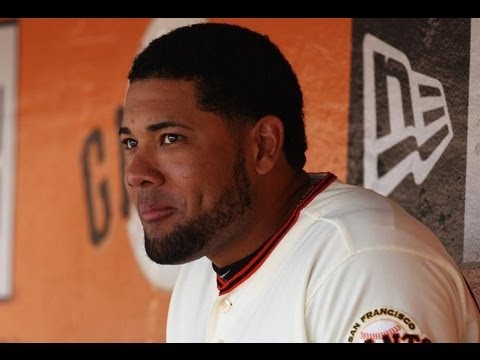
The New York Daily News breaks the story on the bizarre tactics used by Melky Cabrera to try to hide his use of banned substances.
In a bizarre attempt to avoid a 50-game drug suspension, San Francisco Giants star Melky Cabrera created a fictitious website and a nonexistent product designed to prove he inadvertently took the banned substance that caused a positive test under Major League Baseball’s drug program.
But instead of exonerating Cabrera of steroid use, the Internet stunt trapped him in a web of lies. Amid the information-gathering phase of his doping case last month, his cover story unraveled quickly, and what might have been a simple suspension has attracted further attention from federal investigators and MLB, the Daily News has learned.
This is a pretty stunning chain of events if true, and with the involvement of the Feds this story is just getting started. While the federal government has stumbled when trying to get convictions of high profile players like Barry Bonds and Roger Clemons, they have used leverage with witnesses to uncover improper conduct by players, trainers and others. Here, with the possibility that Cabrera and his associates used the Internet in a lame attempt to hide his activities, we might see this whole situation explode into a much larger story if the Feds decide to squeeze Cabrera to give up his sources and possibly other players. Stay tuned.