Author: Anthony Stalter (Page 782 of 1503)

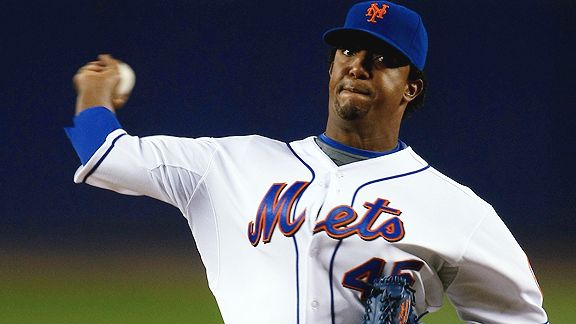
Pedro Martinez a good signing for Phils

Any time a team can add a three-time Cy Young winner who has a World Series ring and can still throw 90 mph as a fifth starter, it’s usually a good thing. And when that three-time Cy Young winner only costs the club $1 million, it’s a great thing.

The defending World Series champion Philadelphia Phillies signed Pedro Martinez to a one-year, $1 million contract on Wednesday in hopes he can rekindle some of the magic that has made him an eight-time All-Star over his career. While they did have to immediately place him on the 15-day DL with an shoulder strain, the club thinks that Martinez might be ready to pitch on July 30 when the Phillies open a series in San Francisco.

This was a low-risk, high-reward signing for the Phils. Given Philly’s offensive firepower, Martinez essentially just has to give the club quality outings. They don’t need him to strikeout 10 batters a game or work into the eighth inning every outing, they just need him to stay healthy and keep them in ballgames. And even if he doesn’t stay healthy, then the Phillies would be in no worse shape then they were before they signed him.

If Pedro pitches well and the Phils can hold off the Marlins, Braves and Mets in the NL East, then the Phillies will have a starting postseason rotation of Cole Hamels, Joe Blanton, J.A. Happ and Martinez, with Jamie Moyer moving to the pen to provide some long relief. That’s not a bad rotation, especially if Happ (6-0, 2.90 ERA, 1.17 WHIP) can continue pitching as well as he has up to this point in the season.

Again, if Martinez’s arm or shoulder craps out again, then the Phillies essentially waste $1 million this year. But if he pitches well, then he was worth the investment – especially considering he wanted $5 million for one season (or so reports claim).

The AL’s secret to dominance over the NL in the ASG? Ichiro’s profanity-laced pregame speeches.

With their 4-3 win over the National League in Tuesday night’s All-Star Game, the American League has now beaten their counterpart 13-straight times in the Midsummer Classic.

While some are quick to suggest that the AL might have more overall talent than the NL and that’s why it has had so much success in the ASG over the years, apparently the real reason for the AL’s dominance can be linked to the Mariners’ Ichiro Suzuki and his profanity-laced pregame speeches.

The tradition began in 2001, Ichiro’s first All-Star appearance, and the AL hasn’t lost a game since. Coincidence?

Um. No.

“I know how important it is to the game,” Ichiro said. “I’m more concentrated at that moment than I am in the game.”

A wide grin spread across his face. Ichiro’s secret had been exposed, so, hey, why not have fun with it?

The exact words are not available. Players are too busy laughing to remember them. Ichiro wouldn’t dare repeat them in public. So here’s the best facsimile possible.

“Bleep … bleep bleep bleep … National League … bleep … bleep … bleeeeeeeeep … National – bleep bleep bleepbleepbleep!”

“If you’ve never seen it, it’s definitely something pretty funny,” Morneau said. “It’s hard to explain, the effect it has on everyone. It’s such a tense environment. Everyone’s a little nervous for the game, and then he comes out. He doesn’t say a whole lot the whole time he’s in there, and all of a sudden, the manager gets done with his speech, and he pops off.”

And onto the field they go, enemies during the regular season, friends because together they just saw a 5-foot-9, 160-pound man from Japan, a national icon who surely could win office there, create beef where there wasn’t any.

I’ve obviously never seen Ichiro’s pregame speech, but if it’s anything like Isuro “Kamikaze” Tanka’s inspirational pregame speech to the Tribe in “Major League II,” I can see why the AL has dominated the NL for over a decade.

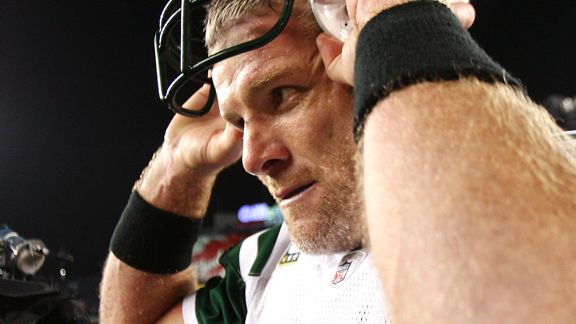
Favre to give Vikings an answer by July 30

The annoying, ongoing song and dance being performed by Brett Favre and the Minnesota Vikings could be coming to an end soon.

According to the Associated Press, Favre will give the Vikes an answer on whether or not he intends to play in 2009 by July 30, which is when Minnesota opens its training camp. Favre said that he felt pretty good after a recent workout, but still has yet to commit himself to playing for the Vikings (or anyone for that matter) this season.

Apparently Favre has increased his workouts to four days a week and says his velocity is back after having surgery in early June to repair a biceps muscle in his throwing arm. At 39 years old, he wouldn’t increase his workout regiment if he didn’t intend on playing, so it’s probably safe to assume that he’ll give the Vikings a “yes” on July 30.

If he says that he needs more time, let’s hope that Minnesota officially pulls its offer off the table and tells Favre to stick it where the sun don’t shine. This charade has gone on long enough (even though technically this is a dead time in the NFL) and the Vikings need to show a commitment to either Sage Rosenfels or Tarvaris Jackson if Favre can’t give them a commitment.

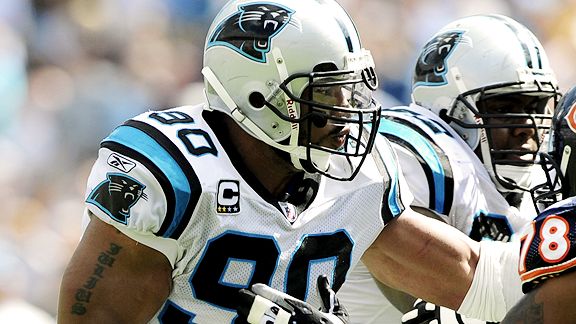
Peppers, Panthers set to do the same dance in 2010

According to a report by the Charlotte Observer, the Carolina Panthers and defensive end Julius Peppers are setting themselves up for dilemma in 2010 similar to the one they just went through this offseason.

The deadline for a team to sign a franchise player to a long-term contract ends today and apparently the Panthers and Peppers remain far apart on a deal. After he signed his one-year tender on June 24, the hope was that the two sides could come together on a long-term deal but so far, no such luck.

That means that the Panthers will face a similar problem next offseason when they’ll have to decide to either try and re-sign Peppers to a long-term deal, franchise him, or let him walk via free agency. Any one of the three options has its positives and negatives.

If Peppers wants to play elsewhere, then forcing Carolina to make another tough decision next offseason is smart. But if he wants to cash in on a massive contract before his playing days are over, the window to do so is closing considering he turns 30 next January.

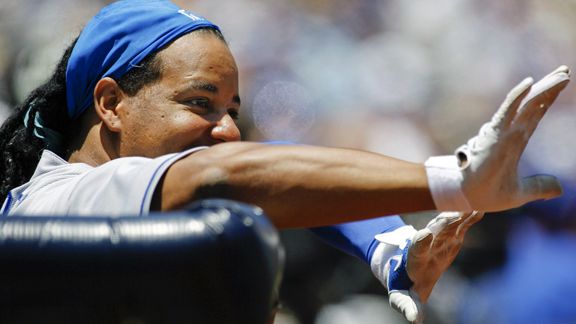
Selig doesn’t want suspended players to play in minors

Bud Selig wants a rule changed that allows suspended MLB players to sharpen up in the minor leagues before their suspensions are over. The latest example of this rule came this year when outfielder Manny Ramirez was able to play in the Dodgers’ minor league system before his 50-game suspension for testing positive for a banned substance was up.

“I believe that should be changed,” Selig said Tuesday during a one-hour question-and-answer session with the Baseball Writers’ Association of America. “Their logic was OK — look, guys get hurt, they can go out on rehab, and so on and so forth. But I think that’s something we need to really change in the next labor negotiation.”

The current rules are in place through December 2011. Rob Manfred, baseball’s executive vice president of labor relations, said management will not ask for a rules change before then.
“I’ll let them work that out. I don’t want to do our negotiating here,” Selig said. “But it’s 50 games and then go do what you got to do to get back into [shape].”

For one of the first times in the history of my existence, I actually agree with Bud the Slug.

If a player is suspended, he should have to serve the full length of that suspension before he’s allowed to partake in baseball on the major or minor league level. I was vilified by a couple of readers in this article for criticizing this rule, but it’s amazing how people don’t find a player being allowed to sharpen up in the minors (while they’re suspended mind you) a ridiculous concept. I understand that it’s baseball’s rule, but it’s a dumb freaking rule.

It’s like sending a kid to time out in the corner for 15 minutes, but for the last five minutes, he gets to play with Legos so that he’s ready to get back to building a Lego house with the other kids after his 15 minutes have been served.

« Older posts Newer posts »