Page 1129 of 2956

Why doesn’t Dwight Howard get more touches?

As part of his annual trade value column, Simmons ranks the top 40 players in terms of total value. Here’s his take on Dwight Howard:

2. Dwight Howard
Fact: Howard has played every game this season.

Fact: A whopping 75 players have attempted more field goals than he has, including Jason Thompson, John Salmons, Danilo Gallinari, Luis Scola, Carl Landry, Raymond Felton, Andrew Bynum, Jamal Crawford and Kenyon Martin.

Fact: He’s 109th in the league in field goal attempts per game, tied with Ryan Gomes at 9.6. Ryan Gomes!

Fact: Teammates Vince Carter (14.9), Rashard Lewis (11.9) and Jameer Nelson (10.3) all average more field goals attempts than he does.

Fact: He leads the league in free throw attempts (10.4 per game), so realistically, that means Howard is getting about 14-15 scoring touches per game. Not even four a quarter.

My take: He’s too nice of a guy. It’s both the best and worst thing about him. If you ever played basketball, you know there’s one rule with big guys: Make sure they touch the ball enough. If they don’t get enough touches, they get cranky. They stop running the floor. They stop setting good picks. They stop crashing the boards. Big guys are like women — they need affection, they need to be stroked every so often, and if you ignore them, they start to resent you.

In Howard’s case, nobody in Orlando has to worry about keeping him happy. He’s always happy! He’s a good soldier. In a roundabout way, he’s avoiding the responsibility of carrying an offense every night. This is easier. He gets to run around, jump over guys, ram some dunks home, block some shots, flex his muscles, smile to the crowd and concentrate on his strengths. Of course, he will never, ever, ever get better this way, and if you look closely at his stats these past three years, he is what he is: 18-19 points, 13-14 rebounds, 3 blocks, 60 percent shooting. Alpha dog pedigree, sidekick mindset. Too bad.

As a point of reference, let’s look at Shaquille O’Neal, who is/was similar in playing style (power post-up game) and handicap (FT shooting). In 10 consecutive seasons from 1993 to 2003, O’Neal never averaged fewer than 18.1 field goal attempts or 9.5 free throw attempts. Over that span, his usage percentage — the percentage of his team’s possessions that the player used while on the floor — vacillated between 31 and 32 percent.

Conversely, Howard has never attempted more than 12.4 shots in a season, and his usage percentage peaked at 26.1% last season. In short, Howard isn’t getting nearly enough touches, and Simmons’ theory about how his innate happiness is limiting his touches is completely valid.

It’s partly up to Stan Van Gundy to fix this. Howard has by far the highest effective FG% on the team (60.1%), so he should be the Magic’s #1 offensive option. Period. Van Gundy has some control over this.

When Howard was asked about his “feud” with Shaq over the “Superman” moniker, he said that he was just trying to get where Shaq is at in his career. If he truly wants to have a comparable career, he has to demand the ball. When Shaq wasn’t getting his touches, he let Kobe know. Howard has to do the same with Nelson, Carter and Lewis.


Photo from fOTOGLIF

Will the Cowboys franchise Miles Austin?

After he hauled in 81 passes for 1,320 yards and 11 touchdowns in only nine starts last season, setting receiver Miles Austin up with a new contract moved to the top of the Cowboys’ offseason to-do list. But according to ESPNDallas.com, the Cowboys might not place the franchise tag on Austin (who is a restricted free agent) this offseason.

The Cowboys have until February 25 to decide whether or not to apply the franchise tag to Austin and pay him roughly $9.5 million for 2010. If they use the tag, they can still work out a long-term deal for the 25-year-old receiver, which would make the most sense given that he became the team’s offensive MVP last year.

If they place a first and third round tender on Austin, the Cowboys will pay him $3.168 million in 2010, assuming that another team isn’t willing to pay that kind of compensation for the receiver. Either way, it’s a safe bet that Austin isn’t going anywhere. He was Dallas’ most consistent receiver last year and he has all the tools to become a legit No. 1 receiver for years to come.

With the threat of a lockout coming in 2011, it might be wise for them just to place the franchise tag on him and worry about coming together on a long-term deal after the new CBA deal is struck (assuming one is struck, that is). That said, players want financial security and the only way to achieve that is by signing a long-term deal with a team. But thus far, the Cowboys haven’t offered one.

Given that Roy Williams made roughly $9 million to catch less than half the balls Austin did for less than half the yards, it’s only fair that Austin be paid as the team’s top wide out. But the Cowboys have options and it’ll be interesting to see what they inevitably decide to do with Austin.


Photo from fOTOGLIF

Will the Yankees regret letting Wang go?

Roughly two months ago, the Yankees came to the conclusion that starter Chien-Ming Wang wasn’t worth the roster space anymore, even though they controlled his rights for the next two seasons. That’s why they non-tendered him on December 12 and made him a free agent this offseason.

It’s hard to blame the Bombers to coming to the decision not to tender Wang after he battled through ineffectiveness and injury in 2009. He was a disaster last season, finishing with a 1-6 record and a 9.64 ERA.

But in wake of the Nationals signing the right-hander to a contract on Tuesday, I wonder whether or not the Yankees will regret the decision to let Wang go after the ’09 season. After all, he’s only 29 and just a few years removed from posting back-to-back 19-win seasons.

Continue reading »

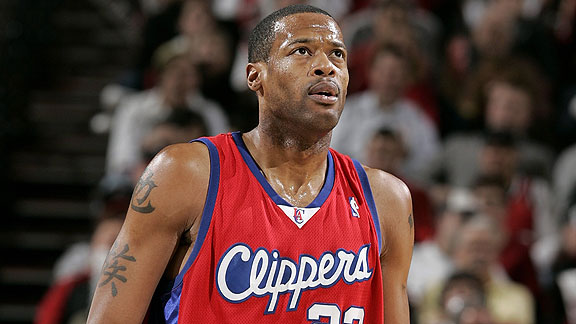
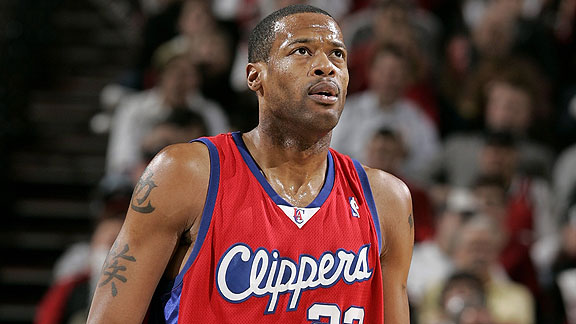
Blazers trade for Marcus Camby


With centers Greg Oden and Joel Przybilla sidelined, the Trail Blazers have acquired Marcus Camby.

The Portland Trail Blazers have acquired the Clippers’ Marcus Camby, the center they’ve desperately needed since they lost both Greg Oden and Joel Przybilla to season-ending injuries.

In return, Los Angeles receives point guard Steve Blake and small forward Travis Outlaw.

Portland will also send $1.5 million to Los Angeles in the trade and is responsible for $2 million in incentives Camby will earn before season’s end, sources said Tuesday.

This is a fairly low-risk move for the Blazers, since Camby is in the last year of his contract. Blake and Outlaw are also in the final years of their respective deals, and there’s a good chance that neither player would be back next season, so why not make a move for one of the best defensive centers in the league?

At 35 years-old, Camby is averaging 8-12 with almost two blocks per game, so he should be able to shore up Portland’s interior defense and rebounding. His PER (18.54) is #13 amongst centers, though Camby has been playing mostly power forward this season.

For the Clippers, the prize of this trade is Outlaw, a 25-year-old swingman who averaged 13-4 the last two seasons. He will push Al Thornton for minutes at small forward. Thornton has had a disappointing year and has lost playing time to Rasual Butler, of all people. Outlaw was expendable in Portland due his expiring contract and the Blazers’ logjam at the wing.

With Blake out of the picture, Portland will rely on Andre Miller and Jerryd Bayless at point guard. Both players have played pretty well this season, which prompted GM Kevin Pritchard to make this move. The Blazers are sitting in the #8 spot in the West, and Camby’s arrival should help the team’s chances of making some noise in the postseason.

« Older posts Newer posts »