Page 1117 of 2957

Eric Gagne admits to taking HGH

Another baseball player has decided to come clean about his use of performance enhancing drugs during his playing career, as reliever Eric Gagne admitted to Los Angeles Times’ columnist T.J. Simers on Monday that he used HGH in the past.

“Why did you use HGH?” I ask, and he says, “I didn’t.”

But he knows better. He and I have had a long relationship; he’s the guy who introduced me to a children’s hospital. Heart and guts, the great intimidator, eight innings of splendid work by his teammates riding on his work and almost never disappointing. How could he?

“You were using HGH, weren’t you?”

“I did,” he says. “I hate to talk about it. It just doesn’t do anyone any good. But I thought it would help me get better when I hurt my knee. I just don’t want that to sound as an excuse.

“I’m so ashamed. It wasn’t smart. If I knew what I know now. . . . I didn’t need it. I regret it so much, just now maybe getting over the guilt. It was stupid.”

It’s great that more players are coming clean about their drug use, but where were these guys when the Mitchell Report was released? I realize the names on that list weren’t supposed to be made public, but once they were it would have been nice if more players admitted their use instead of denying it.

I could be wrong, but I don’t think fans are as mad about the drug use as they are about being lied to. Don’t get me wrong, fans are still pissed that players like Mark McGwire and Barry Bonds broke records while juicing. But what gnaws at fans more than anything is that these players denied using drugs, only to admit later that they were using. I realize that people tell lies because they think they won’t come back to haunt them, but these players should have just admitted their use when they were caught the first time.

As for Gagne, his admission isn’t a surprise. His name was on the Mitchell Report, so it isn’t shocking to hear him admit that he was using. Good for him for coming clean, although he’s no better than any other player for admitting that they used after they originally denied it. Still, he gets credit for coming forward when many others refuse to do so.


Photo from fOTOGLIF

Why didn’t the Kings get more for Kevin Martin?

In his post-deadline PER diem column, John Hollinger discusses how the Rockets were able to end up with a ton of assets in the three-way trade with the Kings and the Knicks.

Consider the Kings, for instance. They had a coveted star in Kevin Martin, $13 million in expiring contracts belonging to Kenny Thomas, Sergio Rodriguez, Hilton Armstrong, Ime Udoka and Sean May, and $1.6 million in cap room to do an unbalanced trade. They should have been controlling the entire game on deadline day.

Unfortunately, they didn’t choose to play. Sacramento didn’t let teams know Martin was available, and in fact insisted he wasn’t available; unlike Phoenix with Stoudemire, the Kings have no idea if Houston’s offer was the best one they could have had. In fact, there’s considerable evidence they could have done much better — possibly by bypassing the Rockets entirely.

Consider, for starters, what would have been the perfect home for Martin: Boston. The Kings could have sent Martin and little-used Andres Nocioni to the Celtics for Ray Allen and a first-round pick, and cleared $18 million in cap room (the Celtics, given their current time horizon, would have blurted out yes to this offer in a nanosecond).

They then could have used Allen and Kenny Thomas in a deal with the Knicks and walked away with the exact same trove of assets that the Rockets did. If so, Sacramento wouldn’t have Landry, but look at what they’d have instead: Jordan Hill, New York’s 2012 first-rounder, Boston’s 2011 first-rounder, the right to swap picks with New York in 2011 (admittedly, an item of more value to Houston given the two clubs’ likely records next season), and the same cap room they cleared with the Martin trade.

The only reason they don’t have those assets, it would appear, is that they didn’t ask. While the Kings fiddled, Houston forced the action and squeezed all it could from New York. When the Knicks wouldn’t flinch, the Rockets scrambled to get alternate deals in place: first an all-smoke, no-fire rumor with Chicago, and then a late deal with Sacramento that both pried Martin free and thrust the Knicks into action.

That story echoes a fairly constant background noise that’s been heard about Sacramento in recent years. The Kings have a small front office and nearly everybody in it has been there forever; one gets the impression not that they’ve lost their basketball acumen, but that they aren’t putting in the legwork anymore.

That Martin/Nocioni-for-Allen swap and subsequent trade with the Knicks is an interesting angle on this year’s trade deadline. By not making it known that Martin was available, the Kings didn’t get everyone’s best offer. Conversely, the Suns did hear everyone’s best offer or Stoudemire, and chose not to pull the trigger.

Chargers release icon LaDainian Tomlinson

After spending nine years in San Diego, LaDainian Tomlinson’s Charger career has officially come to an end, as the team released the 30-year-old running back on Monday.

Tomlinson ends his San Diego career after amassing 12,490 rushing yards and 138 rushing touchdowns on 2,880 attempts. Outside of 2009, he never finished with less than 1,110 rushing yards during a season and never totaled less than 10 rushing touchdowns. His best season came in 2006 when he rushed for 1,815 yards and a NFL-record 28 touchdowns, which he still holds today.

While it’s a sad ending to such a fine tenure, Tomlinson didn’t make things easy by ripping the franchise for his lack of carries last year and his criticism of head coach Norv Turner’s pass-first approach. Tomlinson also refused to take a pay cut to stay in San Diego, so nobody can blame the Bolts for saving $5 million ($3 million in salary, $2 million in bonuses) by dumping him now.

Some fans like to blame the Chargers’ offensive line for Tomlinson’s declining numbers over the past two seasons. But while the left side of Marcus McNeill and Kris Dielman left something to be desired in the run blocking department last year, the right side of Jeromey Clary, Louis Vasquez and center Scott Mruczkowski was more than serviceable in opening up running lanes. The fact is that Tomlinson’s skills have just deteriorated after toting the rock so many times throughout his career.

Tomlinson will land with somebody next year. Chances are he’ll have to take a one or two-year deal, but given his experience and exceptional vision, he’ll land on his feet again.

It just won’t be in San Diego, where it was clearly time for both player and team to move on.


Photo from fOTOGLIF

Buzz Bissinger no likey the Brett Favre

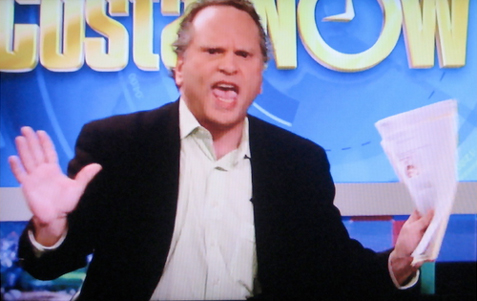
Remember blog-hater Buzz Bissinger, the “Friday Night Lights” scribe who lit into Will Leitch on “Costas Now”?

Well, his most recent target is none other than Brett Favre, whom he calls a “hubristic fool” for playing through an ankle injury in the NFC Championship Game.

Brett Favre wasn’t heroic. He was a hubristic fool. He wasn’t a warrior. He was an arrogant braggart who, whatever the homespun hokum of his Mississippi roots, perversely reveled in his pain to the point where his agent publicly disseminated pictures of his injuries like cheesecake photos–a deep-purple ankle lumpish and swollen, an equally deep-purple hamstring. The pictures did what Favre hoped they would: further reinforce his image as The Gladiator, The Samurai, The White Knight for whom guts in football, however stupid and wanton, is what counts.

Later, Bissinger says that Favre’s admission to his pain killer addiction and his playing the Monday night (against the Raiders) after his father died were contrived and carefully planned.

He has always been clinically grandiose beneath the “aw-shucks” country boy cover. He knows what sportswriters crave, not just the junk food of the noble warrior but the soul-aching confessional, which largely accounts for why he admitted to being a Vicodin addict in 1996. He knew that, when he decided to play a football game the night after his father died in 2003, it would not be perceived for the act of self-absorption it was, but as an act of courage after he carefully spun it as that’s what pappy would have wanted.

Self-absorption…really?

While we all know that Favre has a huge ego and a flair for the dramatic, I don’t think his deciding to play soon after his father died was an “act of self-absorption.” I think any athlete that had a supportive father would choose to mourn on the football field, the basketball court or the baseball diamond rather than wallow in pity and depression in some dark room somewhere. An athlete (and likely his father) would see not playing as a form of self-absorption. No father would want his death to hurt the chances of his son’s team getting a win in a crucial game.

And as for the chances of Favre, or any tough QB for that matter, taking himself out of the NFC Championship Game because of an ankle injury — well, it’s just unrealistic to think that would ever happen. I saw the game, and while Favre limped off after the play in question, he was moving around all right on it for the rest of the game. Do you think Minnesota fans wanted to see Sage Rosenfels or Tarvaris Jackson in that situation? Hell no.

Bissinger’s official website describes him as “highly acclaimed” and “one of the nation’s most distinguished writers.” But this piece isn’t distinguished at all. It just seems like he has an ax to grind with Favre (ever since the pain killer admission) and he took this opportunity to kick a man while he’s down.

Patriots franchise Vince Wilfork

According to beat writer Tom Curran via his Twitter page, the Patriots have designated nose tackle Vince Wilfork as their franchise player.

This news won’t please Wilfork, who has said all along that he didn’t want to be franchised. The one-year deal will guarantee him a $7.003 million salary in 2010, but players want long-term deals because they offer security. ESPN’s Adam Schefter reported last week that the two sides reached a standoff last week in long-term contract talks and thus, that’s why the Pats inevitably decided to use their franchise tag on the 28-year-old NT.

Wilfork is a top 5 defensive tackle, is outstanding against the run and is vital to New England’s 3-4 defense. So while he probably isn’t thrilled with being franchised, the Patriots were never going to let their centerpiece defensive linemen walk this offseason.

At least the two sides can continue to work on a long-term deal. The deadline for franchise players to sign a multi-year deal isn’t until mid-July so now that the Patriots don’t have to worry about competing with other teams, they can focus on making Wilfork contractually happy. Hopefully the two sides can come to an agreement.


Photo from fOTOGLIF

« Older posts Newer posts »