Page 1094 of 2956

2010 Fantasy Baseball Rankings: Second Basemen

All 2010 Fantasy Articles | 2010 Position Rankings

Stop us if this scenario has ever played out during one of your drafts: You’re in the first round and Chase Utley comes off the board. With so many good players available at other positions, you don’t even blink an eye. But then Ian Kinsler is taken a few rounds later and then maybe even Brandon Phillips or Robinson Cano are selected and all of a sudden you start to feel the second basemen death grip on your shoulder.

“No problem,” you think to yourself. “I’ll just address other positions and figure out second base later. After all, what’s the difference now? The production will be roughly the same for anyone I draft from here out, so I might as well wait.”

The problem with that mindset is that you’re probably passing on players that are essentially locks for certain stats. Once those players come off the board, you run the risk of suffering through major bouts of inconsistency (think Dan Uggla) or unspectacular production (think Jose Lopez) at the second base position.

If you miss out on Utley or Kinsler, we recommend snagging one of these four second basemen and reaping the benefits of what should be locks for certain stats. These four might not give you the same production as Utley or Kinsler, but they’re safer bets to than ’09 heroes Aaron Hill and Ben Zobrist, who may not duplicate the success they had last year. We know they look like locks, but we value the four players below more.

(Side note: Depending on what stat you’re looking for, these four players might be interchangeable, so don’t get too hung up on where we have them ranked. They’re all solid options at second base.)

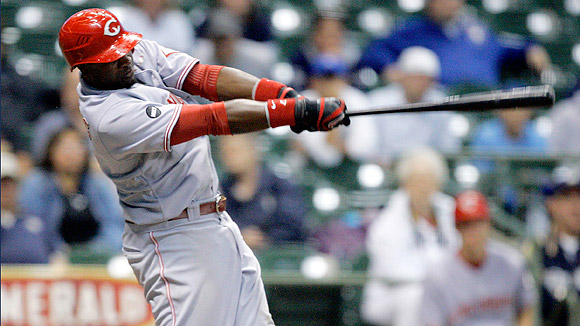
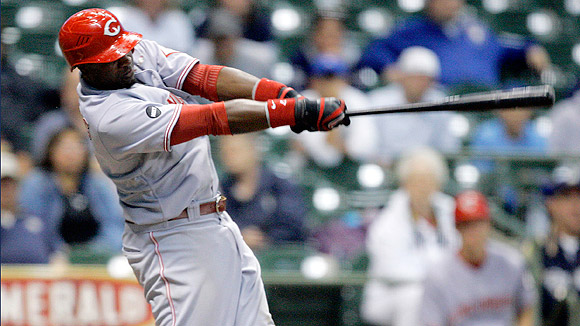
Brandon Phillips, Reds
Phillips has produced three straight 20/20 seasons and chances are, he’ll accomplish that feat again this year. If you’re hoping he’ll slug 30 home runs and steal 30 bases this season, you’re expectations are probably too high. But getting 20 dingers and 20 steals from your second baseman is nothing to scoff at. Phillips often gets overlooked because of his batting average, but at .275 he’s right around the league average – if not better. Plus, he should drive in 90-plus RBI again this year and score 80-plus runs. What else are you looking for out of your second baseman?

Continue reading »

How the Mavs could make a splash this summer

They don’t have any cap room, but that doesn’t mean the Dallas Mavericks can’t make some big moves this summer.

He has one year and $13 million left after this season … but it’s not guaranteed. Meaning a team can trade for him, and drop him. That’s a $13 million savings. Not too shabby.

One team that would like to drop that much and get under the luxury tax? The Hornets.

No one is suggesting the Hornets would trade Chris Paul to Dallas, but David West is a possibility. The Mavs also have Caron Butler and young guard Rodrigue Beaubois, who has played pretty well in his rookie season.

It’s going to be an interesting summer indeed.


Photo from fOTOGLIF

Discussing Tiger’s comeback

Bill Simmons wrote a long column that compares Tiger’s eventual comeback to those of some of sport’s other iconic athletes. One point jumped out at me…

At gunpoint, if I could wager on any conceivable scenario, I would wager on Tiger coming back in severe Eff You Mode, like a seething MJ in Game 1 of the 1992 Finals. The greatest ones have a way of channeling negativity and fueling it toward whatever makes them great. Jordan made a habit of it. So did Ali. But they were also larger-than-life personalities, whereas Tiger was always just someone who was freakishly good at golf and that’s it.

I can see Tiger coming back with a vengeance, but basketball (and boxing, for that matter) is unlike golf in that pure effort and energy can overcome one’s opponent. Typically, in basketball, an athletically inferior team can be victorious if they outhustle its opponent. Defense, rebounding, loose balls — success in these areas depends largely on a team’s effort. So if MJ’s shot wasn’t falling, he could take his “Eff You Mode” and apply it elsewhere and dominate the game. And when the best athlete on the court is playing harder than anyone else, good things will happen.

I don’t think Tiger can do that in golf. Effort is only going to matter when he’s practicing, and while this is vitally important to a successful comeback, effort is not going to matter much when it comes time to play a tournament. Golf is a game of millimeters, and passion isn’t going to help much when titles are on the line. If channeled, this passion and determination can help in the form of focus, but there is also the chance that Tiger becomes too focused and it pushes him off the rails.

Whatever happens, it’s going to be interesting to watch.

How does the zone D affect Syracuse’s tourney chances?

In the most recent issue of ESPN The Magazine, Jay Bilas makes a strong argument for the 2-3 zone defense — Jim Boeheim’s zone D, that is. (Insider subscription required.)

So why don’t more coaches follow a strategy that has helped Boeheim win 800-plus games and a national title? It mostly comes down to myths and machismo. For instance, a common perception is that a 2-3 yields open three-pointers, and yet somehow Syracuse has held opponents to 30.6 percent shooting from deep this season, 36th in the nation. “When teams hit a few threes on Bob Knight’s man-to-man, nobody told him to get out of his defense,” Boeheim says. “They just needed to play it better. And if a team is beating our zone, we need to play it better.” Coaches also cite the fact that it’s tougher to rebound out of a zone than with man, but that’s a minor trade-off, especially since those offensive boards tend to be long ones that don’t lead to easy putbacks.

And the machismo? Many coaches believe that if they’re not running man-to-man they’re not coaching at all. They also worry about the blame game. Says UConn associate head coach George Blaney: “Jim Calhoun believes in man-to-man. The reasons are position, strength and that he can hold our defenders accountable.” But Boeheim understands his zone so well that he knows exactly who’s accountable, even if it’s hard for outsiders to see.

Heading into last weekend, I felt pretty good about picking Kentucky and Kansas to meet in the title game, but now I’m not so sure. Kentucky is young and has had mental lapses at times, while Kansas has looked pretty shaky in the few big games I’ve seen. I still think both teams have a terrific shot at the Final Four, but the more I see of Syracuse, the more I like the Orangemen.

I played for Bo Ryan at the University of Wisconsin-Platteville, and anyone who follows Wisconsin hoops knows that he wouldn’t touch a 2-3 with a ten-foot pole. He won all of those D3 championships with stingy man-to-man defense, and we would always fillet any teams that tried to zone against us, so the idea of sitting in a 2-3 generally doesn’t appeal to me.

But that’s just it — Syracuse doesn’t sit in a zone. They play a matchup 2-3 with man-to-man principles, which means there’s always a man pressuring the ball. It’s tough to prepare for because, no matter what, an opponent’s scout team isn’t going to be able to resemble Syracuse’s zone. It also eliminates about 90% of an opponent’s offensive playbook and reduces the mileage that players cover on defense, so they should have more energy for other parts of the game, like ball pressure, rebounding, and transition defense.

I think the problem with zone is that teams that play it sporadically aren’t very good at it, so the perception is that it’s ineffective. That’s where the rebounding becomes a major issue and shooters are inexplicably left open; players miss their assignments because they aren’t used to playing zone. But teams that play zone all the time — like Syracuse, John Chaney’s Temple squads, early ’90s UNLV — had plenty of athleticism and were extremely difficult to score on. Even Mike Krzyzewski — a devotee to tough man-to-man defense — has played some zone the last couple of seasons after spending time with Jim Boeheim as part of the duo’s Team USA duties.

Whether or not Syracuse makes the Finals may very well depend on their offense, not their defense. This year’s team is leading the Big East in FG% (52%) and is fourth from long range (38%). Their biggest offensive flaw is their inaccuracy at the free throw line (67%), which is worrisome, but not a deal-breaker.

They only have two losses all season. In early January, they lost to Pitt, shooting 1-13 from long range while allowing the Panthers to hit 10-24 from deep. They also lost to Louisville, who has beaten Syracuse five straight times. The two teams meet again on Saturday. If Syracuse can get a win there, and go into the NCAA tournament coming off a Big East Championship, I’m pretty sure they’ll be my pick to win a national title as well.


Photo from fOTOGLIF

« Older posts Newer posts »