Category: Fantasy Baseball (Page 17 of 48)

Pablo Sandoval = Ultimate Fantasy Sleeper?

Chances are if you had the opportunity to flip on a San Francisco Giants game in the second half of the 2008 season, you could have sworn that Bengie Molina had changed his number and was now playing the infield.

That’s because at 5’11” and 246 pounds, Pablo Sandoval could easily be the body-double for the 5’11”, 225-pound Molina.

Unless you’re a Giants fan or a true fantasy baseball mega wizard, there’s a good chance you’ve never heard of Sandoval. San Fran signed the 22-year old switch hitter from Carabobo, Venezuela as an undrafted free agent in 2002, but thanks to his performance over the last month of the 2008 season, Sandoval is officially your 2009 ultimate fantasy sleeper.

In 145 major league at bats last season, Sandoval hit a scorching .345 with a .490 slugging percentage and 10 doubles. He also jacked three home runs, knocked in 24 RBI and crossed the plate 24 times in San Fran’s weak offense – the same weak offense that will give him the opportunity to hit fifth in the lineup this year behind the aforementioned Molina.

Not since Matt Williams have the Giants been so excited about a young position player to come through their farm system. Sandoval absolutely raked NL pitching in the final month of the season last year despite taking a free-swinging approach in all of his at bats. (That’s a nice way of saying he swung at everything.)

But despite being such a young, free-swinging hitter, Sandoval didn’t chase many pitches out of the zone, even when pitchers started to figure out that he could hit. He seemed to stay within himself and take what pitchers gave him while rarely having poor at bats and usually making good contact.

Despite the lofty expectations, however, there are plenty of concerns that accompany Sandoval as he embarks on his first full season as a regular. His track record in the minor leagues suggests that his numbers from last year were a fluke and despite his .345 batting average, he only walked a total of four times in 145 at bats.

From a fantasy perspective, he fell nine games shy of qualifying as a catcher in 2009, which means he’ll be lumped in with the much deeper first base class. Ironically, the Giants will most likely start him at third base this season, which would have made him much more valuable because the hot corner is a weak position in terms of fantasy this year.

Will Sandoval hit .345 again if the Giants give him 520 at bats? Probably not, especially if the kid doesn’t learn to take more walks. But is it possible that he could hit .300 with 15 home runs and a slugging percentage that closes in on .440 again? Absolutely.

We’re not suggesting to sell your soul on draft day to select Sandoval, but a great case could be made for taking a flier on him as one of your late round picks – especially if you’re in a keeper league. And if Molina and fellow youngsters Fred Lewis and Travis Ishikawa produce around him in the lineup, there’s a good chance Sandoval could drive in 75-80 RBI and chip in anywhere from 70-75 runs.

The bottom line is – what do you have to lose? If our projections for Sandoval turn out to be unrealistic, then you can dump him early in the season and not lose sleep after selecting him in one of the final rounds of your draft. But if we’re right and he’s set up for a solid year as a first time starter, then Sandoval could be a fantastic late round gem.

2009 Fantasy Baseball Preview: Shortstops

All 2009 Fantasy Articles | 2009 Position Rankings

Before your 2009 fantasy baseball draft kicks off this year, do yourself a favor and repeat this three or four times to yourself: I will draft a shortstop in the first nine rounds.

Not unlike third basemen, the shortstop position is weak this season. After Hanley Ramirez, Jose Reyes and Jimmy Rollins come off the board in the first two rounds, you’re left with roughly eight shortstops that will give you adequate to good production this season. We project those eight shortstops to be selected anywhere between the fifth and ninth round in standard mixed leagues, which is why we suggest nabbing one before the conclusion of the ninth.

The good news is that in a 12-team league, you’ll definitely have the opportunity to land one of the big three (Ramirez, Reyes, Rollins) or scoop up one of the eight adequate-to-good shortstops that we’re referring to. The bad news is that shortstops can start flying off the board quickly and if you’re selecting in a snake draft, you could wind up on the wrong end of the spectrum when the run starts.

That’s why to be safe, you will draft a shortstop in one of the first nine rounds because you don’t want to be the guy that’s trying to figure out whether or not Edgar Renteria will bounce back now that he’s in the NL again, or having to choose between Orlando Cabrera’s consistent .280 batting average and Khalili Greene’s 25-plus home run potential. (Side note: If you do wind up being that guy come draft day, it might be wise to select two shortstops back to back and hope you catch lightning in a bottle with one of them.)

Obviously you still want to be smart on draft day; we’re not advising you to take Derek Jeter in the third because you’re spooked about failing to grab a shortstop before the ninth round. But taking one of the top 11 shortstops a round early might not be a bad idea considering what you’ll be left with later on.

After Ramirez, Reyes and Rollins come off the board, here are the eight shortstops we’d suggest taking before the ninth round ends:

Stephen DrewStephen Drew, Arizona Diamondbacks
In his third season with the D-Backs last year, Drew was only the third shortstop in major league history to finish with 40 doubles, 20 home runs and 10 triples in 2008. At 26 years old, his ceiling is sky high right now as he enters the prime of his career and there is no doubt that he’s one of the bright young stars in baseball. If he builds off the success he had last year, Drew could easily hit 25 home runs, knock in 75 RBI, score 100 runs and chip in five stolen bases. He probably won’t sniff the .300-mark in terms of batting average, but he should be right around .290.

Troy Tulowitzki, Colorado Rockies
Tulowitzki exploded onto the scene in 2007, helping the Rockies make a World Series appearance and setting a record for most home runs (20) in a season by an NL rookie shortstop. But injuries destroyed what was supposed to be a promising second season in 2008 and he obviously fell short of expectations. Still, he hit .300 over the second half of the season last year and he should once again build on his promising young career. He has the potential to hit 20-plus home runs, knock in 80 RBI, score 90 runs and add 10 stolen bases along with his .290 average. Tulowitzki is a star in the making and definitely one of the better young shortstops in the game.

Alexei Ramirez, Chicago White Sox
Potential could be the one word to describe the Sox’s young shortstop. Ramirez has 20-home run and 20-stolen base potential and he could easily average .290 and score 100 runs. The one thing to keep in mind about him, however, is that last year was his breakout campaign and he could regress in ’09. Still, with Orlando Cabrera moving on in free agency, Ramirez will get every opportunity to build on his rookie performance and should have plenty of fantasy potential hitting in front of Carlos Quentin in the two-hole.

Jhonny Peralta, Cleveland Indians
With most of the Tribe hitters taking a step back in ’08, Peralta came through with a fine season. If Travis Hafner is healthy again this year, Peralta will move back to the third or fifth spot in the order (he was hitting cleanup in Hafner’s absence last season) and should hit 25-plus home runs. He does strike out a lot and his average will probably teeter around .275, but he’ll also give you 80-plus RBI and score 100-plus runs. There’s talk of him moving to third base this year so keep an eye on that, but he’ll still qualify as a shortstop in all leagues.

Derek Jeter, New York Yankees
Tried and true – Jeter is more than capable of giving you quality production day in and day out. At 35 years old, his numbers are definitely on the decline but that doesn’t mean the veteran will crash and burn in 2009. He might not hit 20 home runs or steal 20 bases this year, but you can probably bank on 15 dingers and 15 swiped bags. Just don’t overvalue him, because there’s no doubt someone will based on name recognition alone.

Rafael FurcalRafael Furcal, Los Angeles Dodgers
Obviously he’s a major injury risk, but if he’s healthy there’s no reason to believe Furcal can’t pick up where he left off in April of last year when he hit .367. He also returns to familiar stomping grounds after re-signing with the Dodgers, and he should have every opportunity to top 15 home runs and swipe 35-plus bases. Some owners will look at his name and take a pass given his age and injury concerns, but Furcal could be worth the risk come draft day, especially depending on how far he falls.

J.J. Hardy, Milwaukee Brewers
If you can put up with Hardy’s streaky production, he’s liable to blast 25 home runs, drive in 75 RBI and bat around .280. Depending on how your first five or six rounds turn out, the addition of Hardy could give you a boost in the power department without killing your team’s overall batting average. Not a lot of owners will jump at the opportunity to select him, but Hardy is an underrated player and after hitting 20-plus home runs the last two seasons, he looks like a reliable option.

Michael Young, Texas Rangers
Some owners might choose to go with a young sleeper like KC’s Mike Aviles over an aging vet like Young, but keep in mind how good the Rangers’ offense was last year. Young has the potential to hit .300 with12 dingers, knocking in 82 RBI and scoring 102 runs at the top of Texas’s lineup. Aviles might hit .300 again with 10-plus home runs, but it’s doubtful he brings what Young does to the table in terms of RBI and run production.

Here is our official ranking of shortstops. Remember that all of these players qualify for your middle infield position, so don’t fall asleep and miss out on taking a potential sleeper or consistent veteran shortstop in later rounds.

1. Hanley Ramirez, FLA
2. Jose Reyes, NYM
3. Jimmy Rollins, PHI
4. Stephen Drew, ARI
5. Troy Tulowitzki, COL
6. Alexei Ramirez, CHW
7. Jhonny Peralta, CLE
8. Derek Jeter, NYY
9. Rafael Furcal, LAD
10. J.J. Hardy, MIL
11. Michael Young, TEX
12. Mike Aviles, KC
13. Miguel Tejada, HOU
14. Yunel Escobar, ATL
15. Orlando Cabrera, OAK
16. Elvis Andrus, TEX
17. Edgar Renteria, SF
18. Jason Bartlett, TB
19. Ryan Theriot, CHC
20. Khalil Greene, STL
21. Jed Lowrie, BOS

2009 Fantasy Baseball Preview: Second Basemen

Dustin Pedroia

All 2009 Fantasy Articles | 2009 Position Rankings

Second base is home to one of the biggest draft-day dilemmas: What to do with Chase Utley? I covered Utley’s situation in more detail here, but as you’ll see in the rankings below, I’m not concerned enough about his recovery from hip surgery to drop him from the top slot at second base. Reports out of spring training have all been positive and Utley maintains that he’ll be ready for Opening Day. As long as he doesn’t suffer a setback between now and my draft, that’s good enough for me.

Of course, my refusal to drop Utley’s ranking has as much to do with his talent as it does the general lack of depth at second base. Sure, there is some talent at the top of the list but once you get eight or 10 deep, things start looking rather bleak. Fortunately, there is a fair amount of upside to be harvested here, with several 28-and-under guys who could outperform expectations this season. You’ll have to pay a premium for some (like the reigning AL MVP) while others can be snagged in the mid- to late-rounds (like Arizona’s new potential leadoff man), but they all have the kind of upside that I look for on draft day. And while upside alone won’t win you a fantasy title, it’s a convenient tiebreaker that makes a guy like Brandon Phillips a little more attractive than the steadier but older Brian Roberts.

With that in mind, here is some of the young talent you’ll want to consider this season, and see below for my top-25 second basemen.

Dustin Pedroia, Boston Red Sox
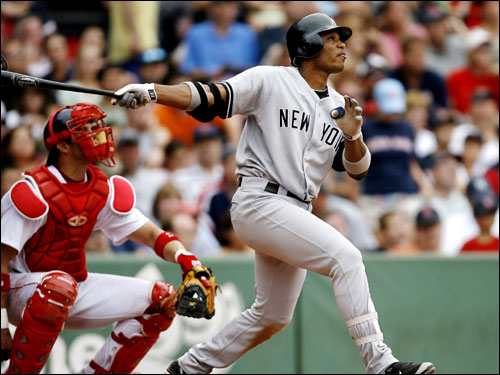
It’s only fitting to start this list with Pedroia after the 25-year-old sparkplug came out of nowhere to snag the MVP award with a .326-17-83-118-20 campaign. Of course, now everyone wants to know if he can do it again. Color me skeptical. Pedroia shouldn’t have a problem matching his average and runs total as Boston’s #2 hitter, but he never flashed the kind of home run power in the minors that he showed last season, and he stole a total of 11 bases in his four minor-league stops. Some will argue that Pedroia’s impressive 54 doubles not only indicate that the power surge was legit, but that more homers are on the way. That may turn out to be true, but I’ve seen Pedroia going ahead of Utley in many mock drafts, sometimes even late in the first round. That’s a price I simply am not willing to pay. Was 2008 the ceiling for Boston’s young second baseman? We’ll find out this season, but I’m content letting another owner pay the premium.

Ian KinslerIan Kinsler, Texas Rangers
After adding nearly 60 points to his batting average, Kinsler is another second baseman who will have to prove that last season was no fluke. A sports hernia ended the 26 year old’s season in August but not before he established himself as a legitimate 25-25 threat atop the Rangers lineup. Unlike Pedroia, Kinsler showed plenty of pop in the minors but, also unlike Pedroia, Kinsler hasn’t exactly proven to be a durable player in his short career, which is the lone reason I have him behind his Boston counterpart in my rankings. As far as pure ability goes, I’d rather have Kinsler. The average may have been a bit flukey but, if he can stay healthy, this may be the only second baseman who can rival Utley’s all-round production.

Brandon Phillips, Cincinnati Reds
Maybe I spoke too soon. Kinsler certainly has the potential to match Utley’s power/speed combo, but the 27-year-old Phillips did just that two years ago, going .288-30-94-107-32. Actually, to be more precise, Utley has never stolen more than 16 bases in one season, whereas Phillips has averaged nearly 27 steals over the last three years. His numbers dropped last season, in part because of a finger injury, and some wonder how much he’ll rebound in 2009 now that Adam Dunn and Ken Griffey Jr. are no longer in town. Call me a sucker for upside, but I’ll gladly roll the dice on Phillips in the fourth or fifth round, and while I like the speed and consistency Brian Roberts offers, I’d rather have the medium-risk/high-reward Phillips.

Alexei Ramirez, Chicago White Sox
Be careful here. Ramirez is all the rage after putting together a .290-21-77-65-13 season that would have been good for Rookie of the Year honors if not for Evan Longoria. The counting numbers look great but don’t overlook the ugly 61-18 strikeout-to-walk ratio. At just 27, Ramirez has plenty of room for growth, and I love the fact that he’ll qualify at 2B, SS and OF in many leagues. But with that kind of plate discipline, don’t be surprised if the Cuban defector falls short of expectations in his second season.
Dustin Pedroia

Robinson Cano, New York Yankees
We’ve seen what Cano is capable of after he hit .342 with 15 homers in 2006 and .306-19-97-93 in 2007. Unfortunately for the 26-year-old Cano, his propensity for ice cold starts depresses his final numbers each year, an early season trend that bottomed out when he hit .151 last April. His pedestrian overall stats (.271-14-72-70-2) will keep his draft stock down this season, which means it’s the perfect time to buy low. If you’re looking for a rebound candidate at second base, Cano is your guy.

Jose Lopez, Seattle Mariners
Lopez delivered improvement across the board last year, going .297-17-89-80-6 in his third full season with the Mariners. At 25, Lopez may very well still be on the upswing, and his career minor league numbers seem to back that up. He doesn’t draw many walks and he hits in a meager lineup, but if you haven’t found your starting second baseman by the middle rounds, Lopez would be a nice fit.

Mike Aviles, Kansas City Royals
As a 27-year-old rookie, Aviles put together a tidy .325-10-51-68-8 line in 102 games. The hype surrounding KC’s likely #2 hitter is surprisingly high right now so there’s a chance he’ll be overvalued on draft day, but Aviles was a very good hitter in the minors who totaled 27 homers in his last two years at AAA. Don’t go crazy for him, but don’t sleep on Aviles either. Bonus: he’ll qualify at 2B and SS.

Howie Kendrick, Los Angeles Angels
Rickie Weeks, Milwaukee Brewers

Kendrick and Weeks ooze upside. The problem is, they can’t stay healthy. The glass-half-full side of me says they each set a career high for games played last year; the glass-half-empty side says, “Yeah, but that was 92 games for Kendrick and 129 for Weeks!” Good point. Still, Kendrick (25) is talented enough to win multiple batting titles even if the power hasn’t yet developed, while Weeks (26) has flashed some serious power/speed ability, averaging 15 homers and 22 steals in limited action the last two years. It would be foolish to count on either guy as your starting second baseman, but if you want to roll the dice on a high-upside middle infielder, you could do a lot worse.

Felipe LopezFelipe Lopez, Arizona Diamondbacks
Lopez once hit 23 homers and stole 44 bases. He didn’t do those in the same year, of course, and since posting those numbers, the 28 year old has been a fairly mediocre fantasy player, but that just means he’ll come cheaply on draft day. The Diamondbacks are talking about having Lopez lead off in 2009, which may be the kind of opportunity the toolsy middle infielder needs to revive his career. As a bonus, he’ll qualify at 2B, 3B, SS and OF in many leagues, which makes him even more appealing as a late-round flier.

Skip Schumaker, St. Louis Cardinals
I’m cheating a little bit with this one in a couple of ways: Schumaker is 29 and he will not qualify at second base during your draft. The upside here is probably minimal but if Schumaker can win the second base job this spring (so far, so good on that front), he’ll likely have a regular gig in the leadoff spot for the Cardinals. That won’t translate to a whole lot of power and speed, but Schumaker should hit .300 and score 100 runs, numbers that look a whole lot like Placido Polanco’s. Considering owners tend to look at Polanco around the 10th round while Schumaker more often than not goes undrafted, that sounds like a pretty good value to me.

TOP 25 SECOND BASEMEN

1. Chase Utley, PHI
2. Dustin Pedroia, BOS
3. Ian Kinsler, TEX
4. Brandon Phillips, CIN
5. Brian Roberts, BAL
6. Alexei Ramirez, CHW
7. Robinson Cano, NYY
8. Dan Uggla, FLA
9. Mark DeRosa, CLE
10. Jose Lopez, SEA
11. Mike Aviles, KC
12. Kelly Johnson, ATL
13. Placido Polanco, DET
14. Howie Kendrick, LAA
15. Rickie Weeks, MIL
16. Aaron Hill, TOR
17. Orlando Hudson, LAD
18. Felipe Lopez, ARI
19. Skip Schumaker, STL
20. Mark Ellis, OAK
21. Freddy Sanchez, PIT
22. Kaz Matsui, HOU
23. Ronnie Belliard, WAS
24. Alexi Casilla, MIN
25. Asdrubal Cabrera, CLE

Fantasy baseball draft tips: Tier it up!

All 2009 Fantasy Articles | 2009 Position Rankings

You’re hunched over your desk, boring a hole into your cheat sheet. “Michael Young or Joey Votto?” You’re up in two picks. Make that one pick. Panic sets in. “Michael Young or Joey Votto?” You’re running out of time. Your eyes dart right to left between the two names. “Michael Young or Joey Votto?!” Time’s up; you need to make a choice. “MICHAEL YOUNG OR JOEY VOTTO?!” You burst into tears.

Okay, maybe you don’t actually cry…or maybe you do, I don’t know. Either way, you can potentially avoid this kind of draft day drama entirely if you spend a little more time preparing beforehand. Sure, you probably at least have one or two cheat sheets from your fantasy magazines or websites in front of you. Maybe you even took the time to put together your own cheat sheet. Unfortunately, that just means you’re looking at a jumbled mess of names organized by position. What does it all really mean?

To get a clearer picture of what kind of talent is still available during my drafts, I break each of my position rankings up into tiers. Typically the elite players at each position get their own tiers, followed by the guys I view as starter-quality, the fallback options and the leftovers. Depending on the depth at a particular position, there may also be a “star” tier in between the elites and starters, and maybe another serviceable tier between the starters and fallbacks, but you get the idea.

Michael YoungSo what’s the point? If the poor fictional sap in my example above had a tiered cheat sheet in front of him, he may have noticed that Young was the last guy in his starters tier at shortstop, whereas there were three quality first basemen still available after Votto. So he takes Young to fill his hole at short and then targets Votto or one of the other three first basemen with his next pick. Problem solved, decision made, embarrassing emotional breakdown avoided.

My goal each draft is to fill my roster with as many starter-quality (and above) players as possible, and having my rankings broken up into tiers makes it much easier to gauge what kind of depth I’m dealing with. You may be surprised by the amount stress this kind of information can eliminate from your draft. Should you take a third outfielder or your starting middle infielder? What do your tiers say? You’d like to get one more closer but can you afford to wait another round or two? A catcher or another starting pitcher? Michael Young or Joey Votto?! The answer is in the tiers.

This isn’t a revolutionary way to approach your draft – all sorts of owners use some kind of tiered system – but it is an extremely useful tool that can help you build a deep and productive roster heading into the season. What owner wouldn’t want that?

2009 Fantasy Baseball Preview: Third Basemen

All 2009 Fantasy Articles | 2009 Position Rankings

Here is everything you need to know about the depth at the third base position these days: On CBS Sports’ cheat sheet for the top players at each position, they list 41 starting pitchers, 25 relief pitchers, 67 outfielders, 25 first basemen, 25 second basemen, 25 shortstops, 30 catchers…and 15 third basemen. Fif, teen. But wait, it actually gets worse: of those 15 third basemen, two are full-time first basemen (Kevin Youkilis, Miguel Cabrera) one is a full-time catcher (Russell Martin), and one played nearly 100 games at DH (Aubrey Huff). In other words, just over a third of all the teams in Major League Baseball have a third baseman worth drafting. And they include Ryan Zimmerman and Edwin Encarnacion as two of those 11 players, meaning even that number is padded.

What this means for you, gentle reader, is that assuming Jose Reyes, Hanley Ramirez and Albert Pujols are no longer on the board, you are a stone cold fool if you don’t draft either David Wright or Alex Rodriguez at your earliest opportunity, and you could even be excused for drafting Wright or A-Rod ahead of the other three. (Don’t let this whole ‘steroids pariah’ hoopla scare you; A-Rod’s gonna put up crazy numbers this year.) Almost overnight, third base has become a fantasy wasteland, so you’d be wise to snag a stud third baseman if you can, especially now that Ryan Braun has lost his 3B eligibility and Troy Glaus decided to go under the knife at the 11th hour. But even when the big names are off the board, don’t panic; there are some players that can keep your fantasy team from having a smoking hole in the ground where third base used to be.

Mark ReynoldsMark Reynolds, Arizona
Meet the new Richie Sexson, same as the old Richie Sexson. Reynolds is death in head-to-head leagues thanks to his obscene strikeout numbers – he ranked 24th in points among third basemen in one of our leagues last year, and to put that into perspective, Marco Scutaro finished 19th – but if you can live with a subpar batting average, he’s capable of giving you 100 runs, 30 homers, and 100 RBI, with 10 stolen bases as a bonus. Not bad for a guy currently ranked #244 in our draft room. A bargain pick if ever there was one, but be prepared to take the very good with the very bad.

Alex Gordon, Kansas City
Is this the year that Gordon finally lives up to his potential? For his first two seasons in the majors, Gordon has been Lucy with the football, sending his owners hurtling to the ground while they shout “Augh!” in exasperation. There is evidence to suggest that Gordon is ready to break out, though; his walks, runs scored, home runs and batting average all increased from 2007 to 2008, and in fewer at-bats (he was one RBI shy of tying his 2007 total), which means the strike zone is starting to come into focus. The typically anemic Kansas City offense is also significantly upgraded from last year, thanks to the additions of Coco Crisp and Mike Jacobs. Lastly, Gordon is projected to bat seventh, which should take some of the pressure off. Definitely worth a late flier.

Chris Davis, Texas
Another player that loses his 3B eligibility at season’s end – he’ll be a full-time first baseman this year – the secret on Davis is officially out after he posted an incredible half-season that projected to 102-34-110-2 had he played the entire year in the bigs. Granted, Davis likely would have fallen short in all of those categories (well, except stolen bases), but this should give you an idea of what kind of mashing potential the young slugger possesses. He’s projected to be drafted around the 11th or 12th round, but don’t be surprised if he flies off the board earlier than that.

Chipper JonesChipper Jones, Atlanta
He may have lost his fantasy stud status a few years ago, thanks to his frequent trips to the disabled list – he had five separate injuries last year alone –but even in an injury-shortened season, Larry Jones Jr. still managed to knock in 75 runs, belt 22 homers, and win a batting title. If you do draft him, you’d be wise to pick another third baseman a few rounds later as insurance, but if Jones can manage to stay healthy, he could put up Youkilis-type numbers at a bargain price.

Jorge Cantu, Florida
It may have taken three years, but Cantu finally followed through on his breakout season from 2005 with a .277-92-29-95-6 stat line. The only question this year is whether the frugal Marlins will look to their deep pool of minor league talent and ship Cantu to a contender at the trade deadline in order to save a couple bucks. Cantu’s job would seem to be secure now that Mike Jacobs is in Kansas City and the Marlins have Dallas McPherson (!) penciled in at third base, but these are the Marlins we’re talking about here. No one holds better fire sales than they do. Still, Cantu is definitely worth a middle-round pick for the home run numbers alone.

Here is our official ranking of third basemen. We left out middle infielders and catchers that were also eligible at third base because, seriously, why would you play a guy eligible for middle infield or catcher at a position other than middle infield or catcher?

NOTE: This piece was written before the news about Rodriguez’s cyst and the subsequent tug-of-war over whether he’ll have surgery to fix the problem. For the moment, the Yankees say that A-Rod will fix it through rehab, which takes away roughly one sixth of his season. We have adjusted our rankings accordingly. (For those seeing this list for the first time, we originally had Rodriguez second.)

1. David Wright, NYM
2. Miguel Cabrera, DET
3. Kevin Youkilis, BOS
4. Evan Longoria, TB
5. Alex Rodriguez, NYY
6. Aramis Ramirez, CHC
7. Aubrey Huff, BAL
8. Garrett Atkins, COL
9. Chipper Jones, ATL
10. Chris Davis, TEX
11. Jorge Cantu, FLA
12. Ryan Zimmerman, WAS
13. Edwin Encarnacion, CIN
14. Mark Reynolds, ARZ
15. Adrian Beltre, SEA
16. Mike Lowell, BOS
17. Alex Gordon, KC
18. Kevin Kouzmanoff, SD
19. Casey Blake, LAD
20. Chone Figgins, LAA

« Older posts Newer posts »