Granted, guys like Peyton Manning, Larry Fitzgerald and Troy Polamalu had wonderful seasons. But don’t they already get plenty of love? With our third-annual NFL All-Spectator Team, we want to shine the spotlight on the players that had great seasons, but for one reason or another, missed the postseason.
So there won’t be any Steelers, Cardinals, Eagles or Ravens on this team. Nor any Giants, Panthers, Vikings or Falcons. They’ve had their opportunity to shine. We’ll recognize those great players that spent the postseason on their couch, or maybe on a beach somewhere. After all, it’s not their fault that they’re on a mediocre (or a crappy) team, is it?
Hell, we’ll even honor a couple of Detroit Lions – how’s that for spreading the love around?
Check out our 2008 and 2007 All-Spectator squads.
QB: Drew Brees (NO)
5,069 yards, 34 TDs, 17 INTs, 96.2 QB rating
For the second straight season, Brees is our choice at QB. On one hand, it’s a nice honor because it means he’s consistently productive, but we’re sure he’d rather be guiding the Saints into the playoffs. Brees improved his numbers across the board, and almost broke Dan Marino’s single-season yardage record; he averaged 317 passing yards per game! He posted the second-highest QB rating of his career and even turned someone named Lance Moore into a fantasy star. For this, he was named AP Offensive Player of the Year, a well-deserved honor.
RB: Matt Forte (CHI)
1,238 rushing yards, 63 rec., 477 receiving yards, 12 total TD
It was a tough call between Forte and Thomas Jones, but with 1,715 total yards, the rookie gets the nod. Some draft pundits questioned his ability to be an every down back, but didn’t have any problems taking over as the Bears’ RB1. He caught an eye-popping 63 catches and was (by far) the Bears’ best offensive weapon. It’s scary to think what he could do if Chicago had another playmaker in the passing game that would keep defenses from stacking the line against the run.
FB: Earnest Graham (TB)
563 rushing yards; 23 rec., 174 rec. yards; 4 total TD
Were there better fullbacks that we could have chosen? Yeah, especially considering Graham isn’t technically even a fullback. But we chose Graham (who missed the last six games of the year with an ankle injury) because of his unselfishness this season. He volunteered to move to fullback when the Bucs were in need of a power blocker and he never griped about losing his feature back role. When he went down with a season ending injury in Week 11, Tampa clearly missed his power running style over the past two months of the season and even more so, they missed his leadership.

WR: Andre Johnson (HOU)
115 rec., 1575 yards, 8 TD
All AJ did was lead the NFL in catches and yards, anchoring one of the league’s best offenses in the process. He posted 9+ catches eight times and went over 100 yards in each of those games. This included success against the very best competition; he racked up 11 catches for 207 yards and a TD against the Titans, who have one of the top pass defenses in the league. A big day for AJ usually meant a Texans win; Houston was 6-2 in games where Johnson went off.
WR: Brandon Marshall (DEN)
104 rec., 1265 yards, 6 TD
Marshall missed the first game of the season due to suspension, but he made up for it the next week, posting an amazing 18 catches for 166 yards and a score against the Chargers. He was one of the most consistent wideouts over the rest of the season, catching no fewer than four passes in 12 of the next 14 games. Surprisingly, he only caught six touchdowns, but with the third-most catches and seventh-most yards in the league, his stats are plenty impressive.
 TE: Tony Gonzalez (KC)
96 rec., 1058 yards, 10 TD
Gonzo makes his second-straight appearance on our All-Spectator Team. Jason Witten may have earned this spot if not for a midseason injury that hindered his production, but Gonzalez was every bit the top TE in the league this season. He was 12th in the league in yards and tied for 4th in catches. What’s most impressive about Gonzo’s season is that, at 32, he turned in what was arguably his third-best season of his illustrious 12-year, Hall of Fame career.
OT: Ryan Clady (DEN)
The Broncos might have produced one of the worst collapses of any team in NFL history by surrendering a four game lead over the Chargers with only four games remaining in the season, but Clady deserves praise for his exceptional play this year. The rookie gave up just a half sack and helped anchor the left tackle position for an offensive line that tied the Titans for fewest sacks allowed in the NFL (12). He’s the type of player the Broncos can build their O-line around and he was clearly a Pro Bowl snub.
OT: Joe Thomas (CLE)
Did Thomas take a slight step back this season? Yes. Even some in Cleveland’s organization will admit it. But offensive linemen aren’t immune to having sophomore slumps and even though his production might have dipped a little, Thomas was still one of the best tackles in the AFC and worthy of his Pro Bowl roster spot. He was also part of a Browns’ offensive line that finished eighth in sacks allowed. Some are going to wonder where Jason Peters’ (Bills) name is, but don’t strain your eyes looking too long because he didn’t make the cut. Peters gave up more sacks (11.5 sacks in just 13 games) this year than any starting left tackle in the league.
 OG: Leonard Davis (DAL)
Two years ago, the Cardinals gave up on Davis because they didn’t feel he was consistent or dominant enough to be their cornerstone left tackle. Not that they were wrong, but they might regret giving up on him with the way he’s excelled since the Cowboys moved him to right guard after signing him to a seven-year, $49.6 million contract in March of 2007. Davis had another outstanding year and some believe that he was the most dominant right guard in the NFL this season. The Saints’ Jahri Evans (who made our honorable mention list) got a starting look for our guard positions, but in the end we couldn’t pass up pairing Davis with Alan Faneca.
OG: Alan Faneca (NYJ)
The Steelers didn’t want to pony up to pay a 32-year old guard with plenty of mileage on his body, but the Jets signed the veteran to a five-year, $40 million contract and it’s safe to say that Faneca was worth the money. After breakout seasons as rookies in 2006, the play of left tackle D’Brickashaw Ferguson and center Nick Mangold dropped in 2007. But the addition of Faneca turned out to be the shot in the arm that the two youngsters needed. Faneca’s presence also helped running back Thomas Jones bounce back after a rough 2007 campaign, as he rushed for 1,312 yards this season.
C: Dan Koppen (NE)
Whether it was because of a down year or the inexperience of quarterback Matt Cassel, the Patriots’ offensive line was brutal in pass protection this season. They gave up 48 sacks despite returning all five starters from their Super Bowl team. Regardless, the Patriots still had the fifth best offense in the NFL and were the sixth best running team. At the center (no pun intended) of their success was Koppen, who continues to be a quiet leader on a team filled with exceptional players. Cassel’s success this season had a lot to do with having a veteran center setting the line protection every play and guiding the young signal caller along the way.
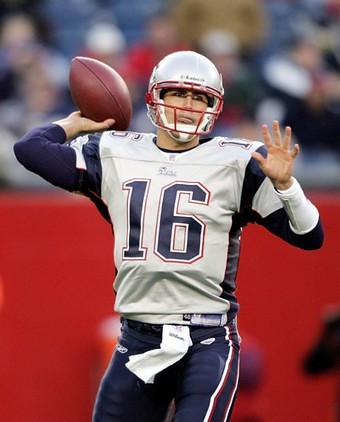 QB: Matt Cassel (NE)
3,693 yards, 23 TDs, 11 INT, 89.4 QB rating
Sure, there were a number of guys with better stats, but Matt Cassel took over for an injured Tom Brady and led the Pats to 11 wins, which was almost enough to get New England into the playoffs. Once he settled in, he showed great poise under pressure and his fine play down the stretch even has some talking about the possibility that the Patriots may trade Tom Brady to make way for Cassel to be the long-term starter.
RB: Thomas Jones (NYJ)
1,312 rushing yards, 36 rec., 207 yards, 15 total TD
The Jets just missed the playoffs and contrary to popular opinion, New York’s resurgence this season wasn’t all about Brett Favre. TJ finished fifth in both rushing yards and touchdowns, and averaged 4.5 yards per carry, his best average since 2003, when he was with the Buccaneers. After finding the endzone only twice in 2007, Jones was touchdown machine in ’08, racking up 13 rushing TD and two scores through the air.
WR: Calvin Johnson (DET)
78 rec., 1331 yards, 12 TD
If a team goes 0-16, they’re looking for any bright spots to cling to, and for the Lions, Megatron shines the brightest. It turned out that any concerns about a sophomore slump were unnecessary. Johnson racked up the fifth-most receiving yards in the league, and of the 22 receivers to break 1,000 yards, he had the third highest yards per catch (17.1) behind Vincent Jackson and Steve Smith. Johnson is a guy that the Lions can build around, and that’s saying something.
 WR: Greg Jennings (GB)
80 rec., 1292 yards, 9 TD
In a way, Jennings had his second breakout season of his young career. Last year, he caught 12 TDs (up from his rookie total of three) and this season, he caught 27 more passes and gained 372 more yards than his sophomore campaign. Like Calvin Johnson, Jennings makes the most of his catches. He was fourth in yards per catch (16.2) of all receivers that broke 1,000 yards. He and Aaron Rodgers should make a deadly combination for years to come.
TE: Jason Witten (DAL)
81 rec., 952 yards, 4 TD
Witten was hampered by a midseason rib injury; over a four game span, he caught just four passes for 53 yards. That means he caught 77 passes for 899 yards and 4 TD in the other 12 games, an average of 6.4 catches for 75 yards and 0.3 TD per contest. Had he performed at that level for a full 16 games, he would have finished with more catches and yards than Tony Gonzalez. But part of being on the All-Spectator Team is durability, so Witten will have to settle for an honorable mention.
OT: Walter Jones (SEA)
Some football purists will think that we’re going with name recognition only and point to the fact that Jones missed the last four weeks of the season due to micofracture surgery. But there’s a reason why he made the Pro Bowl despite missing his first start since 2002 – he’s that good. At 35 years old, he’s still one of the best tackles in the game and a sure Hall of Famer. The Seahawks definitely need to start thinking about the future at tackle, but Jones still has one or two more years left in him.
 OG: Jahri Evans (NO)
Evans makes our All-Spectator team for the second time in as many years thanks to his durability, his hard-working nature and his maturity. In a year where tackle Jammal Brown was hampered by nagging injuries, Evans remained one of the bright spots on a Saints’ offensive line that allowed just 13 sacks this year – the best in the NFC – which is amazing considering how much the Saints throw the ball. Evans continues to demonstrate excellent technique, polished footwork and also uses his quickness to get an advantage off the ball in running situations.
C: Andre Gurode (DAL)
Some may only know Gurode as the player Titans’ defensive tackle Albert Haynesworth stepped on during a regular season game in 2007, but the Cowboys certainly know who the Pro Bowl center is. Gurode was part of a unit that did a solid job of pass protection and helped pave the way for running back Marion Barber before late-season injuries took their toll and wore the back down. If it weren’t for injuries to Barber and quarterback Tony Romo, we highly doubt Gurode (or linemate Leonard Davis for that matter) would have made our team because they would have likely guided the ‘Boys to a playoff appearance.

DE: Mario Williams (HOU)
53 tackles, 4 FF, 12 sacks
Remember when the Texans were chastised by many fans and pundits for passing on Reggie Bush and drafting Williams with the first overall pick in the 2006 NFL Draft? Well it looks like Williams and the Texans are having the last laugh as Bush can’t stay healthy and “Super Mario” has to put together consecutive double-digit sack seasons. Williams also recorded his third straight 16-start season and was a major contributor to Houston’s second-half turnaround this year. He’s clearly one of the best young defensive ends in the league and is making everyone who didn’t believe in him look like a fool.
DE: Richard Seymour (NE)
52 tackles, 8 sacks
Seymour continues to be as steady as they come. He missed seven games last year due to injuries, but had a bounce back season in 2008, one in which he started 15 games and recorded over 50 tackles for the first time since 2003. He also finished with eight sacks, which tied his career best, and provided the interior of the Pats’ defensive line with a constant pass rush. It’s weird seeing any New England player on our All-Spectator team because we’re so used to the Pats making the playoffs. But we’re glad to finally have the opportunity to recognize how good Seymour is.
DT: Shaun Rogers (CLE)
76 tackles, 4.5 sacks
Cleveland made a bold move by acquiring Rogers from the Lions last offseason because he was known for being lazy, unmotivated and often took plays off while in Detroit. But Rogers quickly justified Cleveland taking a shot on him and returned the favor by having one of his best seasons. What’s amazing about Rogers’ success this year was that he put up great numbers having never played in a 3-4 system before. He not only freed up linebackers to get to the ball carrier, but he also managed to record 4.5 sacks, which is quite impressive for a nose tackle.
 DT: Jay Ratliff (DAL)
51 tackles, 7.5 sacks
It was a hard decision between Ratliff and the Jets’ Kris Jenkins, but injuries doomed Jenkins towards the end of the season so he wound up in our honorable mention section. Ratliff was outstanding all year and his performance in the Cowboys’ 14-10 win over the Redskins in Week 11 showed a national audience just how good he is. He registered six tackles, two sacks and generally seemed to have knowledge of what play Washington was going to run because he lived in the Skins’ backfield all night. His breakout season didn’t go unnoticed either, as he was selected to his first Pro Bowl.
OLB: D’Qwell Jackson (CLE)
154 tackles, 2 sacks, 3 INTs
The Browns might have been a huge disappointment this season but Jackson certainly wasn’t. He not only led the Browns in total tackles, but also led the entire NFL in that category. It’s often said that players come into their own in their third year and that can certainly be said about Jackson, who is just starting to reach his prime. Don’t expect a drop off in his play either, as Cleveland hired Eric Mangini as their next head coach. Mangini’s knowledge of the 3-4 will only serve in Jackson’s continued development. The addition of Shaun Rogers was also key in Jackson’s performance this season.
MLB: Patrick Willis (SF)
141 tackles, 1 sack 1 FF, 1 INT
Willis is only in his second year but he’s already made our NFL All-Spectator team twice. He once again led the 49ers in tackles, racking up 109 solo and 141 total tackles. He didn’t force as many fumbles or register as many sacks as he did a year ago, but he was easily San Fran’s best defender this season and has blossomed under the tutelage of now full-time head coach Mike Singletary. As most good middle linebackers do, Willis never shies away from contact and often runs through would-be blockers instead of trying to run around them. He’s the complete package at “Mike” linebacker.
OLB: DeMarcus Ware (DAL)
84 tackles, 20 sacks, 6 FF
How could we not have the NFL’s sack leader on our team? Ware might not be the prototypical linebacker in that he doesn’t have to worry about too much run responsibility. Essentially the Cowboys found ways to free him up to make plays off the edge and his mission on every play was simple: get to the quarterback. But don’t hold that single-mindedness against him. Ware is exceptional at what he does and obviously if he led the league in sacks this year, he’s doing his job.
 CB: Nnamdi Asomugha (OAK)
40 tackles, 1FF, 1 INT
Some stat-heads are going to look at his numbers and scoff at the fact that he’s one of our starting corners. But anyone who watched Asomugha play this year knows why his stats are so pedestrian: because opposing quarterbacks are terrified of him. The Raiders are one of the only teams left in the league that play strictly man-to-man coverage. And Asomugha is one of the only corners that can still shut down his side of the field by himself. Ask DeAngelo Hall how good Asomugha is. Hall is now in Washington because he was targeted on a weekly basis due to Asomugha’s unquestionable talent.
CB: Charles Woodson (GB)
62 tackles, 1 FF, 3 sacks, 7 INTs
A lot of people would have expected Woodson to have moved to safety or nickel back at this point in his career. But this season proved that he has no intention of slowing down and that he can still play with the best of them. He played in all 16 games, was a solid contributor against the run and other than a poor showing against the Saints, Woodson didn’t have many bad games. He’s still one of the better ball hawks in the NFL and even more so, his speed hasn’t diminished that much over time. His three sacks proved his versatility too.
SS: Gibril Wilson (OAK)
129 tackles, 1 FF, 1.5 sacks, 2 INTs
After winning a Super Bowl with the Giants, many figured that Wilson might become a free agent bust after signing a lucrative offseason deal with the hapless Raiders. But Wilson proved his durability in starting all 16 games and registering double digit tackles in seven games this season. He was also the second leading tackler for Oakland behind linebacker Kirk Morrison and was a steady force against the run all season. Of course, his staggering amount of tackles doesn’t speak well for the Raiders’ run defense, but it does to Wilson’s uncanny ability to always be around the ball.
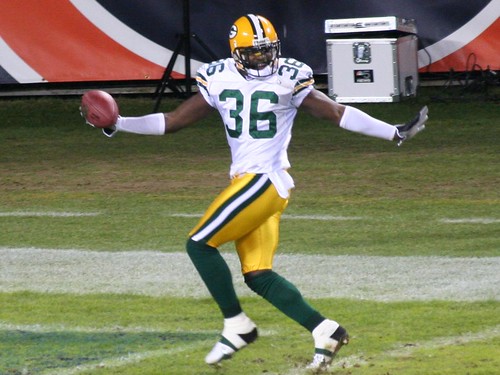 FS: Nick Collins (GB)
72 tackles, 1 FF, 7 INTs
How good was Nick Collins this season? Well considering he was second behind only Ed Reed in total interceptions and tied stalwarts Michael Griffin (Titans) and Troy Polamalu (Steelers) with seven picks, we’d say he was pretty damn good. He also played with nagging hip and knee injuries throughout the season, yet didn’t miss a single game. Yes, the Packers did finish 20th in the NFL in total defense but that was mainly because they couldn’t stop the run. Their pass defense was solid (they ranked 12th) and a big reason was because of Collins blanketing his half of the field.
DE: Aaron Kampman (GB)
62 tackles 9.5 sacks
Kampman quietly had another productive season for the Pack. He recorded two fewer tackles and 2.5 fewer sacks this year than last, but since opposing teams were able to gash Green Bay on the ground and the Packers weren’t able to build double digit leads many times season, Kampman had fewer opportunities to pin his ears back and get after the quarterback.
DE: Shaun Ellis (NYJ)
60 tackles, 2 FF, 8 sacks
Ellis was often overshadowed by linemate Kris Jenkins because Jenkins immediately provided a boost to the Jets’ run defense after being acquired via a trade with the Panthers. But Ellis was equally impressive against the run and provided a steady pass rush from the edge. He racked up eight sacks, which is impressive considering most 3-4 ends have trouble getting to the quarterback because of the multiple double teams they face.
DT: Kris Jenkins (NYJ)
50 tackles, 1 FF, 3.5 sacks
Jenkins dramatically shored up a run defense that was highly regarded as a weakness for the Jets. Unfortunately, a herniated disk in his back and a hip injury slowed him down towards the end of the season and the Jets’ run defense collapsed because of it. But the injury proved just how valuable Jenkins was to the Jets’ run defense for most of the season.
DT: Vince Wilfork (NE)
66 tackles, 2 sacks
It was a tough decision between Wilfork and the Cowboys’ Jay Ratliff, but in the end we went with the better pass-rusher. Of course, Wilfork’s job isn’t to rush the passer in Bill Belichick’s 3-4 defense. His job is to plug up the run, which he happened to excel at once gain this year. In 16 starts, he recorded a career-best in tackles (66) and more importantly, he kept offensive linemen from getting to his linebackers.
 OLB: Jerod Mayo (NE)
128 tackles, 1 FF
You know a young player has massive potential when he leads a team coming off a Super Bowl appearance in total tackles and wins the Defensive Rookie of the Year Award. Mayo was beyond impressive in his rookie campaign and what we liked best about him is that even though he was a first round draft pick, many pundits questioned his abilities because of his so-called lack of athleticism and top-end speed. Mayo proved that speed isn’t everything in the NFL.
MLB: Barrett Ruud (TB)
137 tackles, 3 sacks, 2 INTs
This was such a tough call because Jonathan Vilma (Saints), Kirk Morrison (Raiders) and London Fletcher (Redskins) were all equally deserving, but Ruud gets the nod for his versatility. As a middle linebacker in the Tampa 2, Ruud has tons of responsibilities both in coverage and in run support and he once again excelled in both areas. He’s only starting to reach his potential, too.
OLB: Calvin Pace (NYJ)
80 tackles, 5 FF, 7 sacks
Many were leery of the Jets handing him $42 million last offseason after he was coming off a contract year with Arizona but Pace proved he was worth the money. He basically did it all for the Jets, often finding the ball carrier and forcing turnovers. Along with defensive tackle Kris Jenkins, the addition of Pace last offseason was money well spent for the Jets.
SS: Bernard Pollard (KC)
98 tackles, 3 FF, 1 INT
There’s no polite way of saying this: the Chiefs defense was brutal this year. But Pollard was the leader of a young secondary that flashed signs of talent and showed cohesiveness at times this season. He also led the team in total tackles and given his relative lack of experience (three years) he should only continue to develop.
 FS: LaRon Landry (WAS)
65 tackles, 2 FF, 0.5 sacks, 2 INTs
Landry has been every bit as good as his lofty draft status (he was taken sixth overall in the 2007 NFL Draft) and has been a steady force in Washington’s defensive backfield since Sean Taylor was tragically murdered. Landry is a tough, physical player who is steady against the run and while he’s not at his best in coverage, he does have playmaking ability when the ball is in the air.
CB: Josh Wilson (SEA)
76 tackles, 3 FF, 1 sacks, 4 INTs
Wilson might not be the best coverage corner we could have chosen but there’s no doubt his contributions to the Seahawks this season deserve mention. His play was overshadowed by how bad Seattle’s defense was, but he finished fifth in total tackles on his team, which is amazing considering he plays corner. The second-year pro also led the NFL in kickoff return yardage.
CB: Brandon McDonald (CLE)
75 tackles, 1 FF, 5 INTs
In just his second season, McDonald led all Cleveland defensive backs in total tackles and interceptions. He’s part of a young, improving Brown defense that should continue to develop under Eric Mangini’s guidance next season. Thanks to the emergence of McDonald, the Browns’ decision to part with one-time starter Leigh Bodden (who was traded to Detroit as part of the Shaun Rogers deal) looks like a wise choice.

K: Stephen Gostkowski (NE)
40/40 XPs, 36/40 FGs
All Gostkowski did was lead the league in scoring while hitting 90% of his field goal attempts in the feisty New England weather. He was 10 of 12 from beyond 40 yards, and made all 16 attempts from 30-39 yards. In a year where the Patriots needed every point they could get due to Tom Brady’s injury, their kicker delivered.
P: Brad Maynard (CHI)
41.2 average, 5.6 per return, 38.1 net average
Maynard’s yards per punt and net average won’t knock anyone’s socks off, but the area he excelled at this year was pinning opponents inside their own 20. Maynard’s 41.7 percent average for laying the ball inside the 20 was second to Hunter Smith’s (Colts) league-best 43.4 mark. He also limited opponents to only 5.6 yards per return, which was second behind only Michael Konen’s (Falcons) league-best 2.5 average.
 KR: Danieal Manning (CHI)
29.7 return average, 1 TD
Who would have thought two years ago that a Bears’ kick returner would be mentioned here but it wouldn’t be Devin Hester? Because of Hester, Manning didn’t get a ton of attempts this season. (He had just over half as many attempts as Seattle’s Josh Wilson, who led the league in that category.) But Manning certainly made the most of his opportunities, averaging a league-best 29.7 yards per return and often gave the Bears outstanding field position.
PR: Johnnie Lee Higgins (OAK)
13.0 return average, 3 TDs
True, Higgins did have a ton of attempts this season (44 to be exact), which helped him lead the league with 570 punt return yards. But despite his high number of attempts, he still finished with the fourth best average (13.0) and also tied Reggie Bush (Saints) with three touchdowns. Even though his team didn’t capitalize, Higgins often gave the Raiders excellent field position and if Oakland could ever build an offense, his contributions will be even more valuable.
K: Jason Hanson (DET)
25/26 XPs, 21/22 FGs
Hanson’s totals weren’t all that impressive, but that has more to do with Detroit’s lackluster offense than the quality of their kicker’s season. Hanson was a perfect 14 of 14 from 40+ yards, which included an eye-popping 8 of 8 from 50+ yards. Plus, he led the league in 50+ yard field goals made.
P: Shane Lechler (OAK)
48.8 average, 9.9 return average, 41.2 net average
Thanks to the Raiders’ brutal offense, Lechler got plenty of work this year. He led the league in punt yardage (4,391) and had a respectable 36.7 percentage inside the 20. His 9.9 return average isn’t the best, but neither was Oakland’s punt return coverage. Punters don’t get a ton of attention, but Lechler continues to be one of the best.
KR: Leodis McKelvin (BUF)
28.2 return average, 1 TD
There was a couple worthy honorable mention candidates for this position (mainly Ellis Hobbs of the Patriots, Josh Wilson of the Seahawks and Allen Rossum of the 49ers), but the rookie McKelvin blew us away with his 28.2 average on 52 attempts. With 1,468 yards, he finished second in kick return yardage behind Wilson (who had 17 more attempts), who racked up 1,753 yards.
PR: Reggie Bush (NO)
13.5 return average, 3 TDs
Bills fans are going to lambaste us for choosing the oft-injured Bush over Roscoe Parrish, who led the league in punt return average at 15.3. But Bush racked up solid 13.5 average, 270 yards and three touchdowns despite all those injuries and imagine what he could have done if he hadn’t missed six games. He almost single-handedly beat the Vikings on punt returns in Week 5.