Page 153 of 2955

What’s with the stalling? Saints need to pay Drew Brees.

No other quarterback besides Drew Brees has made it past the Divisional Round of the NFL playoffs in the entire 40-plus year history of the New Orleans Saints. He continues to produce outrageous passing numbers, he means more to his team than any other player on New Orleans’ roster, and he wins.

So why the Saints continue to anger him by not giving him a long-term contract is a question worth $20 million on its own. If Peyton Manning, who didn’t take a snap last year, is worth $19,200,00 in 2012 then why are the Saints balking at paying Brees $20-plus million per season?

Sean Payton and Jonathan Vilma are suspended for an entire year. Gregg Williams is gone, Joe Vitt must serve a six-game suspension before taking over as interim head coach for 2012, and three other players have been suspended for their role in the bounty program. Brees is the only true leader that the Saints have on their roster but he refuses to show up to camp until he receives a long-term deal. Why owner Tom Benson refuses to hand Brees a blank check and says, “Write down any number you want – just get out on that practice field and lead this team like you’ve done the past seven years,” is beyond me.

Some insist that Brees is being selfish because he won’t just play under his one-year tender. But if you nearly had your entire career ruined because of an injury to your throwing shoulder, would you play on a one-year deal? The Saints are lucky they even wound up with Brees in the first place. He was set to sign with the Dolphins before Miami’s doctors told the team to pass because they thought he would never throw again. He landed in New Orleans only to team up with Payton and turn the Saints into one of the most imposing offenses in the last five years.

It’s not like Brees’ production has dipped either. He set career highs in competitions, competition percentage, yards, touchdowns and yards per game last season. So while he may be getting up there in age (he’s 33), he shows zero signs of slowing down.

Unless they have a shutdown defense teams can’t win in the NFL without a quarterback. And the Saints don’t have a shutdown defense.

What they do have is a quarterback who posts Hall of Fame-type numbers but he’s extremely frustrated (his words – not mine) by the way his contract negotiations of gone with the team. Considering what he means to the Saints, the city of New Orleans and his teammates, it’s befuddling why Brees doesn’t have a contract yet. And while the Saints still have until July 16 to work out a long-term deal with their record-setting signal caller, why wait?

Drew Brees extremely frustrated by lack of contract negotiations with Saints

It’s May 16 and Drew Brees has yet to receive a long-term contract from the New Orleans Saints. As you would imagine, this has left the veteran quarterback extremely frustrated about his situation.

From ProFootballTalk.com:

“This is a big time for our team, especially when you look at what’s happened in this offseason, missing our head coach, Sean Payton,” Brees said. “There should be a sense of urgency and yet it seems like there’s not.”

“We’ve reached out on a number of occasions and at times I’ve been frustrated by the lack of response,” Brees said.

“It’s been extremely frustrating for me,” Brees said. “The negotiation shouldn’t have been this difficult.”

It’s understandable that Brees is frustrated but when you’re talking about a contract of this magnitude, it takes time for the situation to get settled. It’s not like Mickey Loomis woke up one day and forgot what Brees means to this team. And in the wake of the bounty scandal, the Saints are well aware that at some point they’re going to need to provide their fan base with positive news.

It would make everyone in New Orleans feel better if Brees were signed to a long-term contract but it’s only May. There’s a good four months before the regular season starts and a month and a half before players report to training camp. It’s a safe bet that Brees will be donning a Fleur-de-lis on each side of his head next season.

The only thing that would make this story remotely interesting is if the Saints came out and stated that they want Brees to play on his one year tender. If that happens, then the crap will hit the preverbal fan because Brees is unlikely to play on a one-year deal. Not after he’s set the league on fire the past three seasons.

What’s in a Closer?

Closer. It’s one of the toughest jobs in baseball, in all of sports even. Or so we’re led to believe. What is it about getting three outs in the ninth inning that’s so different from getting three outs in the seventh? Why do managers make situational decisions in the seventh (e.g. bringing in lefties to face lefties) but insist on using their pre-assigned “closer” in the ninth? What if the situation in the seventh is far more dire than that of the ninth (e.g. if the three, four, and five hitters are due up or the bases are loaded)? Why isn’t the best pitcher on the mound in the biggest spots?

I’ll tell you why: saves, the only statistic that changes the way the game is played, as well as the way it’s financed. A save situation is the only time a manager makes a decision based on arbitrary numerals rather than what’s going to help his team win. The only time he’d do it on purpose anyway. To quote Michael Lewis in Moneyball:

The central insight that led [Billy Beane] to turn minor league nobodies into successful big league closers and to refuse to pay them the many millions a year they demanded once they became free agents was that it was more efficient to create a closer than to buy one. Established closers were systematically overpriced, in large part because of the statistic by which closers were judged in the marketplace: “saves.” The very word made the guy who achieved them sound vitally important. But the situation typically described by the save—the bases empty in the ninth inning with the team leading—was far less critical than a lot of other situations pitchers faced. The closer’s statistic did not have the power of language; it was just a number. You could take a slightly above average pitcher and drop him into the closer’s role, let him accumulate some gaudy number of saves, and then sell him off. You could, in essence, buy a stock, pump it up with false publicity, and sell it off for much more than you’d paid for it.

Before I really get started I suppose I should give full disclosure. I’m a Mets fan, woe be upon me, and that’s why this stuff’s on my mind. For some reason Terry Collins insists on calling Frank Francisco his closer. Frank Francisco, he of the 8.59 ERA and 2.05 WHIP. He of the three losses, 14 earned runs, eight walks, and 22 hits in just 14.2 innings pitched. He is our closer, and nobody else. All those questions in the first paragraph, yeah, I’ve been shouting them at my television over the past few days.

Yet it’s not those numbers that most horrify me, it’s these: two years and $12 million, or Frank Frank’s contract. It’s because of them that Francisco remains in his position, “for now.”

Like so many other closers, Francisco has but one man to thank for those numbers. That man is Jerome Holtzman, the sportswriter who invented the save in 1960, leading to it becoming an official statistic in 1969.

There was a time when the best relievers were called “firemen,” and they pitched when they were needed most. Bases loaded with one out in the eighth? That’s fireman time. Closer time is the ninth inning, with a three run lead and nobody on base, which has lead some to call it “the most overrated position in sports.

Those who believe in the sanctity of the closer will tell you the ninth inning is different, there’s more pressure, it gets in your head the way no other inning can. To them I say this: bullshit. Dave Smith of Retrosheet conducted a study of late-inning leads from 1944 to 2003 and an additional 14 seasons prior. He found that regardless of strategy, teams that enter the ninth inning with a lead win 95 percent of the time. The figure doesn’t even vary all that much, the high was 96.7 percent (1909), while the low was 92.5 percent (1941).

Granted, those figures apply to any lead, not just “save situations,” so they’re not really relevant to this discussion, right? Wrong. Smith calculated the figures for those scenarios as well, and they’re not all that different. Going into the ninth inning, a team ahead by one run wins 85 percent of the time, if they’re two runs up it’s 94 percent, and a three-run lead gets you 96 percent.

The problem for most teams is that they obsessively save their closer for the ninth, he might go a week without seeing action during a losing streak. As a result, they lose in the middle innings. The Mets have the exact opposite problem. Their fireman situations often come in the ninth inning, but only because Francisco creates them. They save the guy they think is their best reliever, because he’s making the most money, and waste better pitchers like Bobby Parnell, Tim Byrdak, and Jon Rauch in the middle innings. Now, the Mets think Francisco is their best for a reason, and maybe he is. But he’s not their best right now, and until he is there should be someone else on the hill in critical situations, regardless of what inning it is.


Jaguars already committed to Blaine Gabbert in 2012

Creating competition is apparently overrated in Mike Mularkey’s book.

When speaking to NFL.com’s Albert Breer on Monday, the new Jaguars head coach said that his quarterback position is not open for competition.

“No, it’s not (a competition),” Mulakery said. “Blaine’s our starting quarterback…I’m a big body-language reader, and on the practice field, the cafeteria, in meetings, he has a confidence about him. We feel good about him.”

It’s understandable that Mularkey wants to instill confidence in Gabbert right from the start. If it walks, talks, and acts like a duck, it’s probably a duck. Thus, if Gabbert is entrusted to be the starter from Day 1, then the hope is that he’ll embrace the leadership role and enter training camp brimming with confidence.

That said, considering how poorly Gabbert played last season as a rookie, it’s interesting that Mularkey has committed to him so quickly. Chad Henne isn’t a great starting option, but one would have thought Mularkey would have at least left the position open to competition. Most coaches want to create competition at every position so that players don’t become complacent – not award starting jobs in May.

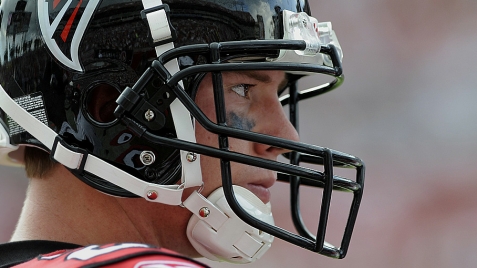
Then again, Mularkey was one of the coaches in Atlanta who did a great job easing Matt Ryan into the NFL. His offense is quarterback-friendly because it relies on power running and a passing game that works the short-to-intermediate zones. Thus, Gabbert, who doesn’t have to worry about the lockout ruining his preparation time this offseason, shouldn’t have an issue grasping his role in Mularkey’s offense.

It’ll be interesting to see how the former Missouri star fares in Mularkey’s offense and to watch him try to bounce back from a brutal rookie campaign.

MLB Hall of Famer Robin Roberts

There’s been a lot of discussion lately of how the Washington Nationals might shut down phenom pitcher Stephen Strasburg after he reaches 160 innings even if they’re in contention for the pennant. While the debate is understandable given his past injuries, it still highlights the differences in the expectations for modern pitchers versus some of the all-time greats.

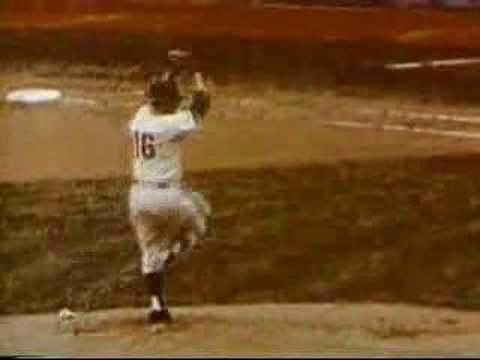
Consider the career of Robin Roberts, the great Hall of Fame pitcher for the Philadelphia Phillies. Roberts played for 19 seasons and compiled a 286–245 record with 45 career shutouts. He notched a lifetime ERA of 3.41, along with a staggering 305 complete games and 4,688⅔ innings pitched in 676 games. Even in a era when pitchers were expected to complete games and pitch on only four-days’ rest, Roberts was known for his incredible stamina. When interviewed after Roberts passed away, his teammate and fellow Phillies starter Curt Simmons said, “He was like a diesel engine. The more you used him, the better he ran. I don’t think you could wear him out. The end of the 1950 season, I was in the Army and I think Bob Miller had a bad back. I know Robin had to throw almost every day.” In a six-year span starting in 1950, Roberts won 20 or more games and pitched at least 304 innings in six consecutive seasons.

In many ways, Major League Baseball seems to be entering into a new era of the pitcher, as offensive production is decreasing and the game is once again being dominated by great pitchers like Strasburg. But it’s doubtful we’ll ever see workhorses quite like Robin Roberts again. Even the great Jack Morris pitched his amazing 10-inning game winner in game 7 of the World Series over 20 years ago.

While modern players will likely never match Roberts for his stamina, he remains a role model for all professional athletes for the class he displayed on and off the field. Just listen to the interview above for an example of why Roberts was widely respected as a true gentleman. When he passed away in 2010 at the age of 83, Marty Noble summed up the attitudes towards Roberts in the opening paragraphs of his obituary:

For the second time in three days, baseball lost one of its foremost gentlemen. Robin Roberts, as pleasant and gracious as any man in the game, died Thursday. As readily associated with the Phillies as any player has been with any franchise, Roberts was 83 years old when he passed away in Florida due to natural causes.

The most accomplished right-handed pitcher in the history of the Phillies, Roberts was a Hall of Famer, card-carrying member of the 1950 “Whiz Kids” and an active force in the creation of the Major League Baseball Players Association. Most of all he was an agreeable, genial man whose company was enjoyed by those who met him.

Like many players of his era, Roberts was a World War II veteran who broke into the big leagues after the war. He actually went first to Michigan State where he played basketball, but then tried baseball and was signed by the Phillies in 1948. In 1969 this seven-time All-Star was named as the greatest Phillie of all time.

When you consider what it takes to have a Hall of Fame career, durability, excellence and class are some of the most important characteristics. With his career and his life off the field, Robin Roberts should be an enduring example to the modern player. And while modern team General Managers try to protect “investments” like Strasburg, they should be reminded that the true great will rise to the challenge, if you let them.

« Older posts Newer posts »