
This is a cool story that helps put the Olympic Games in perspective. Guor Marial, a refugee from the South Sudan, will be the first athlete to represent his country in London 2012, but he won’t be running under his nation’s flag. He’ll be running as an independent under the Olympics flag.
Page 133 of 2955
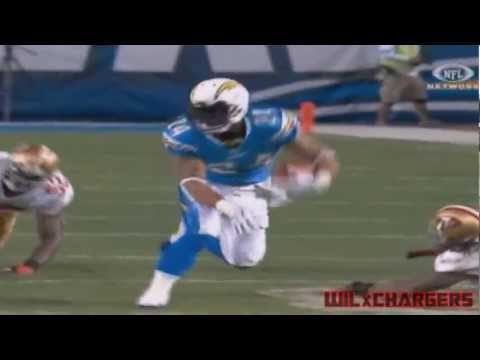
In two years, Mathews has missed an average of three games per season, which is roughly a quarter of the NFL season. In an average 14 week fantasy season, these missed games are even more significant. Additionally, he’s been a top 10 running back each of the last two years and failed to produce- what is different this year?
Regardless of that, Mathews is being drafted on average as the fourth overall running back selected. By not re-signing Mike Tolbert, it clears the way for Mathews to be a workhorse running back- but, the signings of Ronnie Brown and Jackie Battle show you that even the Chargers brain trust isn’t convinced.
So as a fantasy player, why should you be? Especially when you can get MJD, Matt Forte or Steven Jackson instead- proven commodities who are being drafted after him.
Paul Eide can be heard dispensing fantasy football advice every Friday AM during the NFL season on Jacksonville’s 930 AM “The Fox” at 8:00 EST. Email Paul at paul@pauleide.com

This is short but hilarious.

Both sides seem to be digging in:
Mike Wallace’s speed is his biggest asset. His slowness in reporting to training camp — at least in the Steelers’ minds — is suddenly his biggest liability.
The Steelers did a not-so-slow burn Wednesday when the super-fast Wallace, ignoring the Steelers’ history of refusing to negotiate when a player is not in camp, declined to sign his $2.472 million tender offer and did not show up at St. Vincent College.
Wallace and the Steelers have been working on a multi-year contract for some time — teammate Emmanuel Sanders suggested the two sides were close — but the Steelers always shut down such talks when a player isn’t in camp. This won’t be an exception.
Let’s see how this plays out. The Steelers are taking a hard line on their policy of no negotiations for players holding out, but this might just spiral out of control.
Meanwhile, Mike Tomlin got a much-deserved contract extension. Shockingly, one idiot on ESPN actually criticized extending a coach that has been to two Super Bowls with one title. It’s another example of too many talking heads debating both sides of every conceivable issue.
Everybody and their brother has been talking about trades the past few days. A lot of big name players have put on new uniforms, most notably Ichiro Suzuki, but considering I just did a trade-related post last week, I figure I’ll wait until a week from now, the day of the trade deadline, and just do one big recap of the year’s trading season. Instead, I’d like to talk about another topic, one that I just barely scratched the surface of in last week’s post—the additional wild card spot implemented as part of a new collective bargaining agreement this offseason.
As I touched on last week, an extra wild card spot means a lot more teams consider themselves contenders at this point in the season than would have in years past. Right now, 11 of the 14 teams in the American League are either in a playoff spot or within four games of one. Similarly, half of the National League’s 16 teams are within four and a half games of a playoff berth. But the rule change has consequences that stretch far beyond more teams trying to buy at the trade deadline.
First of all, we should probably discuss the specifics of baseball’s first playoff expansion since 1995, when the wild card was first introduced. Since then and prior to this season, the three division winners and the second place team with the best record in each league would make the playoffs. Now, the two wild card teams in each league will play just one game to determine which will move on to the division series.
In the past, teams had one goal: make the playoffs. If they couldn’t win the division then they had to grab the wild card. Once you were in, it didn’t really matter how you’d made it as the challenge ahead would be the same: a five-game series. But with two wild card teams now facing off just to get to that five-game series, playoff spots are no longer created equal. So while a lot more teams are now playoff contenders, those jockeying for a wild card spot will at best go into the divisional series at a serious disadvantage and at worst do a whole lot of extra work (like spending big money at the trade deadline) to play just one extra game.
That play-in game is now what sets division champions and wild card teams apart. It may seem a small thing to play one extra game, but it actually changes things quite a bit. First of all, wild card teams are going to use their best pitcher in that first game, so as to have the best chance of moving forward. But that means when they move on to play the one seed, they’ll be using their second, third, and fourth pitchers against the opponent’s first, second, and third. They could get swept before their ace even gets the chance to take the mound, which in turn means possibly missing out on a single home playoff game. Even the wild card teams that win their 163rd game are far less likely to move past the division series.
Now a lot of you might be thinking “well duh, that’s kind of point the point,” and you’d be correct. The new system is somewhat reminiscent of the NFL’s, in which the top two teams in each conference are given a bye, and thus, an advantage, based on their performance in the regular season. Whereas in the past once a team was in the playoffs, they were effectually equals regardless of how they made it in, having a number one seed now actually means something.
As a result, a team with only a chance for a wild card spot, and thus just a 50-50 shot of making the “real” playoffs should hold off on selling the farm at the trade deadline. Vince Genarro, president of SABR, points out that playoff berths are a big money maker: “fans reward their home teams in the year(s) following a playoff appearance by stepping up their season ticket commitments, absorbing aggressive increases in ticket prices, spiking their viewership of telecasts, and increasing their sponsorship dollars. The deeper the run into October, the greater the fan enthusiasm and spending.” But how much reward is one more game going to bring in?
We’ll have to wait and see what consequences having an extra wild card spot will have on revenue, trades and the like. But there’s one thing we know for certain: if you want to know anything for certain, you’d better win your division.
Follow the writer on Twitter @NateKreichman.
FOLLOW US!

CATEGORIES
© 2026 The Scores Report – The National Sports Blog
Theme by Anders Noren — Up ↑