 Rich Zvosec, former college basketball coach (and friend of The Scores Report), has written a book, Birds, Dogs & Kangaroos: Life on the Back Roads of College Basketball. In Zvosec’s humorous way, the book outlines what life is really like at the low Division I level.
I played ball at what would be considered the high Division III level and it sounds like we had more resources, support and continuity than a few of Zvosec’s teams. Coach Z is an engaging writer and has a plethora of funny/outrageous/touching anecdotes to relate as he goes through his entire coaching career.
The Scores Report had the opportunity to talk to Zvosec about why he wrote the book, what it’s like coaching in New York City, and the hurdles he had to overcome to develop into a successful color commentator for ESPN.
The Scores Report: Hi, this is John Paulsen from The Scores Report. How are you doing?
RZ: Hey, John. How are you doing?
TSR: Pretty good. I just finished reading your book over the weekend. I enjoyed it. It brought back some memories of when I played Division III ball – sounded like some of the same crazy stories. Can you tell me a little bit about why you decided to write the book?
RZ: When I first got the job at St. Francis in New York, some of the different things happened. My mother always told me, “You should save all these stories and write a book someday.” I guess I kind of wrote it for a number of different reasons. It’s kind of a cathartic look back at 25 years of kind of chasing a dream – college coaching. And the other part of it is, I wanted to give the reader a different perspective on college basketball. So often the media only covers the highest of levels and consequently everything is portrayed as just a business transaction, so to speak. Whether it comes to recruiting or wins and losses. I wanted people to get an inside look at what a coach actually goes through. And certainly it’s a little different at a St. Francis than it is at North Carolina or Kansas.
TSR: You said in the book that you coached at ten different schools. Could you give our readers a brief rundown of where you coached?
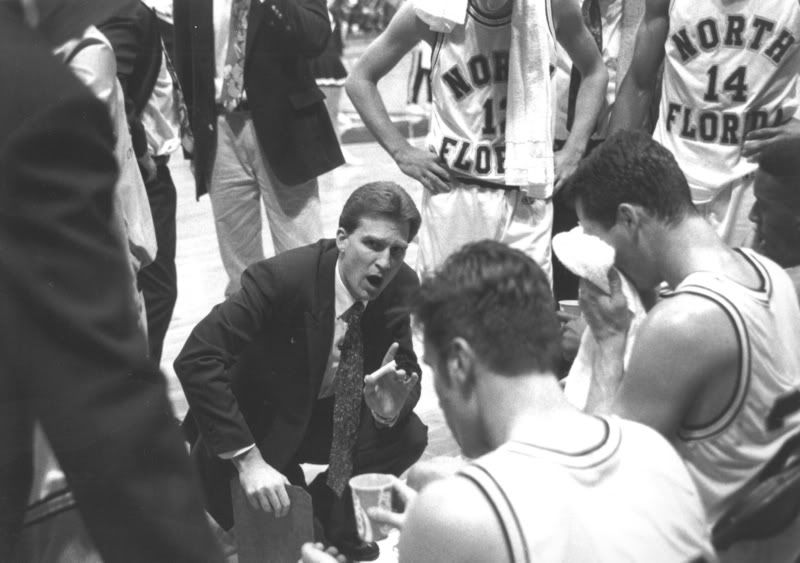
RZ: I spent 25 years, 16 as a head coach. I was the head coach at the University of North Florida, where I started the program. I coached at St. Francis college in New York. There was Millersville, Pennsylvania. And my last stop, as a college coach was at the University of Missouri at Kansas City, where I was at for the last seven years.
TSR: You mentioned St. Francis; what’s it like being a small fish in such a huge pond, basketball-wise?
RZ: It was a great experience. I was 27 when I got the job and was the youngest Division I head coach in the country. St. Francis is a commuter school. Basically, the campus is one city block. It’s one building, seven stories high, with a gym on the third floor. It was a great opportunity to cut my teeth, and also to rub shoulders with some of the premier coaches at the time in the New York metropolitan area. I had an opportunity to become friends with P.J. Carlisemo, who was at Seton Hall at the time and also Lou Carnesecca, the legendary coach at St. John’s.
TSR: You told a story in the book about taking the subway to one of your games. Only in New York, right?
RZ: Our archrival was Long Island University, which ironically enough, is not in Long Island. It’s in Brooklyn, which to this day I’m not sure why it’s called Long Island University when it’s in Brooklyn. They were actually two subway stops away from us. And because of the parking and transportation, it was much easier for us to jump on the train over to their campus as opposed to getting on a bus, or in a van, or some other mode of transportation. And what made the game even more interesting was that it was played in the old Paramount Theatre, which is an old movie theater where they had plays and obviously films. And it gave a lot of character because you’re playing on a stage. So that was interesting.
TSR: And there you had – I believe it was an athletic director – who didn’t want to pay for your team to play in the semifinal of your conference tournament.
RZ: Actually it wasn’t the athletic director it was the Vice President of Student Affairs.
TSR: Ah, okay. But there was a lack of commitment to the basketball program there?
RZ: Pretty much. The athletic director there was fantastic. He was actually the soccer coach as well. How he survived without strangling the Vice President of Student Affairs for so many years is beyond me.
TSR: That’s one of the big differences between the upper echelon Division I schools and the lower Division I, which you describe in your book – how much support the athletic program has from the school, correct?
RZ: That is correct. I think it really comes down to resources. I think the easiest way to quantify it for the reader is if you’re in a low major, you go play guarantee games. That means you go play at a Syracuse or at a St. John’s strictly for money. They’re never going to return the game to you. Nowadays, you can get as much as a hundred thousand dollars for a road game. That would be low major. Mid-majors would be teams that don’t have to go play guarantee games but don’t have the money to buy home games. And then high-majors are obviously teams like Kansas and Syracuse, North Carolina – people that can buy nine or ten home games before their conference schedule every year.
TSR: So I wanted to ask you a couple of things about the state of college basketball today. Specifically, the NBA age-limit and the effect it’s having on college hoops. Brandon Jennings is a player that was going to go to Arizona, but there was a problem with his test score, so he elected to go play overseas. So he’s going to go play for a year overseas and then come back and play in the NBA. What kind of an effect is this having on college hoops?
 RZ: I think it’s having somewhat of a developmental effect, i.e. you have a situation where guys aren’t as fundamentally schooled when they come out of college to go to the NBA, because they’re only playing one year. Now, on the other hand, I’m for either having no rule at all, and just allowing the players to go right to the pros out of high school, or go to the baseball rule where you can’t leave until after your junior year. Right now, for a guy to come to school for one year, to some degree it’s doing a disservice to the institution, because the player doesn’t necessarily want to be at school, but he has to be. I think what Brandon Jennings is doing going overseas – hey, more power to him. I respect that choice because he doesn’t want to be in college. I respect that decision more than a guy who will come to school and just pay lip service. And not to say that a young man can’t get anything out of one year at college because I think they can, and ultimately the reason someone goes to college is to get a better job. The story that sticks in my mind when it comes to guys leaving school early is Bob Costas. Bob Costas never graduated from Syracuse, and by his own admission, he didn’t go back for his senior year because he was offered a broadcasting job and it was too good to turn down. So that’s why people go to college – to get a better job. If a young man can come to college for one year and sign a professional contract where he’s making two hundred thousand dollars, why should he come back and then get a job where he’s making forty thousand dollars a year? Economically, it doesn’t make sense.
TSR: It seems, from the NBA’s point of view, that they want a more mature league, but I wrote a column when this age-limit passed and found that players that came straight out of high school actually had a better chance to become a starter-, star- or superstar-level player than your average college senior or international player that was drafted. So they have the talent, it’s just about where they cultivate that talent and David Stern wants the college ranks to do that.
RZ: The NBA drafts out of two things. They draft out of potential, but more importantly, they draft out of fear — the fear of passing over the next Michael Jordan or the next Kobe Bryant. So they’re going to draft an international guy or a guy with one year of college over maybe a more seasoned college player, because they’re afraid that that guy is going to develop into the next Kobe Bryant. And they’re going to be the one that missed on that guy. It’s unfortunate that the group that’s standing in the way is the NBA Player’s Association. For the life of me, I don’t understand why. Because you would think that they would want older guys so that their veteran players aren’t replaced by younger guys. It will be interesting to see what happens. I know the Coaches Association wanted the baseball rule then it got rolled back two years and then eventually it was rolled all the way back to one year.
TSR: I’m with you. I’m okay with guys going straight to the NBA, but I think if you go to college you should stay for at least two years. At least during that freshman year, they would have to go class, because I think some of these guys know that they don’t have to go to class because they know they’re leaving.
RZ: That’s exactly right. If you keep going to school for two years you have a much better chance of coming back and getting your degree than somebody who goes to college for one year and basically that second semester they really haven’t done anything. Because here’s the caveat – the NCAA wants to talk about a school’s progress and retention rate. Well, if a kid signs a professional contract, it doesn’t matter that he’s leaving school, ineligible to come back the following year. So where’s the motivation to get that kid to at least finish complete that freshman year in good academic standing?
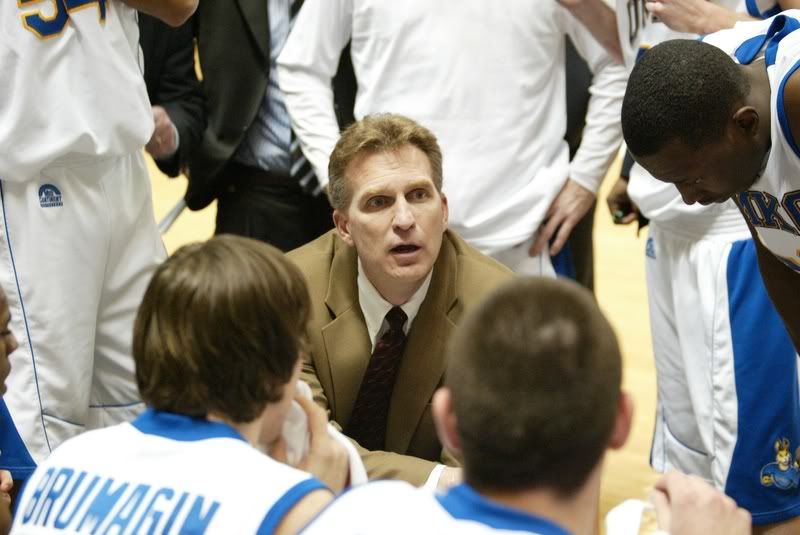
TSR: So, moving on to your current career. You spent last season I believe calling games for the Big Ten Network and now you’re doing a package of games for ESPN. How’s that going?
RZ: It’s going well. I’m really enjoying it. All I know is that I haven’t lost a game in two years. So that’s always a good thing. It’s a great opportunity to stay around the game. I enjoyed getting to know and watch all the guys in the Big Ten last year and this year I’m doing primarily Big 12 games, so I’m kind of getting the same opportunity in the Big 12. I enjoy going to watch practice and see how different coaches prepare their teams. When you’re running your own program as I did for so many years, you don’t really get that opportunity, so in a lot of ways, I’m like a kid in a candy store.
TSR: So when you called your first game on TV, or first couple of games, what were some of the challenges there?
RZ: Actually, the first game I did was Michigan and Radford. And fortunately I did it with Roger Twibell, a longtime broadcaster. He was very helpful in setting me up to cover certain things that I wanted to talk about during a game. But probably the biggest challenge when you’re sitting there doing a game, and you have the producer in your headphones, and they’re saying, “say this” or “this is what’s coming next.” I’ll never forget the very first game I’m doing it and I hear the producer say “Clem Haskins,” and I’m thinking “Clem Haskins, what in the heck is he talking about?” Well then they go to a shot of Jerry Dunn, who is the associate head coach at Michigan, with the graphic underneath his picture that says “Clem Haskins, former head coach at Minnesota.” Well, I was so raw and since I wasn’t looking at the monitor, so I didn’t see it. So they went to Jerry Dunn, I actually rattled off “Jerry Dunn, former head coach at Penn State University now the associate head coach at Michigan.” And the next thing I know, I hear this producer cussing in my headphones because they had the graphic wrong. Well, I had no idea, and probably, if I had been doing this a little longer, I probably wouldn’t have said that. Sometimes accidents happen in a positive way.
TSR: So when’s the next game that we can catch?
RZ: Actually I have Oklahoma and Kansas State on Saturday.
TSR: That should be a good one.
RZ: Yeah, that should be a good contest.
TSR: Well, that’s about all I have for you. Thanks for sending over the book and best of luck in your new career.
RZ: I appreciate that. Thank you.
TSR: All right, talk to you later.
RZ: Take care.


