Of course it can. We have hard evidence that the game has been fixed since the early ‘90s. Crooked players, crooked trainers, crooked owners, crooked general managers, and crooked lawyers have all contributed to turning America’s pastime into a racketeering enterprise. For the last 15 years, baseball fans have watched their game turn into a traveling sideshow. Before our very eyes, we’ve conceded that baseball will have that sort of WWE fantasy – the realization that while what we are watching at times is athletically amazing, it’s not altogether real.
This week, a video surfaced of WWE wrestler Chris Jericho punching a female fan who was antagonizing him. All this recent hullabaloo got me thinking about the relationship fans have with their favorite athletes. As witnessed in the video, while many attempted to get a picture with Jericho, a few passionately wanted to abuse him. They stupidly believed in a fabricated storyline and sought to attack the main instigator who was ruining their day. Essentially, they cared way too much about something that wasn’t even real.
Wrestlers are actors who work out, plain and simple. While they do display some degree of athleticism, that’s not why fans pile into the arena. They watch because of the engaging storylines written by failed Hollywood writers. Hey, this amalgam of fiction and sports did it for me as kid. However, other hobbies and becoming familiar with the female gender prevented my relationships with The Rock, “Stone Cold” Steve Austin, and The Undertaker from continuing. Nevertheless, I always hung on to baseball, even to this day. Unfortunately, I’ve watched my sport evolve into a form of sports entertainment, not unlike the WWE.
Baseball was the first sport I ever really loved. I played it. I collected the cards. I went to the Dodgers games. I stayed up late to watch Dan Patrick and Chris Berman on “Baseball Tonight.” I really loved it. Even then, I appreciated that I didn’t know anything personal about the players I admired. In my mind, they were all “good guys.” Now that I think about, the reason I was in awe of these athletes was because I was watching them perform things I couldn’t do. I couldn’t hit as far (Frank Thomas), I couldn’t throw as hard (Randy Johnson), and I sure as hell could never make that catch (Ken Griffey). At ten years old, something inside me couldn’t stand that they were better players than I was. What they were doing was real, and there was no way around it.
 Then it happened. Barry Bonds was accused of taking steroids and the game imploded. I could do what some of these guys were doing – I just needed to cheat. Then there were the Supreme Court hearings and the Mitchell Report. And Jose Canseco? What? Amidst all the two-stepping by those involved, Canseco has appeared to be the only constant source of truth. In doing so, he’s been blackballed from the game and created more enemies than he has home runs. I don’t care what you think about the guy, all of his claims have proven to be true. As I write this, a list of 103 players who took steroids in 2003 is out. Donald Fehr, the union chief of the MLBPA says that it’s unlikely that he will ever release this list. Call me crazy, but I respect Canseco for outing himself and others who contributed to tarnishing the game. Fehr, on the other hand, is protecting these criminals by not releasing their names. And they are criminals. If you used illegal methods at your job to generate a salary three to five times your actual worth, you would not be suspended three months without pay. You would immediately be fired and most likely be taken to court, tried as a criminal.
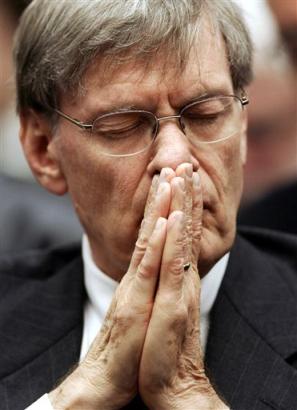
Suddenly, everybody in baseball is a bad guy. The game looks a lot more like Barry Bonds than Chase Utley, a lot more like Ty Cobb than Willie Mays. The good guy is gone. Hey may be there, but you’ll rarely hear about him because he isn’t putting up the bloated numbers, negotiating $25 million one-year contracts, or lying in front of a grand jury. Nope, you only hear about the bad guys. Sadly, what these individuals are doing is fake, so unreal in their performance and in the money they earn from it. They’re the wrestlers of baseball and they’ve been winning every match. Bud Selig is Vince McMahon, the one in charge whose negligence indirectly promotes the evil. And we’re just the fans who get punched in the face for caring too much about something that isn’t even real.
But it once was. Most of our readers most likely got into the sport before the early 90s, when players weren’t injecting themselves left and right. We got into the game simply because of its blueprint. We love the stats, the diving grab, the long ball, the uniforms, the stadiums, the broadcasters, and the rivalries. Most importantly, we love the 162-game season, because its constant loyalty never wavers like a girlfriend who’s still in community college and much too attractive for us. The game will be there in April, but also in October, unlike so many things in life.
Baseball can be fixed, my friends, and in a good way. While casual fans quit watching out of disgust and sponsors pull their support because of the negative association, the purists will remain because of this blueprint. Selig and the player’s union will have to rely on this stable base and build up from that. Here are my suggestions:
1. Officially ban any currently retired players associated with steroid use from the Hall of Fame. With what we know, this would include Barry Bonds, Mark McGwire, Sammy Sosa, Rafael Palmeiro, and Roger Clemens. Whether or not their stats before using are strong enough to encourage admission is not valid. They cheated, and if Pete Rose and “Shoeless” Jack Jackson are exempt, so are these guys.
2. As with all sports, statistics tell its history. Baseball purists are some of the most eccentric and passionate stat-heads around. To please them, any World Series championship team that contained a steroid-user shall receive an asterisk.
3. Bud Selig should force Player’s Union chief Donald Fehr to release the list of the remaining 103 players who tested positive for steroid use in 2003. Since Fehr is publicly holding evidence that incriminates certain individuals, I have no idea how the information hasn’t been made available.
4. The players on this list, and those mentioned in the Mitchell Report, are also banned from the Hall of Fame. All stats recorded during years of admitted or proven steroid use will contain an asterisk.
 5. All active players that tested positive will be banned for the following season without pay. Their contracts would then start up again the season after. Therefore, if they were in the second year of a three-year contract, after their banned season, they would then commence being paid for the final year of their contract. Even though they’ll have been “laid off” for a year, I think they’ll be able to get by.
6. The popular notion revolving around this preceding idea is that their salaries should be donated to various charities. While that may be a good idea, I’m from the school of thought that selfishly believes baseball fans got incredibly screwed by all of this. With the money back in the owner’s hands, Selig shall order that they use it in a way that gives back to the fans. Three to five games during the seasons will be free to fans on a first-come, first-serve basis (season tickets holders keep theirs). There will be more “free days” such as Free Hot Dog Day, Free Nachos Day, etc. Lastly, ticket prices and concessions will be reduced by a figure both sides can agree on. What fans have been watching the past few years has been a hoax. With many of the big-earners suspended, owners will have less money to pay out. With ticket and concession prices slashed, the game should be fine economically. We’ve already seen that its TV ratings haven’t been affected.
It’s a long road ahead, I know. Let’s not forget that baseball has dealt with cheaters and liars in the past, just not at this disgusting level. While baseball purists will never forget, we will forgive because we want to. Unfortunately for Bud Selig, there aren’t enough baseball purists to pay his salary, let alone those of Manny Ramirez, CC Sabathia, and Mark Teixiera. The casual fans needs to tune in and they’re slowly beginning to stop. It’s not just time to come clean, it’s time for the league to take a well-deserved spanking from everybody who’s seen or been to a game in the last few years. We’ve earned it.
What about Manny Ramirez? someone asks.