After becoming the first underclassman to win the Heisman Trophy in 2007, the conventional wisdom is that Florida quarterback Tim Tebow is the favorite to win college football’s prestigious award again this year.
But should he be the favorite?
Below is a breakdown of 10 Heisman Trophy candidates and reasons why they will or won’t win the award this season.
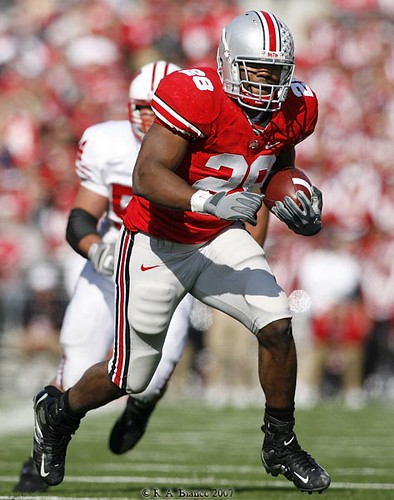 1. Chris Wells, RB, Ohio State
Why he’ll win: Barring injury, “Beanie” Wells should be the true favorite to win the Heisman this year based on his role in Ohio State’s offense, his talent and his team’s schedule. Jim Tressel loves to pound the ball on the ground, which should mean big numbers for Wells, who’s arguably the best back in the nation. It also doesn’t hurt that the Buckeyes won’t face many tough defenses this year outside of USC and possibly Penn State, who both had excellent run defenses in 2007. A 2,000-yard season certainly isn’t out of the question given Wells’ durability and strength.
Why he won’t win: Voters tend to remember if players don’t perform well against top competition, so Wells could blow his Heisman chances if he produces a dud against USC in early September. Outside of that, an injury or just a terrible year, what’s to stop Wells in 2008-09?
 2. Tim Tebow, QB, Florida
Why he’ll win: Tebow is arguably the best player in the country and certainly the most versatile. He also is the offensive centerpiece for a powerhouse program that should contend for a national title this year and his 2007 performance is still fresh in the minds of voters.
Why he won’t win: The Gators offense should be even better in 2008, which in theory means that Tebow won’t be counted on to do quite as much as he did last year (again, in theory). Obviously he’ll still have a huge role in the offense, but Florida will have one of the most balanced attacks in the nation, which is great for wins but not for Tebow’s final numbers. He’ll likely not only have to produce a tremendous season, but also lead the Gators to a national championship, which is never easy playing in the tough SEC.
3. Chase Daniel, QB, Missouri
Why he’ll win: Stats. Given the offense the Tigers run, Daniel is going to have the opportunity to match the 4,000-plus yards and 30-plus touchdowns he compiled from a year ago. Like last year, Missouri is a contender for the national title, which only helps Daniel’s chances.
Why he won’t win: Stats aren’t going to be a problem, but wins against top competition might be. Daniel will likely have to lead Mizzou to victories against Texas, Kansas and Oklahoma (or whoever) in the Big 12 Championship to even sniff a decent finish in the Heisman voting. That’s one tall order for not only Daniel, but the Tigers as well.
 4. Knowshon Moreno, RB, Georgia
Why he’ll win: It’s scary to think that given how productive the freshman Moreno was last year (1,334 yards, 14 TDs, 5.4 YPC), that there’s even more room for growth. Outside of Wells, Moreno is the most talented back in the nation and he also plays for the preseason No. 1 favorite so he’ll receive plenty of attention. He’s already drawing comparisons to Herschel Walker and Garrison Hearst.
Why he won’t win: Mark Richt has already indicated that he wants to get other backs involved (i.e. redshirt freshman Caleb King) in the offense, which could eat into Moreno’s touches (and thus, his stats). The offensive line also features some youth and might take time to gel, which usually doesn’t bode well for running backs. UGA quarterback Matthew Stafford also figures to be in the Heisman mix this season, and thus stealing some of the spotlight from Moreno.
 5. Pat White, QB, West Virginia
Why he’ll win: Despite being one of the most electrifying players in the nation, White also has several factors working in his favor. One, West Virginia plays a favorable schedule and will likely contend for a national championship. Two, White doesn’t have to share the spotlight with Steve Slaton anymore, which should only increase his Heisman value. (Although Noel Devine looks like Steve Slaton Jr., so that second point might be moot once the season starts.)
Why he won’t win: With Rich Rodriguez now in Michigan, White and the Mountaineers have to adjust to having a new head coach (even though the team is familiar with new front man Bill Stewart from last year’s Fiesta Bowl victory). White has also struggled with injuries and one loss to a sub-par opponent will crush his Heisman chances. And with Slaton now in the NFL, defenses will likely key on White and build their game plan around stopping the dynamic QB.
6. Michael Crabtree, WR, Texas Tech
Why he’ll win: Crabtree’s stats should be impressive across the board in terms of touchdowns, receptions and yardage. Given the offense he plays in and the quarterback he plays for, Crabtree is going to have every chance to be the most productive receiver in the nation. (Stat-wise, at least.)
Why he won’t win: Crabtree will have the same problem as teammate Graham Harrell in that he plays in an offensive system designed to produce outrageous numbers. Heisman voters will expect big numbers out of Crabtree, so he and Texas Tech will likely have to produce a few upsets in order to turn heads.
 7. Sam Bradford, QB, Oklahoma
Why he’ll win: If it weren’t for an injury suffered against Texas Tech late in the year, Bradford would have made some noise in the 2007 Heisman race. His numbers were extraordinary last year (8 INTs compared to 36 TDs), so if he can stay healthy, produce similar stats and lead OK to another Big 12 Championship, his Heisman chances are excellent.
Why he won’t win: Losing receiver Malcolm Kelly hurts and like several other players on this list, Bradford has a teammate in DeMarco Murray that could steal some of his spotlight. Will the Sooners have to compete for a national title in order for Bradford to truly be recognized by voters? Or will a Big 12 Championship be enough?
8. DeMarco Murray, RB, Oklahoma
Why he’ll win: As a backup last year, Murray produced 13 touchdowns, so the sky is the limit this season. He also plays on a dynamic offense and a program that should compete for a national title. A few key performances against Texas, Kansas and possibly Missouri in the Big 12 Championship, would be huge for Murray.
Why he won’t win: As previously mentioned, only one underclassman has ever won the Heisman and that was Tebow last year. Murray also has to share the limelight with teammate Sam Bradford and he’s battled a knee injury in the past. Back up Chris Brown is also likely to steal some of Murray’s carries.
 9. Matthew Stafford, QB, Georgia
Why he’ll win: Stafford has developed into one of the best quarterback prospects in the nation and a future top 5 draft pick. He also plays on the most talked about team in the nation and if Georgia can cash in on all the preseason hype, Stafford is going to get major recognition from voters.
Why he won’t win: Playing in the SEC East is brutal. Stafford and UGA will have to face Florida, Tennessee, Alabama, Auburn and LSU this year, which is daunting to say the least. It also doesn’t help that Stafford plays in the same backfield as Moreno and will face Florida’s Tebow – two of the Heisman’s top candidates. Stafford could essentially lose the race if Tebow outperforms him in early November.
10. Graham Harrell, QB, Texas Tech
Why he’ll win: Similar to Chase Daniel, Harrell should produce eye-popping numbers in the Red Raiders’ high-powered offense. It also doesn’t hurt having a solid offensive line and an explosive weapon in fellow Heisman candidate Michael Crabtree. Depending on how you look at it, the Red Raiders’ schedule could help or hurt Harrell’s chances. Road games against Oklahoma and Kansas could sink Harrell’s Heisman stock. But if he could pull off a couple of upsets, his chances will obviously rise.
Why he won’t win: History. Despite producing great numbers on a yearly basis, Texas Tech quarterbacks typically don’t fair well in Heisman voting. System quarterbacks have a hard time earning Heisman votes; Hawaii’s Colt Brennan was the latest example.
 For nearly a quarter-century, amateur boxing has been an Olympic sore spot or the embarrassing relative you prefer not showing up at your summer party. Corruption, financial woes, and strange outcomes have all contribute to the negativity toward the sport.
