
Tony LaRussa is much more than a World Series-winning manager and current skipper of the St. Louis Cardinals. Along with his wife Elaine, Tony is also is the founder of a foundation that reaches out to animals that are very much in need.
Tony and Elaine started Animal Rescue Foundation (or ARF) in 1991. The goal of ARF is to find families for adoptable animals before they become euthanized and according to the foundation’s website, the foundation now has a 4-star rating by Charity Navigator, which is America’s largest charity evaluator. Considering only 25 percent of charities reach a 4-star rating, it’s quite an achievement.
This Sunday, January 18, Tony will host “Stars to the Rescue”, which is an event that benefits ARF and other St. Louis area animal non-profits. “Stars to the Rescue” will be held at 6:30 p.m. at the Chaifetz Arena on the campus of St. Louis University and will feature music and entertainment such as country music star Vince Gill, rockers Huey Lewis and The News, Kevin Cronin and Dave Amato from REO Speedwagon, as well as comedians Lewis Black and Kathleen Madigan, and 2008 CMA Horizon Award winner Lady Antebellum. For tickets and general information, please call Metrotix at 314-534-1111, or visit the foundation’s website at www.arf.net.
Tony was gracious enough to sit down with us recently to talk about “Stars to the Rescue”, ARF, and whether or not he would ever consider concentrating solely on his charitable work in the wake of Tony Dungy retiring from coaching to work more on his off-field contributions.
We also had the opportunity to ask him some baseball questions, including what it meant to add shortstop Khalil Greene this offseason, how the Cards look heading into the new season and what the health status was of Albert Pujols.
Tony LaRussa: Hey, this is Tony.
The Scores Report: Hey, Tony this is Anthony – thanks for sitting down with us, we really appreciate it!
TL: Not a problem – looking forward to it.
TSR: For those who aren’t familiar with Animal Rescue Foundation or “Stars to the Rescue”, can you explain what you guys do?
TL: We try to save animals that are adoptable, but ones that if they don’t find homes with families they get euthanized. That’s the traditional approach – that’s how we first got started. In St. Louis, we do a show where we partner with about a dozen other local rescue groups. Through sponsorships like AT&T and Purina, we’re able to give blocks of tickets to these rescue groups and whatever they sell they get to keep 100% for their programs. So it’s about animal rescue and at the same time, what ARF has become to be known for is we also use these animals as the rescuers of people with much different needs — whether it’s kids, seniors (who need) companionship, someone that has been hospitalized or other special needs (such as) victims of violence, (these animals become rescuers themselves). So that’s really our mission.
TSR: And what motivated you to start a foundation like ARF?
 TL: Well, I grew up always wanting a pet in the house and then when I got married with Elaine, she had a dog and a cat and I realized that having a couple of companions be a part of your family was as special as it comes. So, as you learn more about them you realize just how many – like in the millions – adoptable animals there are. There’s an overpopulation and they’re not adopted enough so they’re being euthanized, and that’s part of the issue. So one of the ways, besides the public effort, is to form a non-profit (organization) to complement the public effort and that’s why we started ARF.
TSR: Do you work with any other athletes, managers, or coaches who specifically target animals in their charitable efforts?
TL: Well, we’ve been really fortunate (because) we’ve gotten a lot of help from different athletes and coaches in all sports. But recently a good example (of athletes getting involved) just happened last week. We had CC Sabathia, Jake Peavy, Barry Zito and Nick Swisher come together and make a donation for something we call Camp ARF at our facility in Walnut Creek, California. It’s a Monday through Friday program where kids spend the day learning, meeting and interacting with the animals. It’s become really popular – so much so that we have a waiting list – but it’s also one of the few things ARF does where we earn a fee. There are some kids that are kind of stretched for income or (for whatever reason can’t) be a part of the program, so these four baseball players are going to fund scholarships for a bunch of these students.
TSR: That’s absolutely outstanding and I’m sure a lot of people appreciate what those four athletes, as well as other athletes, do for the community. I’ll tell you what, that wouldn’t be a bad starting pitching rotation for the Cardinals either.
TL: Yeah, those are some stalwarts there.
TSR: (laughs) Absolutely! Do you feel that more athletes will get involved in ARF or charitable foundations like this?
TL: You know, the way I usually answer that question is – just get involved in something. Make it a cause that you have a passion for, (whether) it’s something in your family or somebody that has had an issue or a problem…get involved somehow. So yeah, if you wanted to make animal rescue or specifically get involved in ARF, we have a website at www.arf.net. We would love to have you with us, but the key is to get involved in something and don’t just be involved in taking from the community – give something back.
TSR: And that was going to be my next question. You see so many young athletes come into sports and they’re fortunate enough to make a lot of money – how important is it in your mind that athletes get involved in something and give back to the community?
TL: Well I think it’s absolutely critical. I learned that from people like Jerry Reinsdorf (who was) our owner in Chicago and Walter Hobbs in Oakland.
TSR: Right.
TL: You’re in a very special position as an athlete. Number one, you’re usually in the public eye so people are aware of you. You can lead by example so people can see your involvement and that’ll lead to more people being interested and getting involved. At the same time, just your personal (contributions)…you know, it doesn’t have to be money. It can be money, but you can always give your time, your energy, your connections – all of those things really add up. So, I think the worse thing you can do is not be involved and you don’t want to help anybody but yourself.
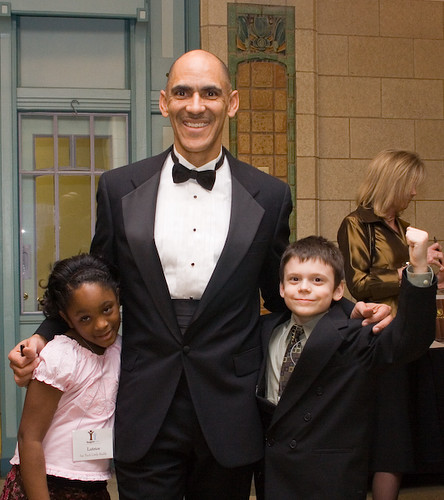 TSR: Absolutely. I wanted to ask you about Tony Dungy, who recently retired as head coach of the Indianapolis Colts so that he could spend more time on his off-field foundations and charitable events. Is ARF something that you can focus on while managing or could you see yourself eventually going the route Dungy did and retiring to focus solely on your foundation?
TL: That’s a good question, really, because we’ve wrestled with that as an organization, whether it’s our staff volunteers or especially our board of directors. When you’re actively working like in baseball – we have such a long season, we play so many games – there are 162 games where before and after I talk to the press. So I have opportunities to not only be known, but also spread a certain message. And there’s always media looking for some notes rather than just the pure game story. So, if you don’t have that kind of platform, you wonder about the effectiveness (the foundation can have). But if you had more time, maybe you can take some of your personal contacts and develop them better. I just keep it simple – right now I’m managing and I do have an opportunity to develop a lot of relationships and spread the word, and quite a few are joining up and helping.
TSR: It must be great to not only do something you love like be around baseball, but also give back to a foundation you truly care about. I think Tony Dungy is one of the best stories in sports and I always enjoy reading news about guys like you and him, as well as other athletes and coaches who reach out to the community and find a cause to get involved in.
TL: Well I appreciate it and if you grow up in team sports…I’m not a golfer or tennis player…but I’ve always been involved in team sports, so what you have away from the playing field, it often becomes a team (in itself). You know, we now have about 60 staff (members) and about 600 volunteers but we’re still all very personable, very connected to what we’re trying to do. And it’s been interesting because from day one – we’re 18 years old now –we’ve always tried to be innovative. We’ve always tried to find a different way and a new way, so it’s been a neat place to be around because there’s a lot of creativity.
TSR: If you could talk a little about “Stars to the Rescue”…which once again is this Sunday January 18 in St. Louis…there will be a lot of different stars there from Vince Gill to Huey Lewis and the News to Lewis Black the comedian. Who are you looking forward to working with the most?
TL: That’s like asking which one of your kids you like better.
TSR: (laughs)
 TL: They’re all wonderful. “Stars to the Rescue” is set up like an all-star baseball game – you don’t ask anyone to do their full game or full show. Just like an all-star pitcher will only (be asked to pitch) a few innings; we’ll get each (musical performer) to do about 30 minute sets and then the comedians – Lewis (Black) and Kathleen (Madigan) – will (do their sets) for about 15 or 20 minutes in between. We’ve (used this format) for years in California and we’ve done four of them in St. Louis. It really works for the audience because they get a nice section of entertainment – you know, Vince (Gill) will do his country and Huey Lewis and the News will do rock and we also have Kevin and Dave from REO Speedwagon, so they’ll do a nice healthy segment. And then we’re really lucky because we got Lady Antebellum, who won the Horizon Award (this year), which is just like the Rookie of the Year Award. So it’s a terrific show and we’re pricing it right – there’s nothing elitist about it. The tickets are $55, $40 and $25 and it’s (held at the) Chaifetz Arena, which is a brand new arena on the campus of St. Louis University. So there are a lot of things that make it a very special night and the sponsorships (as well as the) money (from the event) will go right to the (animal) programs. It’s also the weekend of our “Winter Warmup”, which is like our fanfest, so we’ll have a lot of Cardinals players that are in town for their warmup. They’ll come to the show and our fans will enjoy seeing them (at the event) as opposed to being at the ballpark.
TSR: Do you know right now what specific players will be there?
TL: Well, yeah, you can go up and down the list. Our starting pitchers – whether it’s Chris Carpenter, Kyle Lohse or Adam Wainwright – they’ll be there. A lot of our relievers will be there – Jason Motte, Kyle McClellan, Ryan Franklin and Chris Perez. I’m not sure if Yadier (Molina) will be there because he’ll be in Puerto Rico, but Albert (Pujols) will be there and our new shortstop Khalil Greene…Troy Glaus I’m hoping will be there…a lot of great outfielders will be there. We should get a good turnout. Some of our Hall of Famers will be around, so it should be a real nice night.
TSR: How important is it to you for your players to show up to an event that you’re hosting like “Stars to the Rescue?”
TL: It’s kind of heart-warming, really. (The Cardinals) have a history of being a very family oriented team. It’s a family, besides our family, you know? We spend a lot of time together and you have your real family, and then your team family. Guys do a terrific job of supporting each other. A lot of the guys have causes or foundations and if they have an event, (their teammates) will all show up. So, they help me as well and I’d do anything for them.
TSR: My girlfriend lives in St. Louis and has always been a Cardinal fan – her favorite player is Ozzie Smith – so I’ve got to ask how the ’09 Cards will look this year.
TL: Well, we have a good nucleus. We’ve been trying hard to add a good piece or two because every time you do that you get better. We ended up being very competitive last year (even though) we were a little young. Now guys are a year older and they’re more experienced, plus we’re starting from a healthy place. Adding a piece or two has been tough because (the league) is very competitive, but we did acquire Khalil Greene from San Diego so we got a young, powerful shortstop.
TSR: How big is it to add a little pop to the shortstop position?
TL: Well, if he’s got power it helps. But if he hits 15 home runs and .220 he really doesn’t help as much as if he hits .300 because base hits get rallies going. I think the key thing for a guy like Khalil…when he hits it he’s got extra-base carry, but he has to first make sure he gets enough contact to where he’s putting the ball in play.
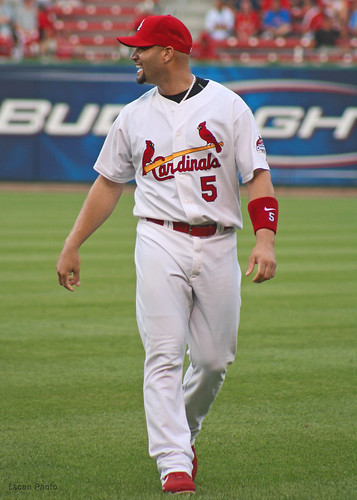 TSR: I know you haven’t seen him in any workouts yet, but how is the health of Albert Pujols?
TL: Well, we keep tabs. He really works hard at it and he’s feeling great, so if we can keep him healthy – knock on wood – he’ll have another great year. He really does everything possible to stay (in shape).
TSR: That always seems to be the challenge for every team entering the season – keeping their guys healthy for 162-plus games a year.
TL: Yeah, part of it is health (and the physical part of the game) and some of it is mental. (The season) is such a grind, so we really try to do things to keep guys fresh mentally and hopefully they don’t get into a rut. There are some things that you do – not gimmicks, not tricks – but strategies that we use to keep them mentally, as well as physically strong and ready to go.
TSR: Well Tony I really appreciate your taking the time to talk with me and I encourage everyone to go and check out “Stars to the Rescue” this Sunday. Is there anything else that you wanted to add about the event this weekend or any other general information about ARF?
TL: Only that you can get tickets at 314-534-1111 – that’s Metrotix. It’s a Sunday night on Martin Luther King weekend; it’s a very quiet weekend in St. Louis but the fans are in town, the players are in town and it’ll be a great show. It’ll be a very, very personable show. If you know Huey (Lewis) and Vince (Gill) and the REO guys – they really connect with the audience.
TSR: What seems great about the event is that there are so many athletes and entertainers that you really have something there for everyone and people can go out, have a good time and get involved in a great cause.
TL: I agree and the next thing to do is to get the word out and that’s why I appreciate today and your helping me do that.
TSR: It’s our pleasure and I’ll make sure to get the word out the best we can and help you draw people to the event. Again, we really appreciate your taking the time to chat with us.
TL: Thank you and take care, Anthony.
TSR: Thank you, Tony.
For tickets and general information, please call Metrotix at 314-534-1111, or visit the foundation’s website at www.arf.net.
But the same team that was so generous with its players now wants New York taxpayers to be even more generous than they already have been in helping fund for a stadium built for the singular purpose of making the Yankees even more money.


