Category: External Sports (Page 227 of 821)

Miller only worried about beating Shalorus at UFC 128

HeavyMMA.com writes that Jim Miller isn’t worried about title shots. His only concern is beating the dangerous Kamal Shalorus at UFC 128.

Mixed martial arts is a sport prone to speculation. We wonder who would win imagined match-ups across weight classes, how good an emerging young talent will be in two or three years, and where a win will put a certain fighter in the divisional pecking order.

Heading into UFC 128 this weekend, lightweight Jim Miller is the focus of some of that speculation, as he puts his six-fight winning streak and top 5 standing in the division on the line against WEC convert Kamal Shalorus. Many wonder whether a win, coupled with Dennis Siver’s upset win over George Sotiropoulos last month in Australia, would vault the Whippany, New Jersey native to the top of the list of contenders in the 155-pound division.

Miller is not one for wondering what it all would mean. He has one focus heading into his second UFC fight in his home state: earn a victory over Shalorus. The rest, he believes, will sort itself out.

Read the full article.

Were the owners more flexible in negotiations than players?

NFL Executive Vice-President and General Counsel Jeff Pash (C) talks to reporters about negotiations with players association representatives as they seek an agreement as a deadline looms for a player lockout, in Washington, March 4, 2011. The NFL and the players’ union agreed to extend talks on a new collective agreement for another week, the League-owned NFL Network reported Friday. The chief sticking point in the talks is how to distribute the league’s $9 billion in annual revenues. REUTERS/Jonathan Ernst (UNITED STATES – Tags: SPORT FOOTBALL BUSINESS)

Jim Trotter of SI.com wrote a great piece about the breakdown of the NFL labor talks and in the article, he writes that the owners felt they were more flexible in the negotiations than the players were.

Owners also argue they were more flexible in the negotiations than the players. On Friday the two sides were $640 million apart on the 2011 salary cap number; the NFL offered to split the difference. The union, however, would not move from its best offer of an additional $137.5 million a year for four years without a detailed accounting of each team’s books, a demand it had requested as early as May 2009. Says Pash, “In November ’09 we asked for an 18 percent rollback, and we didn’t get that either. Demands that you make before your first-ever face-to-face bargaining session might not be where you end up two years later.”

Ultimately, players contend that the owners initiated the standoff, so the burden of proof rests with them. “Not once have the players asked for more money during this negotiation,” Brees said on Friday. “Past players sacrificed a great deal to give us what we have now, and we will not lay down for a second to give that up.”

It may come down to a court to decide if they have to.

Because of the media blackout, there’s not a whole lot of information available on this labor dispute. Of course the owners are going to feel like they were more flexible, as I’m sure the players felt like they were more than fair with their demands. We the fans and media can only go off of what certain people tell us because we weren’t in the meeting rooms.

That said, there’s a real possibility that the union overplayed its hand here. They knew they had an advantage in talks once Judge David Doty ruled that the owners couldn’t use the $4 billion from renegotiated TV contracts to fund their lockout. The players then figured that if they decertified and their case went in front of a judge, they always had Doty (who has ruled often ruled in the players’ favor when it comes to previous NFL cases) in their back pocket.

Thus, when the owners came to the table with a last-second proposal on Friday before the lockout, the players wouldn’t budge on their offer. But they may have screwed themselves because Judge Susan Nelson will oversee their case, not Doty. So while they still could wind up winning big, they may have bypassed a decent offer and a way to end this charade before the CBA expired last week. Instead, they decided to go to court and now here we are.

When the dust finally settles on this issue, I wonder which side will have more regret: the owners for not opening their books (even though they did agree to show the players five years worth of aggregated league wide profitability information), or the players for not taking that last-second proposal last Friday.

2011 March Madness: Sagarin & Pomeroy data for the first round

Looking for updated numbers? Click here.

If you’ve read my annual March Madness bracket column or if you are a stathead in general, you’ll know what the title of this post means. If you don’t, check out my column and come back.

Here are the first 36 matchups representing the First Four and the first round of the NCAA Tournament. The Sagarin advantage represents the spread in Jeff Sagarin’s predictor ratings. If the number is positive, it means that Team A is the Sagarin favorite. If the number is negative, then it means Team B (and the lower seed) is actually the favorite.

The Pomeroy % represents the chances that Team A will win the game according to Ken Pomeroy’s Pythagorean calculation.

Over the last four years, teams with a 2+ point advantage in Sagarin’s “predictor” rating have won 156 of 198 games (78.7%). Over the last two years, if a team had at least a 65% expected win rate according to Pomeroy’s Pythagorean calculation, they won 61 of 76 games (80.2%).

I’ve also included the spread for the game at the World Sports Exchange. Oftentimes the spread is very close to the Sagarin spread.

#Team ATeam BSag Adv.Pom %Spread
1NC-AshevilleArkansas-Little Rock4.569.2%-4
2UABClemson-3.434.4%+4.5
3UT-San AntonioAlabama State7.073.6%-4
4USCVCU5.370.7%-4.5
5Ohio StateUT-San Antonio26.898.9% 
6George MasonVillanova-1.850.5%-1
7aWest VirginiaClemson2.452.7% 
7bWest VirginiaUAB5.868.0% 
8KentuckyPrinceton13.589.6%-13
9XavierMarquette-2.147.4%-2
10SyracuseIndiana State13.991.0%-11.5
11WashingtonGeorgia8.373.7%-5.5
12North CarolinaLIU13.290.6%-17.5
13DukeHampton25.198.6%-22.5
14MichiganTennessee1.157.2%+1.5
15ArizonaMemphis8.677.7%-6
16TexasOakland10.587.8%-9.5
17CincinnatiMissouri1.056.9%PICK
18ConnecticutBucknell10.584.3%-10
19TemplePenn State1.251.1%-2.5
20San Diego StateNorthern Colorado14.593.4%-15.5
21KansasBoston University23.097.4%-22.5
22UNLVIllinois-0.548.4%-2
23VanderbiltRichmond2.655.9%-2
24LouisvilleMorehead State12.888.5%-9.5
25aGeorgetownUSC3.156.0% 
25bGeorgetownVCU8.375.5% 
26PurdueSt. Peter’s17.292.6%-14
27Texas A&MFlorida State0.049.2%PICK
28Notre DameAkron14.792.2%-13
29PittsburghNC-Asheville17.994.9% 
30ButlerOld Dominion1.248.8%+2
31Kansas StateUtah State-0.839.7%-2
32WisconsinBelmont3.861.4%-4.5
33St. John’sGonzaga-0.446.9%-1.5
34BYUWofford12.686.3%-8
35UCLAMichigan State-1.545.0%+1.5
36FloridaUC-Santa Barbara11.488.9%-12.5

A few random thoughts about “The Fab Five”

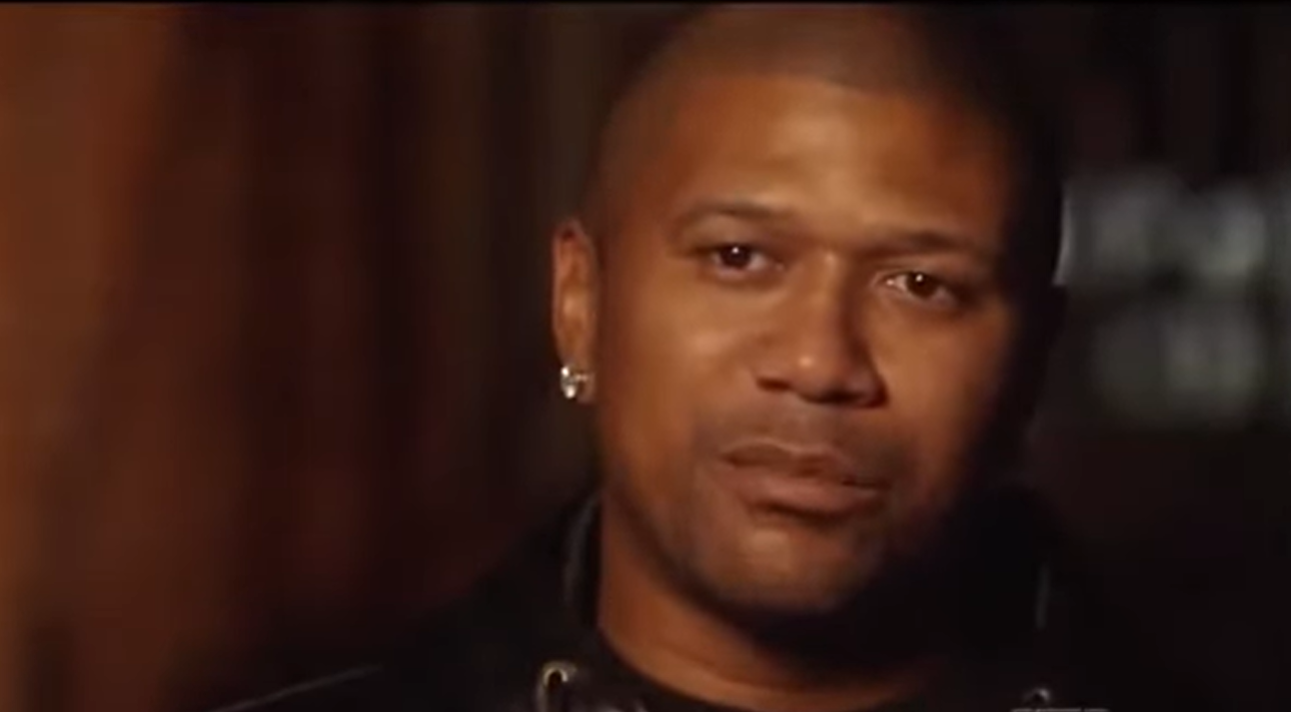
Jalen Rose The Fab Five Screenshot

ESPN is currently running a two-hour documentary about Michigan’s Fab Five (Chris Webber, Jalen Rose, Juwan Howard, Jimmy King and Ray Jackson, and if you haven’t seen it, I’d definitely recommend it. Webber didn’t agree to participate, but the interviews with the other four members along with members of the coaching staff were quite compelling.

Yesterday, the internet was abuzz with comments made by the former Michigan players about Duke and especially Christian Laettner, whom Rose thought was an “overrated pu**y,” until he actually played against him and saw that he had some serious game. I’ll leave those comments alone since Rose eventually gave Laettner credit, but there are a few other moments in the documentary that jumped out at me:

1. Rose hated Duke because they wouldn’t recruit someone like him; they only recruited “Uncle Tom”-type black players. He also admitted he hated Grant Hill because Hill grew up in a great home while Rose grew up poor with an absentee father. Rose probably hit the nail on the head with regard to why many inner city blacks resent/criticize suburban blacks; it’s out of envy. They see lives that are more comfortable than theirs, and they lash out in anger. The Fab Five translated this to a hatred of the Duke players, including guys like Grant Hill and Thomas Hill.

I suspect if Mike Krzyzewski were asked about his recruiting habits and answered honestly, he’d say that he had the luxury of recruiting players (of whatever race) that he thought would fit into his team-first concept. He already had a successful college program, so why recruit a ‘risky’ player like Rose who may or may not fit into what he’s trying to build? The last thing he wants is to have a to battle a player on a daily basis.

In the end, Duke was 3-0 against the Fab Five, so I’d say the Blue Devils got the last laugh.

2. Forget the shorts, shoes, socks or even the style of play. The thing that bothered me about the Fab Five was the in-your-face taunting. The film was great because it reminded me of what I didn’t like about the Fab Five. Their play was outstanding. Nobody hogged the ball and winning was paramount, so from a pure basketball respect, they were wonderful. It was all the antics that drove me nuts. There were several highlights that showed the players getting into the face of the opponent after the guy was just dunked on. It’s one thing to over-celebrate with your teammates, but to show up an opponent like that is just bad sportsmanship. This was explained away as being part of the inner city playground culture, but my guess is that if they would have gotten into someone’s face on the playground, they would have been punched in the nose (or worse). At the time, officials didn’t really call taunting technicals, so there were no consequences to those actions. Oh, and Juwan Howard was the worst. Webber or Rose would dunk and there comes Howard, getting into the grill of the guy who just got dunked on. It was no surprise that against Ohio St. in their first Final Four, Howard got headbutt to the nose at one point in the game.

Continue reading »

Adrian Peterson compares NFL to modern-day slavery

Minnesota Vikings running back Adrian Peterson runs for a 4-yard gain during the first quarter against the Chicago Bears at Soldier Field in Chicago on November 14, 2010. UPI/Brian Kersey

You knew somebody was eventually going to say something stupid when it came to the current state of the NFL.

Meet Adrian Peterson, that “somebody.”

Minnesota Vikings running back Adrian Peterson made some controversial comments about the NFL labor situation in an interview with Doug Farrar of Yahoo’s Shutdown Corner. The interview was conducted just before the NFLPA decertified.

It’s modern-day slavery, you know? People kind of laugh at that, but there are people working at regular jobs who get treated the same way, too. With all the money,” Peterson continued. “The owners are trying to get a different percentage, and bring in more money.”

Farrar took out the quote shortly after publishing. He tweeted that he wanted to give Peterson an opportunity to explain. Farrar described the comment as “a real misstep.”

As expected, AP is being ridiculed about the remarks. A person set to make $10.72 million in a down economy can’t refer to his job as “modern-day slavery” and not expect to receive backlash for it. In fact, at least one player has already taken to Twitter to disagree with what Peterson said. Below is a series of tweets from Packers’ running back Ryan Grant.

I have to totally disagree with adrian Peterson’s comparison to this situation being Modern day slavery..false..

Their is unfortunately actually still slavery existing in our world.. Literal modern day slavery.. That was a very misinformed statement

But I understand what point he was trying to make.. I just feel like he should have been advised a little differently

Actually, it’s hard to understand the point Peterson was trying to make. Is he saying he’s been forced to play football against his will the past couple of years? Is he viewed as property of the NFL or the Minnesota Vikings or can he come and go as he pleases? Is he treated poorly or met with violence if he doesn’t serve his employer?

As Grant noted, slavery still remains today so Peterson’s comment was pretty insensitive and, to use Grant’s words, misinformed. It was a dumb comment and he should take every opportunity to clarify what he meant (or better yet, tell everyone that it was stupid to even suggest such a thing).

If I’m AP’s publicist, I just fired myself.

« Older posts Newer posts »