Month: June 2011 (Page 6 of 18)

Report: Players to receive 48% of all revenue in new CBA

NFL commissioner Roger Goodell leaves a federal courthouse after participating in court-ordered talks regarding labor and revenue issues between the NFL and the NFL Players Association in Minneapolis, April 19, 2011. REUTERS/Eric Miller (UNITED STATES – Tags: SPORT FOOTBALL CRIME LAW BUSINESS)

ESPN.com is reporting that the players will receive 48% of all revenue under the framework of the labor deal currently being discussed at the owners’ meeting in Rosemont, IL.

Here are the proposed details for the new Collective Bargaining Agreement:

• Players get 48 percent of “all revenue,” without extra $1-billion-plus off top that previously had been requested by owners.

• Players’ share will never dip below 46.5 percent, under new formula being negotiated.

• Teams required to spend minimum 90-93 percent of the salary cap.

• Rookie wage scale part of deal but still being “tweaked.”

• 18-game regular season designated only as negotiable item and at no point is mandated in deal.

• New 16-game Thursday night TV package beginning in 2012.

• Owners still will get some expense credits that will allow funding for new stadiums.

• Retirees to benefit from improved health care, pension benefits as revenue projected to double to $18 million by 2016.

I obviously have not been involved in these discussions and I’m not a lawyer. But in this simpleton’s opinion, this looks like a good deal for both sides (based on the information provided above, that is).

Considering the players will lose some of the revenue pie I think it’s safe to say they lost quite a bit of leverage over the past couple of months. But one of the big things that they were fighting for was improved health care and pension benefits for retired players, which is what that last bullet point highlights. And when you take into account that teams will be required to spend a minimum of 90-93% of the salary cap, the players should make out just fine under this new CBA.

Another big thing that the players are definitely against is the 18-game schedule. While that still appears to be an option for down the road, at least it’s not going to hold up the current discussions. It’s one less item that the two sides have to argue over right this second.

It’s nice to see that the framework for the new CBA is in place and the two sides continue to work together to reach common ground. It’s still a fluid situation so let’s not assume anything right now. But hopefully they won’t hit any more snags and the lockout will lift in the upcoming weeks.
Scouting Report: Derrick Williams

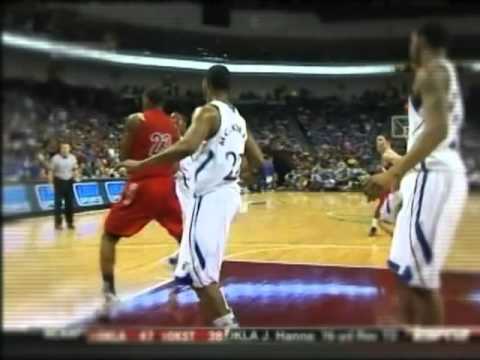
Check out these highlights of Derrick Williams sophomore season at Arizona:

Williams averaged 20/8 and shot 60% from the field in 2010, including an eye-popping 57% (42-of-74) from long range. He stands just over 6-7 in bare feet, but his standing reach of 9-0 is the same as Nick Collison and Tyrus Thomas and just a half inch less than Amare Stoudemire’s (though Stoudemire may have grown a bit since being measured in 2002).

While slightly on the small side, Williams is more of a power forward than a small forward, though he could get by with some minutes at the ‘three’ if need be. This isn’t good for the Minnesota Timberwolves, who already have a very good power forward in Kevin Love. Williams would struggle covering the quicker small forwards if pressed to play big minutes out of position, which is why the T-Wolves are trying to trade out of the #2 spot.

Williams is a terrific finisher in the lane, whether it be a powerful dunk or a nifty double cutch lay-in. He’s especially good at catching the ball off the pick-and-roll and finishing in traffic. He has a high motor and isn’t easily outworked. His range goes out to the NBA three-point line, though his shot isn’t exactly pure.

DraftExpress compares him to Michael Beasley (without any of the off-court issues) and says that “Williams shouldered a heavy load for Arizona this season at 16.4 possessions per game (5th in this group), but was nevertheless the most efficient forward of the players we looked at, scoring 1.16 points per possession. That’s especially impressive considering how heavily defenses keyed in on stopping him, how little playmaking Arizona had besides him, and the way in which he generated his offense.”

Meanwhile, NBADraft.net says he “was a pretty modest defensive player in college, as his lateral quickness is mediocre and his length is just OK, which are respective problems for the SF and PF positions … Definitely has wavering intensity on this end, and will allow baskets without much resistance around the rim, particularly against the bigger, more athletic PF’s he faced.”

The FIFA Women’s World Cup begins this week

Looking for something to pay attention to in the doldrums of summer? The FIFA Women’s World Cup starts on Sunday in Germany and Nike is following the U.S. Women’s team as they prepare.

After winning in 1991 and 1999, the U.S. Women finished in third place in 2003 and 2007. Germany has won two consecutive titles and if the U.S. hopes to break that streak, they will have to beat the Germans on their own turf.

The top 5 Heisman candidates for the 2011 college football season

Stanford Cardinals quarterback Andrew Luck (12) completes this first half pass against the Virginia Tech Hokies during the 77th Annual Discover Orange Bowl at Sun Life stadium in Miami on January 3, 2011. UPI/Michael Bush

The 2011 college football season is still a couple of months away but seeing as how we’ve reached the dead days of the sports calendar, I figured it would be okay if we took a look at this year’s Heisman candidates. Below are five players I believe have the best shot at claiming this year’s Heisman hardware.

1. Andrew Luck, QB, Stanford
What to Like: Barring injury or a Jake Locker-type senior campaign, Luck could run away with this year’s Heisman. He was runner-up for the award in 2010 and was named the Pac-10 Offensive Player of the Year. Most pundits believe he’ll be the top signal caller in college football this year and he’s the main reason why Stanford will be rated high in the preseason polls.
What Not to Like: He lost his top two receivers (Doug Baldwin and Ryan Whalen), his head coach (Jim Harbaugh), and his offensive line (which allowed only five sacks last season) is undergoing a reloading phase. Can Luck overcome all that change in one offseason?

2. Landry Jones, QB, Oklahoma
What to Like: Jones led the nation in completions last season and put up monstrous numbers in Oklahoma’s pass-happy offense. He completed 65% of his passes while racking up 4,700-plus yards and 38 touchdowns. With WR Ryan Broyles and nearly all five starters on his offensive line returning, Jones shouldn’t miss a beat.
What Not to Like: Losing all-purpose back DeMarco Murray hurts, but the biggest worry with Jones is whether or not he can handle the expectations of Oklahoma being the top-ranked team at the start of the season. All eyes will be on the Sooners every week and just one slip up could cost OU a national title berth and Jones a shot at the Heisman.

3. Marcus Lattimore, RB, South Carolina
What to Like: After rushing for 1,197 yards and 17 touchdowns as a freshman, South Carolina fans can’t wait to see what Lattimore will do for an encore. His performance last year placed him among the nine SEC players who have rushed for at least 1,000 yards as a freshman, which is a list that also includes Georgia’s Herschel Walker and Florida’s Emmitt Smith. With Lattimore set to again be the workhorse in Steve Spurrier’s offense, you can expect big things out of this sophomore in 2011.
What Not to Like: Quarterback Stephen Garcia is one jaywalking charge away from being kicked off the team for good. If Garcia flubs up again or can’t beat out sophomore Connor Shaw for the starting job this summer, then Lattimore might have too much pressure on his shoulders this season. If SC becomes too one-dimensional, Lattimore’s production will likely suffer.

Continue reading »

Scouting Report: Kyrie Irving

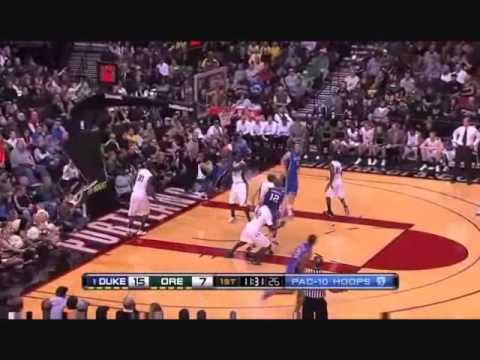
First, watch these highlights of Irving’s stint at Duke…

Irving reminds me a little of Chris Paul. He has that same speed and ball control, and while his vision may not be on par with Paul’s, it’s pretty close. He’s great on the break and does a nice job of making the right decision in transition or when he dribbles into the lane. He made 18-of-39 three-pointers (46%) while at Duke, which isn’t a huge sample size, but it appears that he has an NBA-ready jumper. He also nailed 90% of his free throws and shot a terrific 53% from the field.

NBADraft.net says Irving is “a facilitator who shows the ability to make those around him better … Great vision and passing skills … Great burst. Has the blow by speed to get past defenders off the dribble … Good decision maker. Looks to make the right play instead of always trying to dazzle.” Conversely, the site says that Irving’s durability is a concern and that he “could struggle with the transition to the NBA game with just 8 games of NCAA experience under his belt.”

Meanwhile, DraftExpress says that Irving is “not as blazingly fast with his first step as Derrick Rose, John Wall, or even Kemba Walker, Irving plays at a very unique pace that keeps defenses consistently off-balance and allows him to get to the basket seemingly whenever he needs to. Able to drive left or right almost equally well, he has excellent timing on his drives, very good body control, and the ability to operate at different speeds.”

It may take a while for Irving to mature into a franchise point guard, but he has all the tools to get there. The Cavs need a player to build around and Irving is that guy.

« Older posts Newer posts »