Tag: sports documentaries (Page 2 of 3)

Grant Hill responds to “The Fab Five”

In the ESPN documentary “The Fab Five,” Jalen Rose and his teammates made a few comments about the Duke basketball program. The most inflammatory was that the black Duke players were “Uncle Toms.” Grant Hill’s name was brought up, and Hill has since responded via the New York Times’ college sports blog.

My teammates at Duke — all of them, black and white — were a band of brothers who came together to play at the highest level for the best coach in basketball. I know most of the black players who preceded and followed me at Duke. They all contribute to our tradition of excellence on the court.

It is insulting and ignorant to suggest that men like Johnny Dawkins (coach at Stanford), Tommy Amaker (coach at Harvard), Billy King (general manager of the Nets), Tony Lang (coach of the Mitsubishi Diamond Dolphins in Japan), Thomas Hill (small-business owner in Texas), Jeff Capel (former coach at Oklahoma and Virginia Commonwealth), Kenny Blakeney (assistant coach at Harvard), Jay Williams (ESPN analyst), Shane Battier (Memphis Grizzlies) and Chris Duhon (Orlando Magic) ever sold out their race.

To hint that those who grew up in a household with a mother and father are somehow less black than those who did not is beyond ridiculous. All of us are extremely proud of the current Duke team, especially Nolan Smith. He was raised by his mother, plays in memory of his late father and carries himself with the pride and confidence that they instilled in him.

Well said, Grant.

In a recent column, FoxSports columnist Jason Whitlock took the Fab Five to task for saying such things:

The Fab Five clearly believe Coach K and Duke didn’t and don’t recruit inner-city black kids, and they believe race/racism/elitism are the driving forces behind the philosophy.

Let’s go back to the Fab Five era and Duke’s philosophy then. Coach K recruited kids who had every intention of staying in school for four years. He recruited kids who had a good chance of competing academically at Duke and could meet the standardized test score qualifications for entrance.

The Fab Five stated it was their intention to win a national championship and turn pro as a group after their sophomore season. Webber, who was recruited by Duke, left Michigan after two years. Rose and Howard left as juniors. Impoverished inner-city kids have good reason to turn pro early. I’m not knocking Webber, Howard and Rose for their decisions. They didn’t fit the Duke profile at the time.

During the three-year run of the Fab Five (one season without Webber), Duke beat Michigan all four times the schools met while winning two ACC titles and one NCAA title. During the same span, Michigan won zero conference or national titles. In addition, Webber’s interactions with booster Ed Martin put the program on probation and caused Michigan to forfeit all its games.

I think Coach K recruited and recruits the right kids for Duke.

It turns out that Jalen Rose was the executive producer of the documentary, so it would be tough to argue that his words were taken out of context.

A few random thoughts about “The Fab Five”

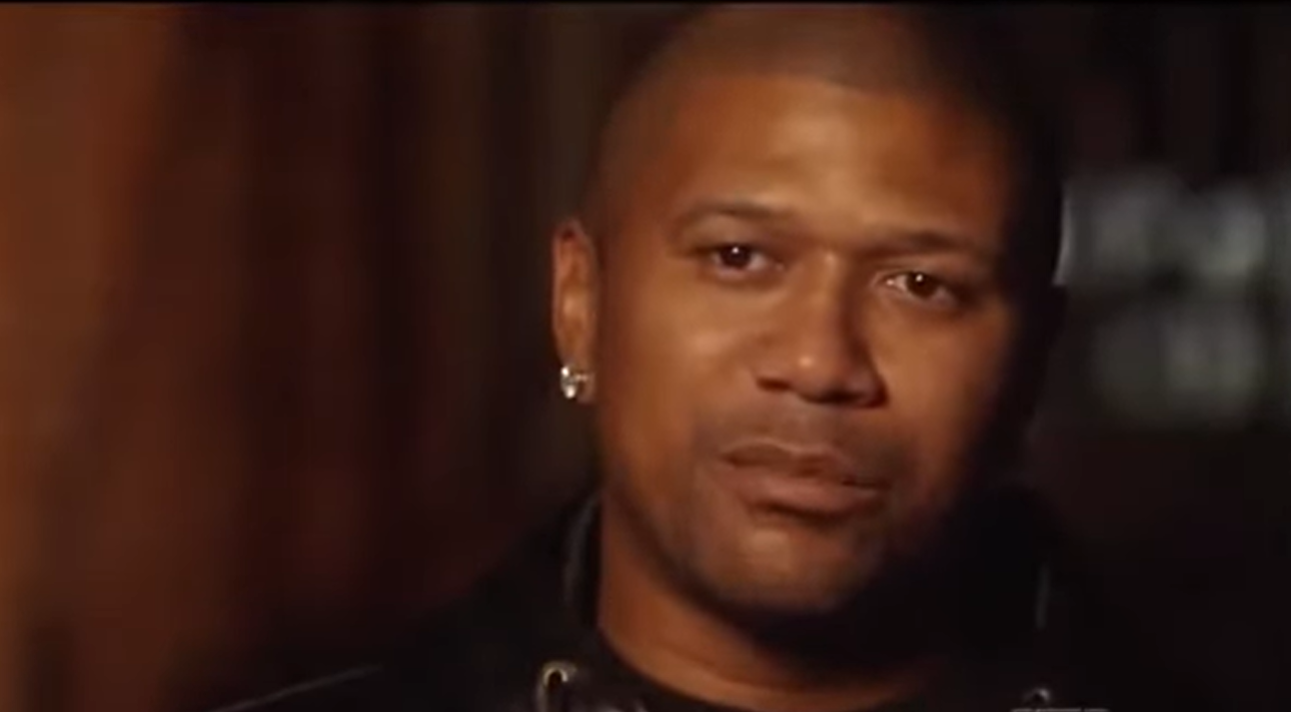
Jalen Rose The Fab Five Screenshot

ESPN is currently running a two-hour documentary about Michigan’s Fab Five (Chris Webber, Jalen Rose, Juwan Howard, Jimmy King and Ray Jackson, and if you haven’t seen it, I’d definitely recommend it. Webber didn’t agree to participate, but the interviews with the other four members along with members of the coaching staff were quite compelling.

Yesterday, the internet was abuzz with comments made by the former Michigan players about Duke and especially Christian Laettner, whom Rose thought was an “overrated pu**y,” until he actually played against him and saw that he had some serious game. I’ll leave those comments alone since Rose eventually gave Laettner credit, but there are a few other moments in the documentary that jumped out at me:

1. Rose hated Duke because they wouldn’t recruit someone like him; they only recruited “Uncle Tom”-type black players. He also admitted he hated Grant Hill because Hill grew up in a great home while Rose grew up poor with an absentee father. Rose probably hit the nail on the head with regard to why many inner city blacks resent/criticize suburban blacks; it’s out of envy. They see lives that are more comfortable than theirs, and they lash out in anger. The Fab Five translated this to a hatred of the Duke players, including guys like Grant Hill and Thomas Hill.

I suspect if Mike Krzyzewski were asked about his recruiting habits and answered honestly, he’d say that he had the luxury of recruiting players (of whatever race) that he thought would fit into his team-first concept. He already had a successful college program, so why recruit a ‘risky’ player like Rose who may or may not fit into what he’s trying to build? The last thing he wants is to have a to battle a player on a daily basis.

In the end, Duke was 3-0 against the Fab Five, so I’d say the Blue Devils got the last laugh.

2. Forget the shorts, shoes, socks or even the style of play. The thing that bothered me about the Fab Five was the in-your-face taunting. The film was great because it reminded me of what I didn’t like about the Fab Five. Their play was outstanding. Nobody hogged the ball and winning was paramount, so from a pure basketball respect, they were wonderful. It was all the antics that drove me nuts. There were several highlights that showed the players getting into the face of the opponent after the guy was just dunked on. It’s one thing to over-celebrate with your teammates, but to show up an opponent like that is just bad sportsmanship. This was explained away as being part of the inner city playground culture, but my guess is that if they would have gotten into someone’s face on the playground, they would have been punched in the nose (or worse). At the time, officials didn’t really call taunting technicals, so there were no consequences to those actions. Oh, and Juwan Howard was the worst. Webber or Rose would dunk and there comes Howard, getting into the grill of the guy who just got dunked on. It was no surprise that against Ohio St. in their first Final Four, Howard got headbutt to the nose at one point in the game.

Continue reading »

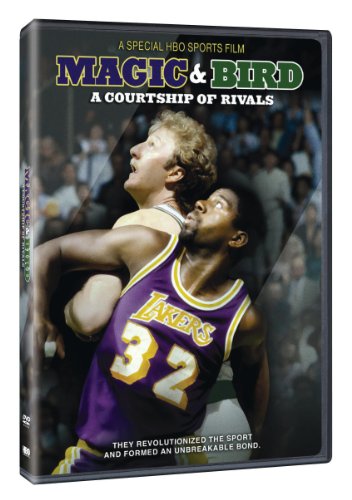
DVD Review: “Magic & Bird: A Courtship of Rivals”

For years, the passion they shared for winning made Earvin “Magic” Johnson and Larry Bird the most bitter of rivals. It also made theirs the most compelling rivalry in sports, driving the NBA to new heights of popularity in the 1980s. Narrated by Liev Schreiber, this all-new documentary tells the riveting story of two superstars who couldn’t have been more different — until they forged an unlikely friendship from the superheated rivalry that had always kept them apart.

And that’s how “Magic & Bird: A Courtship of Rivals” is described on its back cover. HBO Entertainment did a nice job outlining the duo’s relationship starting with their joint appearance as part of Team USA’s warmup to the 1976 Olympics and their clash in the 1979 NCAA championship game all the way through their respective retirements.

By now, most basketball fans are aware of the rivalry/friendship that Magic and Larry developed over the years, but this 90-minute documentary digs deeper into each man’s personality and puts their relationship into context based on what was going on in the country at that particular time. Bird was extremely introverted and for much of his career it wasn’t his style to be friends with an opponent. Meanwhile, Magic was an extrovert and loved being loved, so when Bird snubbed Magic before the NCAA title game, the relationship was purely adversarial for several years. That loss bothered Bird for years, and it wasn’t until Converse convinced the two players to shoot a commercial (in French Lick, Indiana, on Bird’s request) did the two men actually become friends.

The documentary also covers each player’s childhood, Larry’s first day with the Celtics, how their rivalry became fodder for racists in Boston and around the country, Larry’s reaction to Magic’s HIV revelation, and how their unselfish style of play effectively saved the NBA. The film relies heavily on interviews with the two players, and it’s refreshing to hear them describe the different milestones in their relationship in their own words. It’s funny, emotional and for those of us that grew up watching the two superstars battle in the Finals — plenty of nostalgia.

The only knock is the complete lack of bonus features on the DVD, so for viewers who have already seen the film on HBO, there isn’t any extra content to dig into. But that’s just a small gripe — on the whole, “Magic & Bird” is an outstanding production.

The current (sad) state of card collecting

Thanks to Big League Stew, I stumbled upon this little eight-minute documentary about modern-day card collecting. Anthony Stalter watched it as well, so we’re going to discuss how card collecting has changed throughout the years.

John Paulsen: For me, card collecting started with basketball. I was never really into baseball as a kid (mostly because my dad preferred basketball and football, which he played in college), so my focus was on other sports. I had some old Topps football and basketball cards from the late ‘60s and ’70s, but I don’t really remember how I acquired them. Basketball cards were defunct for a while — Michael Jordan’s “real” rookie card could only be found in a regional set produced by Star — and once the mid-90’s hit, the NBA’s popularity blew up, so did the prices of those Star sets from the ’80s. I got into collecting for two reasons: 1) because I liked basketball (and to a lesser extent, football) and 2) I thought it was an investment that I could someday pass onto my son to teach him about the history of the sport (and about investing). Unfortunately, by the time I had some real money to spend on cards (when I was in college), the basketball card industry was so saturated with all the different brands and sets. Instead of going out and buying one or two rookie cards of your favorite player, now there’s 10 or 15 or more amongst all these different brands. The old rookie cards are iconic. I can still picture the first cards for Magic Johnson and Larry Bird, as well as Jordan’s Star rookie and his Fleer rookie, which came a few years later. With so many different brands/lines floating around, rookie cards have lost their appeal. The whole industry has lost its appeal for me, which is depressing because I probably have a few thousand cards stored under my bed that are worth a fraction of what they were 15-20 years ago. I was more of an individual card buyer than a pack or a box buyer. I bought a few packs and boxes in my day, but all those “commons” seemed like a waste. Anthony — how did you get into collecting and what do you think of the industry today?

Continue reading »

HBO presents the Thrilla in Manilla

Tomorrow night (April 11 at 8 pm ET/10pm PT), HBO will premiere the Thrilla in Manilla, a documentary covering the third and final fight between Muhammad Ali and Joe Frazier. The documentary “tells the story of two great fighters forever linked by three epic bouts, and looks at their final fight, considered the most brutal, from Frazier’s perspective for the first time.” Check out the trailer:


Martin Johnson reviews the film.

Thrilla in Manila tells the story with alarming detail and hilarious commentary. The film is much less observational than Leon Gast’s superb When We Were Kings which captured the scene in Kinshasa for the Ali-Foreman fight in 1974. Instead, Dower arrays a cast of talking heads between them so that a dialogue emerges from the commentary. Ali’s cornerman, Ferdie Pacheco, is almost as brash and outspoken as his fighter was. Imelda Marcos, former first lady of the Philippines, is a charming curiosity. Frazier’s son, Marvis, is calm and insightful. “I like to have a Robert Altmanesque ensemble,” said Dower of his motley crew of commentators.

The film will rub hard-core fans of Ali the wrong way, but Dower says it wasn’t his intent to tear down the great heavyweight. “I came to this with no agenda about Muhammad Ali at all,” he said at a post-screening press conference in New York this week. “It’s just that in telling this story you keep butting into the myth of Ali.”

Ali takes a few on the chin, but he has only himself to blame for some of it. Dower and his crew unearthed footage of Ali boasting about his agreements with the Ku Klux Klan on camera from the early ‘70s. And during his stay in Manila, he is caught womanizing.

However, Thrilla in Manila is far more effective as a portrait than a rebuttal or a diatribe. Frazier is the quiet focus of the film. He is shown in his gym, and he’s coaxed into watching the third fight for the first time. “I lost the fight. What would I have learned from watching it again?” he asked without the slightest hint of wistfulness.

Frazier, both in the movie and in person, seems like a man stuck in the wrong era. His humility and background were easily confused in the ‘70s for subservience, a time when outspokenness was the norm. He wasn’t media savvy in a moment when his opponent was charismatic and savagely sarcastic.

If you like boxing films and documentaries, this one is definitely worth checking out. Boxing isn’t as big now as it was in the glory days of the 20th century, but it’s still big business, particularly with sports betting becoming accepted in more states. Now you can at least find a no deposit bonus opportunity and enjoy betting on fights.

« Older posts Newer posts »