Page 1117 of 2956

Chargers release icon LaDainian Tomlinson

After spending nine years in San Diego, LaDainian Tomlinson’s Charger career has officially come to an end, as the team released the 30-year-old running back on Monday.

Tomlinson ends his San Diego career after amassing 12,490 rushing yards and 138 rushing touchdowns on 2,880 attempts. Outside of 2009, he never finished with less than 1,110 rushing yards during a season and never totaled less than 10 rushing touchdowns. His best season came in 2006 when he rushed for 1,815 yards and a NFL-record 28 touchdowns, which he still holds today.

While it’s a sad ending to such a fine tenure, Tomlinson didn’t make things easy by ripping the franchise for his lack of carries last year and his criticism of head coach Norv Turner’s pass-first approach. Tomlinson also refused to take a pay cut to stay in San Diego, so nobody can blame the Bolts for saving $5 million ($3 million in salary, $2 million in bonuses) by dumping him now.

Some fans like to blame the Chargers’ offensive line for Tomlinson’s declining numbers over the past two seasons. But while the left side of Marcus McNeill and Kris Dielman left something to be desired in the run blocking department last year, the right side of Jeromey Clary, Louis Vasquez and center Scott Mruczkowski was more than serviceable in opening up running lanes. The fact is that Tomlinson’s skills have just deteriorated after toting the rock so many times throughout his career.

Tomlinson will land with somebody next year. Chances are he’ll have to take a one or two-year deal, but given his experience and exceptional vision, he’ll land on his feet again.

It just won’t be in San Diego, where it was clearly time for both player and team to move on.


Photo from fOTOGLIF
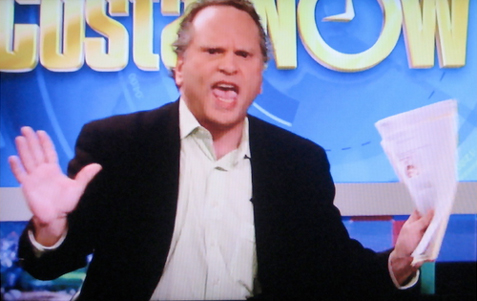
Buzz Bissinger no likey the Brett Favre

Remember blog-hater Buzz Bissinger, the “Friday Night Lights” scribe who lit into Will Leitch on “Costas Now”?

Well, his most recent target is none other than Brett Favre, whom he calls a “hubristic fool” for playing through an ankle injury in the NFC Championship Game.

Brett Favre wasn’t heroic. He was a hubristic fool. He wasn’t a warrior. He was an arrogant braggart who, whatever the homespun hokum of his Mississippi roots, perversely reveled in his pain to the point where his agent publicly disseminated pictures of his injuries like cheesecake photos–a deep-purple ankle lumpish and swollen, an equally deep-purple hamstring. The pictures did what Favre hoped they would: further reinforce his image as The Gladiator, The Samurai, The White Knight for whom guts in football, however stupid and wanton, is what counts.

Later, Bissinger says that Favre’s admission to his pain killer addiction and his playing the Monday night (against the Raiders) after his father died were contrived and carefully planned.

He has always been clinically grandiose beneath the “aw-shucks” country boy cover. He knows what sportswriters crave, not just the junk food of the noble warrior but the soul-aching confessional, which largely accounts for why he admitted to being a Vicodin addict in 1996. He knew that, when he decided to play a football game the night after his father died in 2003, it would not be perceived for the act of self-absorption it was, but as an act of courage after he carefully spun it as that’s what pappy would have wanted.

Self-absorption…really?

While we all know that Favre has a huge ego and a flair for the dramatic, I don’t think his deciding to play soon after his father died was an “act of self-absorption.” I think any athlete that had a supportive father would choose to mourn on the football field, the basketball court or the baseball diamond rather than wallow in pity and depression in some dark room somewhere. An athlete (and likely his father) would see not playing as a form of self-absorption. No father would want his death to hurt the chances of his son’s team getting a win in a crucial game.

And as for the chances of Favre, or any tough QB for that matter, taking himself out of the NFC Championship Game because of an ankle injury — well, it’s just unrealistic to think that would ever happen. I saw the game, and while Favre limped off after the play in question, he was moving around all right on it for the rest of the game. Do you think Minnesota fans wanted to see Sage Rosenfels or Tarvaris Jackson in that situation? Hell no.

Bissinger’s official website describes him as “highly acclaimed” and “one of the nation’s most distinguished writers.” But this piece isn’t distinguished at all. It just seems like he has an ax to grind with Favre (ever since the pain killer admission) and he took this opportunity to kick a man while he’s down.

Patriots franchise Vince Wilfork

According to beat writer Tom Curran via his Twitter page, the Patriots have designated nose tackle Vince Wilfork as their franchise player.

This news won’t please Wilfork, who has said all along that he didn’t want to be franchised. The one-year deal will guarantee him a $7.003 million salary in 2010, but players want long-term deals because they offer security. ESPN’s Adam Schefter reported last week that the two sides reached a standoff last week in long-term contract talks and thus, that’s why the Pats inevitably decided to use their franchise tag on the 28-year-old NT.

Wilfork is a top 5 defensive tackle, is outstanding against the run and is vital to New England’s 3-4 defense. So while he probably isn’t thrilled with being franchised, the Patriots were never going to let their centerpiece defensive linemen walk this offseason.

At least the two sides can continue to work on a long-term deal. The deadline for franchise players to sign a multi-year deal isn’t until mid-July so now that the Patriots don’t have to worry about competing with other teams, they can focus on making Wilfork contractually happy. Hopefully the two sides can come to an agreement.


Photo from fOTOGLIF

Rudy Gay might be the big winner this summer

In his trade deadline rankings, Chad Ford discusses the Grizzlies’ quandary with Rudy Gay.

With so many teams getting under the cap, it almost guarantees that one of them will panic this summer and overpay for Rudy Gay. (The Knicks, Nets, Clippers and Wizards all like him.) Will Michael Heisley really pay the max for Gay? If not, chances are they lose him this summer.

Gay fits the profile of a non-max player who could very well get max money this summer. There are eight teams that currently have enough money to sign a max player and two of those teams (the Knicks and the Heat) that have enough cap space to sign two max free agents. So, this summer, there will be room for 10 max players, but looking at our list of the top potential free agents, there are only three players — LeBron, Wade and Bosh — that I’d offer a max contract. Granted, guys like Amare Stoudemire, Joe Johnson and Carlos Boozer are likely to get huge long-term contracts, but still, that’s just six guys for 10 slots (not even counting teams like Cleveland and Toronto, who can re-sign LeBron and Bosh, respectively).

This means non-max players like Rudy Gay and David Lee will probably end up with bigger contracts than they deserve because the teams that miss out on LeBron, Wade, Bosh, Amare, etc. will panic and overpay so that they aren’t stuck with a gaping hole heading into the 2010-11 season. Certain teams may hold onto their cap space for the following summer, but it depends on who is likely to be available and how poor of a season that team is prepared to have.

So if you’re a fan of the Nets, Clippers, Timberwolves, Kings and Wizards…or the Grizzlies…be prepared.


Photo from fOTOGLIF

How to fix the Winter Olympics

In his article, “Games Saver,” in the Feb. 22 issue of ESPN The Magazine, Luke Cyphers recommends a few ways to rekindle interest in the Winter Olympic Games. I particularly like his first two suggestions:

1. RECOMBINE OLYMPIC YEARS.
Back in 1992, you could rely on certain big events hitting every four years. A leap year. A presidential election. And the Olympics, both Winter and Summer in one 12-month span. That made them a scarce commodity. But, acting on a plan hatched eight years earlier, the IOC monkeyed with the calendar in 1994, putting the Winter Games in “off” even-numbered years. What was intended to make them more visible did just the opposite. The Games need to get back on Olympic Standard Time, one year for all. It would solve one huge and growing problem — competition with the World Cup for ad dollars and attention.

2. PICK ONE OLYMPIC VENUE.
Vancouver’s financial mess is a warning to future bidders: Stay away. Suckering new cities to create a billion-dollar playground is simply unsustainable. More sites means more sprawl, more CO2 and more global warming — counter-productive when you race on snow. As the Greeks did, the Olympic organizers need to pick a single stage they can dust off every four years, preferably a city that already has facilities in place. We vote for Innsbruck, site of Franz Klammer’s downhill, Dorothy Hamill’s haircut and an active spot for all major winter sports. At the very least, the IOC should rotate the Games among single hosts on each of the three continents that have held them before. In addition to Innsbruck, recycle Salt Lake, and Sapporo in Asia too.

Holding the Winter Olympics and Summer Olympics in the same calendar year would increase interest in the former since it would wet the palette of those looking forward to the Summer Games. Also, Cyphers point about the World Cup is a strong one. Soccer is only getting bigger.

I also like his idea about rotating the Games through three venues, one on each continent of Europe, Asia and North America. It’s pretty ridiculous that a city has to build all of these venues just to hold these Games for a few weeks. It’s a waste of resources, especially when there are very nice facilities available in other cities that have already hosted the event. They should do the same thing for the Summer Games — rotating amongst, say, Athens, Sydney and Los Angeles — for the same reasons.

Ratings for the Vancouver Games have been decent.

NBC is still exceeding its ratings guarantee to advertising of a 14.0 average prime-time household rating. Through Friday, it was averaging a 14.7 rating and 26.2 million viewers over the first eight nights of the Olympics.

According to Cyphers, Salt Lake had a 19.2 rating and Torino had a 12.2.


Photo from fOTOGLIF

« Older posts Newer posts »