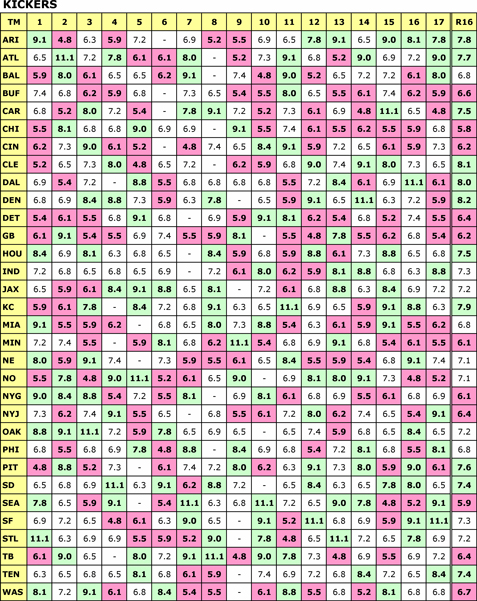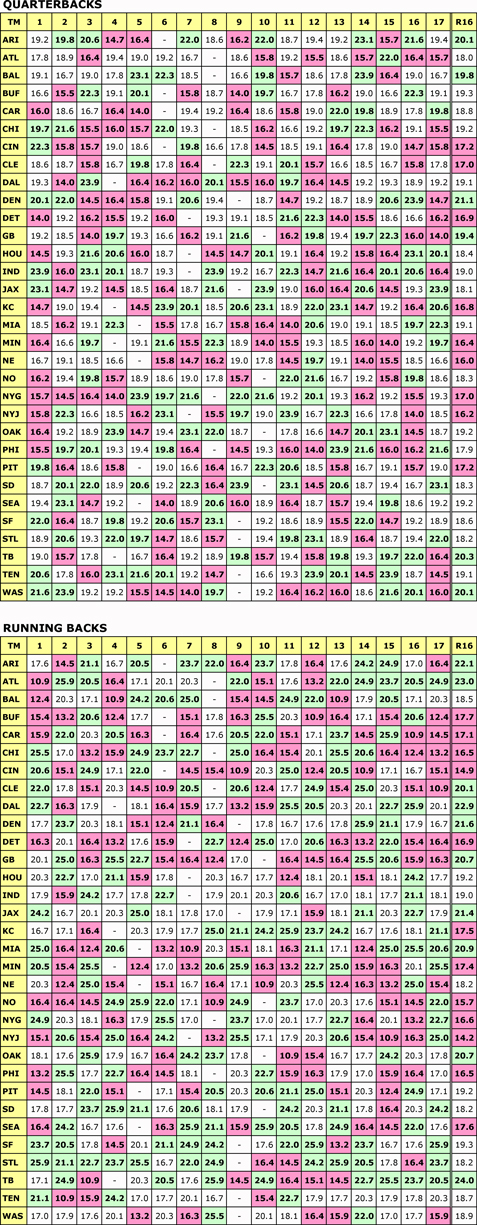
What am I looking at?
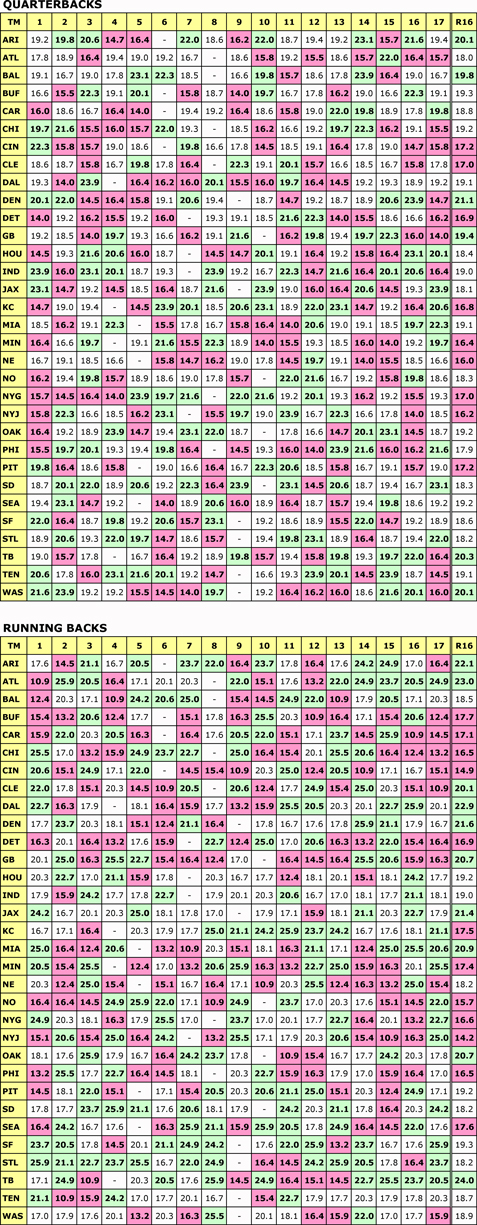
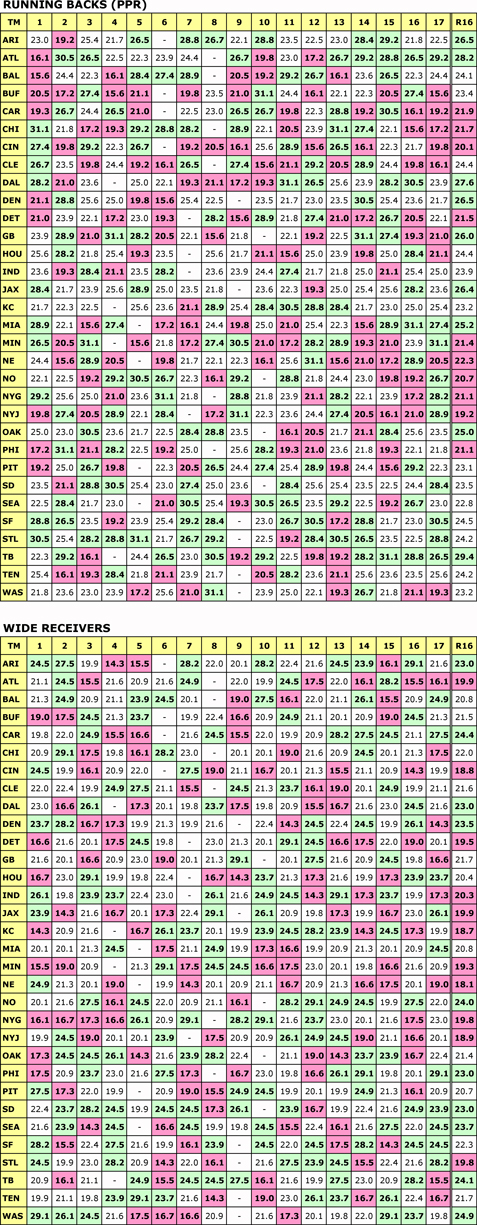
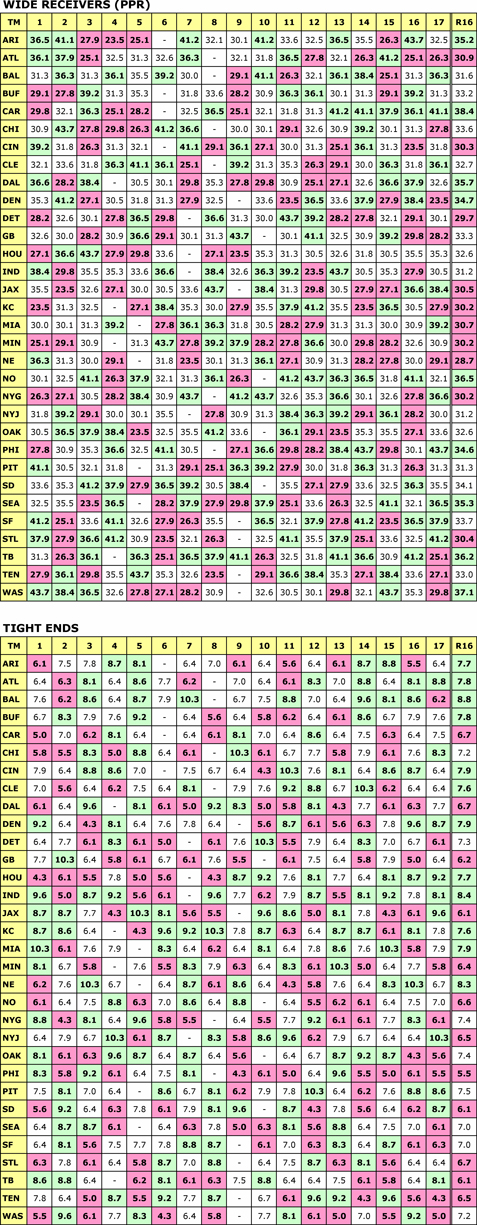
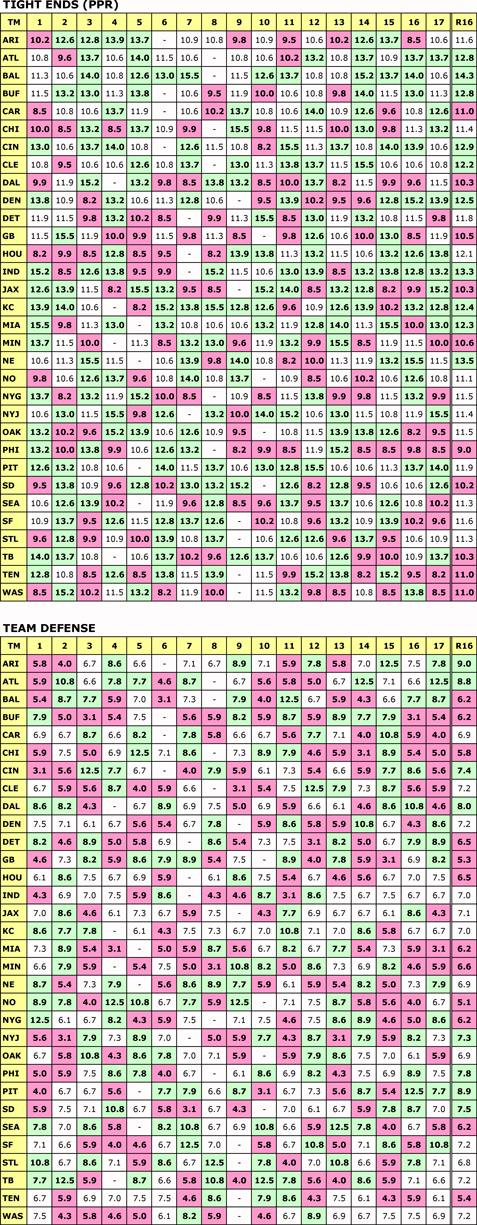
Below you’ll see a table for each position with a list of team names on the left. If a square is pink, it means that the matchup is tough. If it’s green, it means it’s a favorable matchup. On the far right, the column “R16” shows the average SOS for the remaining weeks.
It’s important to note that this is NOT straight fantasy points allowed. I removed the bias of schedule by looking at the opponents of each defense and how they fared in their other games. For example, if a particular defense faced a series of great QBs, then that is taken into account in these tables.
How do I use these tables?
Generally speaking, I use strength of schedule as a tiebraker between two similarly ranked players. Let’s say I’m trying to decide between starting BenJarvus Green-Ellis and Ronnie Brown. All else being equal, these two players are very close in my mind. But if BGE has a great matchup and Brown has a bad matchup, the choice is clear. In fact, if BGE just has a mediocre matchup while Brown has a bad matchup, I’d probably go with the Law Firm.
Be careful not to read too much into these tables. You aren’t going to bench Chris Johnson in a bad matchup unless you somehow have Arian Foster waiting in the wings.
Note: I apologize for the size of the text, but there really is no other way for me to present this data, at least not at this point.